
Surplus Asset Recovery Services for Industrial Property
Call or text 713-385-1333 to request an inventory review and direct purchase discussion.
Surplus asset recovery services help businesses convert idle equipment, excess materials, project overages, and outdated inventory into an organized sales opportunity. Texas Global Resources works with verified owners of industrial property who need more than a general scrap quote. The company reviews identifiable assets, determines which items fit its purchasing scope, presents an offer for accepted property, coordinates transportation, and states that sellers are paid before purchased assets are loaded.
The need for recovery can arise during a plant shutdown, warehouse reduction, construction closeout, maintenance storeroom cleanup, facility relocation, equipment upgrade, or change in production. Each event creates a different inventory and timeline. One project may involve unused valves and fittings still in boxes, while another may include installed process equipment, machinery, pipe, lifts, and mixed materials spread across a large site.
Effective surplus asset recovery services begin with facts: ownership, specifications, condition, quantity, location, access, safety requirements, and the required removal date. Clear information allows Texas Global Resources to assess the opportunity without relying on generic assumptions. Call or text 713-385-1333 or use the contact form to submit the first details.
Why Businesses Use Surplus Asset Recovery Services
Idle assets consume floor space, tie up staff time, complicate facility transitions, and may deteriorate while disposition decisions remain unresolved. Labels fade, batteries fail, corrosion progresses, accessories disappear, and records become separated from the equipment. A recovery plan gives the owner a defined process for documenting assets, obtaining a purchase decision, and coordinating removal.
Direct purchasing can also reduce the workload created by individual listings. Selling item by item may require research, photography, advertising, repeated questions, demonstrations, payment screening, packing, freight estimates, and multiple pickup schedules. A direct buyer can consolidate accepted property into one commercial agreement and one coordinated logistics plan.
Surplus asset recovery services do not guarantee that every item has resale value. The purpose is to identify the assets that justify a direct purchase and separate them from material that may need recycling, disposal, donation, internal transfer, or another specialized path. This distinction helps protect reusable equipment from being treated only as commodity scrap while keeping the project realistic.
Surplus Asset Recovery Services for Common Project Types
Plant Shutdowns and Decommissioning
Shutdowns can involve production assets, spare parts, utilities, warehouse inventory, maintenance equipment, and fixed process systems. Recovery planning should begin before demolition or removal crews disturb equipment identification. The owner should define which assets are excluded, which remain operational, which require disconnection, and which must leave by a firm date.
Warehouse and Storeroom Reductions
Storerooms often contain unused project material, critical spares for retired systems, discontinued components, and mixed items that no longer match current standards. Organizing inventory by category, manufacturer, model, size, and condition makes commercial review faster and reduces the risk of throwing away useful assets.
Construction and Project Closeouts
Cancelled orders, specification changes, and quantity overages may leave contractors or owners with new materials that cannot be returned. Original packaging, labels, purchase records, consistent quantities, and protected storage can materially improve the quality of the submission.
Facility Relocations and Consolidations
When operations move, equipment must be divided between assets that will transfer and property that should be sold. Marking those groups clearly prevents mistakes during loading. Recovery should be coordinated with movers, contractors, property managers, security staff, and ongoing production.
Surplus Asset Recovery Services for Industrial Valves
Have valves, actuators, or controls available? Call or text 713-385-1333.
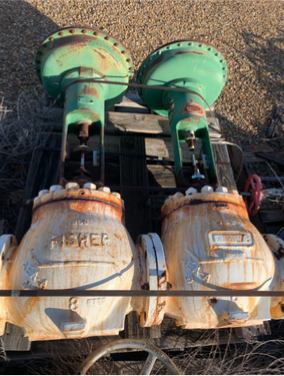
Valve inventories should be documented with manufacturer, model, size, pressure class, body material, trim, end connection, actuator, positioner, quantity, and condition. Photograph tags, cast markings, flange faces, connections, actuators, and any visible defects. State whether items are unused, rebuilt, removed from service, untested, incomplete, or held for parts.
Keep matching actuators, positioners, controls, brackets, hardware, and documents together. Disassembled or mixed components create uncertainty and can reduce marketability. For installed valves, the owner must arrange proper isolation, depressurization, decontamination, and disconnection through qualified personnel before removal.
Through surplus asset recovery services, large valve groups can be reviewed as organized lots rather than unidentified metal. This does not mean every valve will qualify, but specifications and accurate condition details give potentially reusable units a meaningful commercial review.
Surplus Asset Recovery Services for Heat Exchangers
Request a heat-exchanger review by calling or texting 713-385-1333.
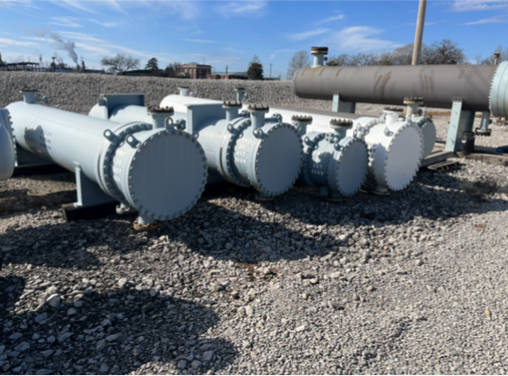
Heat exchangers require data beyond a general photograph. Submit the manufacturer, model, serial number, dimensions, weight, construction materials, tube information, surface area, pressure and temperature ratings, nozzle schedule, drawings, data sheets, and service history when available. Photograph all sides, plates, heads, nozzles, supports, and visible damage.
Disclose the prior process, known leaks, corrosion, erosion, repairs, plugging, damaged tubes, missing components, and cleanliness status. A buyer’s review is not an engineering inspection or certification for future service. Do not describe an exchanger as clean, tested, or ready for use unless current documentation supports that claim.
Heavy units may require cranes, rigging, permits, escorts, or specialized trailers. Surplus asset recovery services must account for the complete path from the equipment location to the loading area, including overhead restrictions, foundations, doors, road conditions, and available crane positions.
Surplus Asset Recovery Services for Pipe and Piping Materials
Call 713-385-1333 with pipe sizes, schedules, grades, lengths, quantities, and location.
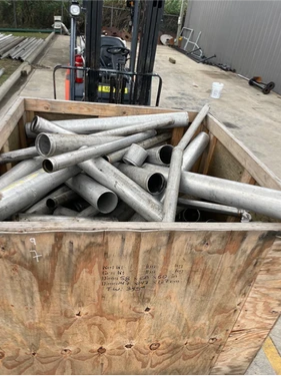
Pipe is easier to evaluate when grade, specification, diameter, schedule, length, end preparation, coating, heat number, and quantity remain identifiable. Photograph manufacturer markings, ends, interiors when safely visible, bundles, racks, storage conditions, and representative surface condition. Separate material by grade and specification whenever possible.
Unused pipe stored on appropriate supports differs from removed pipe with unknown prior service. Disclose rust, pitting, bends, cut ends, coating damage, contamination, mixed grades, or lost traceability. Do not cut standard lengths before requesting a review merely to simplify movement; usable lengths can have different commercial potential from irregular short pieces.
For surplus asset recovery services involving long or heavy pipe, describe bundling, lifting points, rack access, ground conditions, available forklifts or cranes, and trailer access. Accurate loading information helps prevent a promising material inventory from becoming impractical at pickup.
Surplus Asset Recovery Services for Fittings and Flanges
Submit boxed, palletized, or mixed fittings at 713-385-1333.
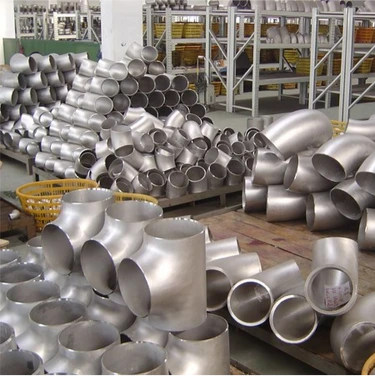
Fittings and flanges may retain value when they can be identified by type, size, schedule or pressure class, material, facing, manufacturer, specification, and quantity. Original packaging and legible labels are useful, but unpackaged items can still be reviewed when markings remain visible. Photograph representative pieces, labels, pallets, boxes, and the full quantity.
Separate elbows, tees, reducers, couplings, flanges, unions, and specialty items by specification instead of combining everything into an undifferentiated bin. Note corrosion, coating condition, damaged threads, scratched faces, mixed materials, and outdoor exposure. Provide counts or reliable estimates rather than stating unsupported quantities.
Organized fittings can support efficient surplus asset recovery services because the buyer can evaluate product groups and plan palletized transportation. Mixed bins may require more sorting, but clear photographs and representative identification help determine whether further review is justified.
Surplus Asset Recovery Services for Welding Equipment
Call or text 713-385-1333 with welding-machine models, ratings, accessories, and condition.
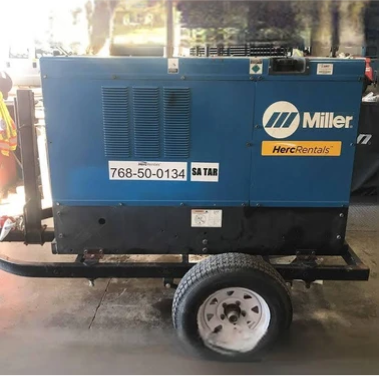
Welding machines should be listed by manufacturer, model, serial number, process, rated output, input requirements or engine type, duty cycle, hours, and included accessories. Photograph the controls, data plate, connections, case, engine area, feeders, torches, leads, remotes, carts, and visible damage. Keep accessories matched to the correct power source.
State whether each machine powers on, produces a stable arc, feeds wire, provides auxiliary power, or has a known fault. Do not call a machine tested when only the display was energized. Engine-driven units should include starting, running, leak, smoke, and hour information. Shop equipment should include voltage and phase.
Fabrication and maintenance departments often use surplus asset recovery services when standardizing equipment or closing a work area. Submitting the complete group can simplify review, but each machine still needs an individual identity and condition note.
Surplus Asset Recovery Services for Scissor Lifts
Discuss available lifts and fleet quantities at 713-385-1333.
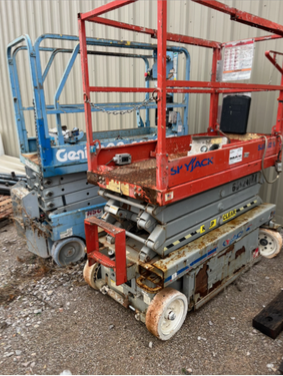
Scissor lifts should be documented by manufacturer, model, serial number, year, platform height, working height, capacity, power type, hours, batteries, charger, tires, controls, and operating condition. Photograph the complete lowered machine, platform, rails, controls, scissor stack, hydraulic components, chassis, tires, plates, and visible damage.
Identify warning codes, weak batteries, hydraulic leaks, damaged rails, missing manuals, nonworking controls, or inspection limitations. The purchase evaluation does not certify a lift for operation. Owners must follow applicable inspection, maintenance, and safety procedures before anyone uses or demonstrates the machine.
For fleet-based surplus asset recovery services, provide a unit-by-unit spreadsheet that matches serial numbers, hours, and condition. A precise list prevents confusion when similar machines have different battery health, configurations, or operating status.
How Surplus Asset Recovery Services Work
1. Establish the Commercial Scope
The seller identifies the site, ownership, asset categories, quantities, condition, and desired completion date. The first submission does not need to be perfect, but it should be detailed enough to show whether the project fits the buyer’s focus. Large or complex opportunities may progress from a remote review to an on-site evaluation.
2. Create an Asset Record
Build a spreadsheet with item numbers, descriptions, manufacturers, models, serial numbers, ratings, quantities, condition, and location within the property. Match photographs to each line. Include wide images showing aisles, doors, docks, yards, racks, foundations, pipe connections, and overhead restrictions.
3. Confirm Authority to Sell
The seller must own the assets or have legal authority to transfer them. Identify leased, financed, consigned, customer-owned, landlord-owned, or disputed property before an offer. Liens and other restrictions should be resolved before payment or removal.
4. Review Purchase and Logistics Factors
Texas Global Resources considers technical identification, physical condition, completeness, quantity, demand, location, access, labor, rigging, and transportation. More information may be requested for assets that materially influence the offer. Items outside the purchase scope should be identified before crews arrive.
5. Document the Agreement
The written purchase agreement should list accepted property, price, payment, loading, rigging, disconnection, transportation, schedule, access, insurance expectations, and exclusions. Serial-number schedules are useful when machines or high-value components must be distinguished individually.
6. Verify Payment and Coordinate Pickup
Texas Global Resources states that payment is provided before purchased assets are loaded. Sellers should confirm cleared funds independently through their financial institution. Site representatives should verify arriving personnel, vehicles, work areas, approved equipment, and safety requirements.
What Affects Surplus Asset Recovery Services and Purchase Offers?
Equipment Identification
Manufacturers, models, serial numbers, ratings, materials, dimensions, drawings, and quantities help establish what the owner is offering. Missing plates or altered markings introduce uncertainty and may limit value.
Condition and Completeness
Unused packaged material differs from installed, weather-exposed, repaired, removed, or untested property. Missing controls, guards, chargers, attachments, heads, covers, or documentation can affect marketability. Honest disclosure supports better planning.
Current Demand
Original purchase price is not a current valuation. Secondary-market demand changes with industry conditions, installed equipment, available alternatives, parts support, specifications, and the cost of preparing an asset for reuse.
Site Access and Transportation
Weight, dimensions, loading surfaces, docks, cranes, forklifts, foundations, door openings, permits, escorts, traffic rules, and distance affect project economics. The buyer needs the entire removal route, not only close photographs.
Deadlines and Facility Rules
Restricted work hours, shutdown windows, security, orientations, lockout procedures, insurance, union requirements, and property turnover dates may affect scheduling. Disclose them before the offer so the project can be planned honestly.
Preparing for Surplus Asset Recovery Services
- Assign an authorized project contact who can answer asset and site questions.
- Mark property included in the sale and identify exclusions.
- Preserve plates, tags, labels, manuals, drawings, and maintenance records.
- Keep keys, controls, chargers, tooling, and attachments with the correct asset.
- Separate leased, financed, consigned, or customer-owned property.
- Disclose contamination, leaks, damage, missing parts, and testing limits.
- Confirm loading routes, floor capacity, gates, docks, and crane access.
- Use qualified personnel for disconnection, decontamination, and rigging.
- Share safety, security, and scheduling requirements in advance.
- Verify payment before releasing purchased assets.
Do not dismantle useful assemblies, discard accessories, paint over identification, or mix specifications before the review. Preparation should make assets safer and easier to identify without concealing condition or damaging commercial value.
Trust and Safety in Surplus Asset Recovery Services
A commercial recovery project should define who is buying, what property is included, how payment will be verified, who performs each task, and when removal will occur. Sellers should use written documents and trusted contact information. Personnel arriving at the facility should match the agreed plan, and no property should leave before payment and authorization are confirmed.
The owner remains responsible for facility safety, environmental obligations, hazardous materials, process isolation, regulatory requirements, and lawful asset transfer unless a written agreement specifically assigns qualified work elsewhere. Transportation does not automatically include electrical disconnection, remediation, vessel cleaning, hot work, structural demolition, or hazardous-material handling.
These safeguards strengthen surplus asset recovery services by reducing ambiguity. Clear responsibilities protect employees, contractors, the buyer, the property owner, and future users of the equipment.
Why Choose Texas Global Resources for Surplus Asset Recovery Services?
Texas Global Resources provides a direct purchasing option for companies that need to move idle industrial property. Its stated service model includes evaluation, purchase offers for accepted assets, transportation coordination, and payment before loading. A single buyer and coordinated removal plan can reduce the number of listings, negotiations, freight arrangements, and pickup dates managed by the seller.
The company is based in South Houston, Texas and evaluates opportunities across the United States. Service depends on asset type, value, condition, quantity, location, access, and transportation. This page does not claim a local office, warehouse, or crew in locations where none has been verified. More information is available on the Texas Global Resources About page.
Companies considering surplus asset recovery services can begin with a small representative submission or a complete inventory. The quality of the information—not exaggerated promises—determines how quickly the buyer can understand the opportunity and recommend the next step.
Surplus Asset Recovery Services: Seller Questions
Can a small inventory be reviewed?
Yes. A small group or single significant asset can be submitted. Purchase feasibility depends on equipment type, condition, location, value, and transportation requirements rather than quantity alone.
Can mixed industrial property be included?
Mixed inventories can be reviewed. Group assets by category and identify each important item. Not every category will necessarily receive an offer, but showing the complete scope helps the buyer understand logistics and potential transaction value.
Must every asset be operational?
No, but operating status must be accurate. Nonrunning and untested assets may carry greater repair and loading risk. Explain the last known operation, fault, storage period, and whether the equipment can move or load safely.
Who pays for transportation?
Texas Global Resources states that transportation is included for purchased assets. The agreement should still define loading, rigging, cranes, permits, escorts, packaging, disconnection, and special handling so neither party relies on assumptions.
When is the seller paid?
The company states that payment occurs before accepted assets are loaded. Confirm the legal payer, method, timing, and verification process in writing, then verify funds through the seller’s own financial institution.
How should a facility deadline be handled?
Share the final access or removal date during the first conversation. Early notice gives the buyer time to review the inventory, inspect when necessary, arrange payment, schedule labor, and secure transportation.
Request Surplus Asset Recovery Services
Surplus industrial property should not remain unreviewed until weather, storage damage, lost documentation, or a closure deadline removes the owner’s options. A timely submission allows Texas Global Resources to identify assets that may fit a direct purchase, clarify site requirements, and develop a practical removal scope.
To request surplus asset recovery services, provide representative photographs, manufacturers, model and serial numbers, ratings, quantities, condition, location, access details, and the required schedule. Include drawings, spreadsheets, service records, or operating videos when they help explain significant equipment.
Call or text 713-385-1333 for surplus asset recovery services, or submit the inventory through the contact page.