
Sell Motor Control Centers Through a Direct Equipment Purchase
Call or text 713-385-1333 to submit an MCC lineup, cabinet, bucket inventory, or scheduled removal for review.
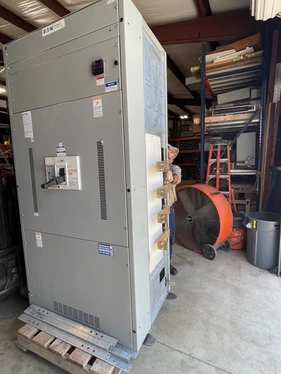
Businesses ready to sell motor control centers need a purchasing process that considers the complete electrical assembly, not merely its cabinet size. Texas Global Resources reviews qualified MCC opportunities from verified industrial facilities, manufacturers, commercial properties, electrical contractors, distributors, project owners, demolition firms, and companies managing plant upgrades or closures across the United States.
Every motor control center has a configuration that can materially affect purchasing interest. Manufacturer, product series, system voltage, phase, horizontal and vertical bus ratings, short-circuit rating, enclosure, section count, main device, bucket schedule, starter sizes, feeder devices, controls, condition, location, and removal status should be documented. Owners who want to sell motor control centers should begin with readable labels and current photographs of the entire lineup.
Texas Global Resources provides a commercial equipment-purchasing service. It does not provide engineering approval, electrical testing, installation, energization, code certification, arc-flash analysis, or site safety services. Motor control centers may contain dangerous voltage, stored energy, heavy components, and arc-flash hazards. Only qualified personnel should access energized rooms, open equipment, disconnect conductors, divide lineups, rig sections, or load the equipment.
Sell Motor Control Centers That Match Purchasing Requirements
Potential opportunities include complete low-voltage MCC lineups, certain medium-voltage motor control assemblies, combination starter sections, main and tie sections, feeder sections, variable-frequency-drive sections, soft-starter sections, reduced-voltage starter sections, and compatible replacement buckets. Individual components may also be considered when they remain identifiable, complete, and relevant to an installed equipment family.
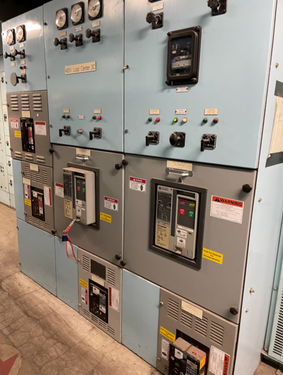
A complete lineup should be presented as a connected system. Record the number and order of vertical sections, overall dimensions, bus information, main protection, enclosure type, and contents of each section. Factory drawings and bucket schedules are helpful when they match the current equipment. If the lineup was modified, mark the changes rather than presenting an outdated schedule as accurate.
Owners can also sell motor control centers that are no longer current models when the equipment supports ongoing replacement demand. Obsolete status alone does not create value, however. Exact identification, useful configuration, condition, completeness, documentation, quantity, access, and recovery cost all influence whether an older lineup or bucket inventory warrants further review.
Condition descriptions must be factual. State whether equipment is new surplus, unused project stock, installed but never energized, operational when removed, tested after removal, rebuilt, stored, damaged, incomplete, or condition unknown. Avoid unsupported descriptions such as “perfect” or “fully working.” Current images and traceable records are more useful than broad sales language.
Complete MCC Lineups
Complete lineups should remain intact long enough to document their original arrangement. Photograph every section with doors closed, all identification plates, accessible bucket faces, the main device, metering, end panels, and visible damage. Assign a number to each section so the image set, inventory, and drawings can be compared without confusion.
Individual Buckets and Starter Units
For loose buckets, record manufacturer, series, bucket size, starter type, NEMA or IEC rating, documented horsepower, voltage, breaker or fused switch, overload device, control transformer, pilot devices, terminal blocks, and included hardware. Show the front, sides, label, stab assembly, door, and any missing parts. Never claim cross-series compatibility from appearance alone.
Sell Motor Control Centers With Buckets and Feeder Devices
Have starter buckets, feeder units, or spare devices? Call 713-385-1333 with catalog numbers and quantity photographs.
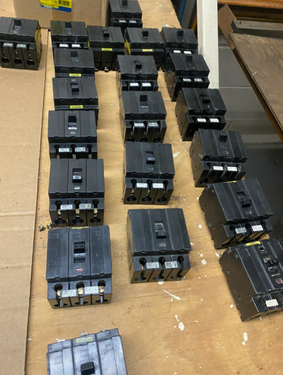
Loose MCC units require careful sorting because similar-looking devices may have different frame sizes, trip ratings, starter ratings, control voltages, stab arrangements, or interlocks. Group equipment only when the complete catalog number and configuration match. Create a separate inventory line for each variation and connect it to corresponding photographs.
A starter bucket submission should show the contactor, overload relay, disconnecting means, fuse clips or circuit breaker, control transformer, auxiliary contacts, selector switches, indicating lights, terminal blocks, communications equipment, and door hardware. Identify field modifications and missing pieces. Sellers should not operate, reset, disassemble, or energize a unit solely to prepare an inquiry.
Feeder buckets should include the protective-device manufacturer, catalog number, frame size, trip rating, pole count, interrupting rating when marked, handle mechanism, door, stabs, and mounting hardware. When an electronic trip unit is installed, photograph its model and visible settings without changing them. Documentation should state whether the breaker and bucket were removed together.
Companies planning to sell motor control centers should keep related parts with their original units. Doors, interlock pieces, control plugs, terminal covers, racking hardware, stab covers, and factory labels may be essential to completeness. Use durable tags that connect loose components to the correct bucket and avoid stacking heavy devices on relays, switches, or wiring.
Why Companies Sell Motor Control Centers
An MCC may become surplus after a production line is reconfigured, a facility changes voltage, a plant adopts another manufacturer, or a capital project is cancelled. Other releases follow a shutdown, building sale, modernization program, process relocation, or reduction in emergency spares. Explaining the actual reason for release gives the purchasing team valuable context about equipment history.
Unused sections and buckets can also accumulate after construction. Project quantities may exceed final requirements, approved equipment may change before installation, or a contractor may retain properly identified components after closeout. Provide purchase records, submittals, factory drawings, and packaging information when available, but do not assume a sealed carton proves condition or completeness.
Space and timing often drive the decision to sell motor control centers. Large cabinets occupy valuable floor area and can obstruct an upcoming electrical project. Removed sections are vulnerable to bent doors, broken handles, damaged bus, missing hardware, and moisture exposure when moved repeatedly. Early review can preserve the equipment’s identity before the lineup is dismantled or scattered across storage locations.
A direct inquiry also helps coordinate internal stakeholders. Maintenance staff may know operating history, engineering may control one-line diagrams, procurement may hold original records, accounting may authorize asset release, and facility teams may manage access. One organized submission gives everyone a shared description of what is being offered and when it must leave the site.
Sell Motor Control Centers With Complete Lineup Details
For a multi-section MCC, call 713-385-1333 with the manufacturer, series, voltage, section count, and location.
Begin documentation with the lineup nameplate. Capture the manufacturer, product family, factory order number, manufacturing date when shown, system voltage, phase, frequency, horizontal bus rating, vertical bus rating, short-circuit current rating, enclosure classification, and drawing references. Photograph the plate straight on and close enough for the text to remain readable after upload.
Next, prepare a left-to-right section schedule. Identify main breakers, main switches, ties, feeder breakers, fused switches, starter buckets, drives, soft starters, metering, programmable controls, power-factor-correction equipment, and spare spaces. A numbered sketch is sufficient when a formal schedule is unavailable. The purpose is to remove ambiguity about what the lineup contains.
Factory configuration and field changes should be separated. Replaced breakers, converted starter units, added drives, altered doors, changed control transformers, new ventilation, drilled enclosures, bypassed interlocks, and revised control wiring can influence a purchasing decision. Show each material alteration and provide updated drawings if the owner has them.
When you sell motor control centers, do not rely on a building panel schedule as the sole source of ratings. Facility records may describe an intended installation rather than the current lineup. Equipment labels, factory documents, photographs, and a current bucket inventory provide stronger identification. If sources conflict, disclose the difference instead of selecting the more favorable number.
Information Needed to Sell Motor Control Centers
Manufacturer and Product Series
Record the exact manufacturer, product family, series, catalog information, and factory order or drawing number. Similar generations may use different doors, bus stabs, bucket sizes, interlocks, and hardware. If a label cannot be read, provide a close photograph and state that the identification remains unconfirmed.
Electrical Ratings
Provide voltage, phase, frequency, horizontal and vertical bus ratings, short-circuit rating, main-device information, and neutral or ground-bus details when documented. For medium-voltage equipment, include the applicable voltage class and control information shown by the manufacturer. Never estimate an electrical rating from cabinet appearance.
Section and Bucket Inventory
List each vertical section and the equipment installed within it. Include starter sizes, feeder ratings, drives, soft starters, control power, meters, relays, and spare spaces. Quantities should match the photographs. Separate loose units from installed units so a reviewer does not count the same bucket twice.
Condition and Operating History
Explain installation dates when known, prior application, last operating date, maintenance, removal reason, storage conditions, and testing. Disclose arc damage, overheating, corrosion, water exposure, smoke, broken doors, forced handles, damaged bus, missing barriers, stripped wiring, or incomplete units. Traceable facts support a more credible review.
Location and Recovery Requirements
Provide the city and state, floor level, electrical-room access, doorway dimensions, stairs, elevators, dock conditions, available lifting equipment, documented weights, loading hours, contractor rules, and removal deadline. These details help determine whether the equipment can be recovered economically and safely.

Sell Motor Control Centers During Plant Upgrades and Shutdowns
Planning an upgrade, line closure, or facility shutdown? Call 713-385-1333 before dismantling begins.
Industrial removals frequently involve outage schedules, controlled access, contractor coordination, and strict clearance dates. Submit equipment information early enough for a commercial review. State whether the lineup remains installed and energized, has been placed in an electrically safe work condition, is awaiting qualified disconnection, or has already been removed and staged.
Safety controls remain the facility’s responsibility. Never enter restricted electrical spaces, open energized compartments, defeat interlocks, or remove protective covers for photographs. Existing qualified personnel should decide what can be documented safely. A buyer’s request for information does not authorize unsafe inspection or change the site’s electrical safety program.
Preserve lineup order before removal. Number the sections, buckets, doors, and loose hardware so the configuration can be reconstructed. Retain factory labels, schedules, drawings, end panels, bus links, barriers, and mounting parts. Cutting bus or cabinets without an agreed recovery plan can reduce usefulness and complicate identification.
Owners who sell motor control centers from operating facilities should provide separate target dates for review, offer approval, shutdown, disconnection, rigging, loading, and final site clearance. Include security procedures, orientation requirements, insurance rules, available work hours, and any labor restrictions. Responsibilities for electrical work, separation, packaging, loading, freight, and cleanup must be confirmed rather than assumed.
How a Direct MCC Purchasing Review Works
A purchasing review does not use one universal price per section, amp, bucket, or horsepower. Commercial potential depends on manufacturer, series, ratings, age, lineup contents, condition, completeness, documentation, demand, quantity, location, schedule, and recovery cost. Two lineups of equal size may serve different applications and require very different removal plans.
Original project cost is not necessarily present market value. A heavily customized MCC may have limited usefulness outside the original process, while standardized replacement buckets from a widely installed family may attract broader interest. Conversely, common equipment can have limited potential if it is damaged, incomplete, undocumented, or inaccessible.
Testing can support a review when the records identify the specific equipment, date, provider, procedures, and results. A generic sticker or verbal claim may not establish current performance. Do not energize or perform new tests merely for a preliminary inquiry. Submit existing records first and allow the purchasing discussion to identify whether additional information is necessary.
Recovery expense is part of the commercial equation. Section weight, bus separation, doorway clearance, lifting requirements, packaging, labor, permits, freight distance, site delays, and loading resources may affect feasibility. Accurate logistics help prevent a promising transaction from failing after access limitations or unassigned responsibilities are discovered.
Sell Motor Control Centers From Warehouse Inventory
For staged electrical assets and project overages, call or text 713-385-1333 with the inventory and pickup location.
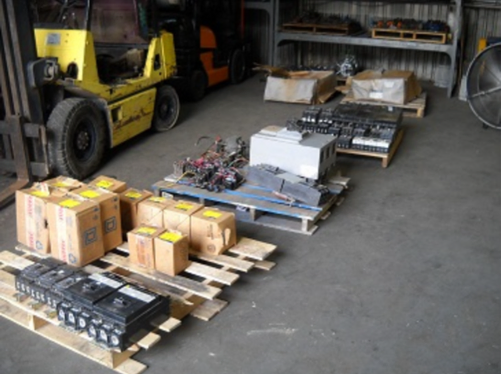
Warehouse submissions should separate MCC equipment from unrelated electrical and industrial material. Create distinct groups for complete sections, buckets, starter components, feeder devices, drives, doors, controls, and loose hardware. Use full catalog numbers and condition notes. Wide images establish quantity, while individual closeups confirm identity.
Packaging must be described honestly. Original cartons and crates may protect equipment, but they do not prove that contents are unused, complete, or undamaged. Match each shipping label to the actual device, note whether packaging has been opened, and show moisture, crushing, or missing material. Label any unverified contents as unverified.
Storage conditions matter. Keep sections upright when required, support cabinets on suitable bases, protect exposed bus and stabs, secure doors, and prevent heavy items from resting on handles or controls. Current photographs should show how the equipment is stored. Qualified warehouse personnel must select handling methods based on reliable dimensions and weight.
A single authorized contact can simplify the transaction. That person should understand ownership approval, inventory, warehouse access, loading resources, payment requirements, and deadlines. Centralized communication prevents contradictory quantities and ensures that retained spares are not accidentally included when the company moves forward to sell motor control centers.
Steps to Sell Motor Control Centers
Verify Ownership and Release Approval
Confirm that the seller owns the equipment or has written authority to release it. Exclude leased, financed, utility-owned, customer-owned, consigned, or disputed assets. Separate approved surplus from operational equipment and spares reserved for future maintenance.
Build a Complete Inventory
Record manufacturer, series, lineup ratings, section order, bucket details, condition, documentation, dimensions, and included accessories. Pair every inventory line with current photographs. Use consistent section numbers across the image set and schedule.
Describe Access and Timing
State the present equipment status, exact location, access route, loading conditions, lifting resources, contractor requirements, decision date, and removal deadline. Identify any work that must be completed by the seller or its qualified contractors.
Submit the Equipment for Review
Use the Texas Global Resources contact page to send the inventory, photographs, documentation, location, and timeline. A complete package helps the purchasing team determine whether more details are needed before discussing an offer.
Confirm the Final Scope
If purchasing interest exists, confirm included sections and components, excluded assets, inspection expectations, price, payment, electrical disconnection, separation, rigging, packaging, loading, freight, and timing in writing. Release equipment only after authorized parties agree on the commercial scope.
Frequently Asked Questions About How to Sell Motor Control Centers
Can I Sell a Complete MCC Lineup?
Complete lineups may qualify when they are identifiable, legally available, accurately represented, and aligned with current demand. Submit the manufacturer, series, ratings, section schedule, condition, documents, photographs, location, access, and removal timeline.
Can I Sell Individual MCC Buckets?
Individual starter buckets, feeder units, and compatible components may be reviewed. Provide complete labels, ratings, device photographs, stab condition, doors, hardware, quantity, and storage details. Identify missing or modified components.
Can I Sell Obsolete Motor Control Centers?
Some discontinued series can support installed equipment, but age does not guarantee demand. Exact identification, useful configuration, condition, completeness, documentation, quantity, location, and recovery costs determine whether further review is practical.
Should I Dismantle the MCC Before Contacting a Buyer?
Usually, documentation is easier while the lineup order remains intact. Photograph and inventory the equipment before dismantling whenever the project allows. Qualified personnel must plan all electrical disconnection, separation, lifting, and handling.
Can Pickup Be Included?
Pickup feasibility depends on equipment, quantity, value, location, weight, access, loading resources, schedule, and site requirements. The final agreement must identify responsibility for disconnection, rigging, packaging, loading, freight, and related work.
Can I Submit Equipment Located Outside Texas?
Texas Global Resources reviews qualified opportunities across the United States. Distance and recovery cost influence feasibility, so include the city and state, access conditions, quantity, and required removal date in the initial submission.
Request an Offer to Sell Motor Control Centers
Preserve the equipment’s identity before seeking a commercial review. Keep labels, drawings, section schedules, buckets, doors, bus components, and accessories together. Photograph the current condition, disclose modifications or damage, verify ownership, and document the access route before the lineup is moved.
Texas Global Resources evaluates qualified MCC opportunities using the equipment’s exact identity, ratings, configuration, condition, completeness, documentation, demand, quantity, location, schedule, and recovery requirements. The objective is a direct purchasing discussion for verified owners with real industrial electrical assets.
To sell motor control centers, provide the manufacturer, series, voltage, bus rating, short-circuit rating, section count, bucket schedule, condition, photographs, drawings, dimensions, weight, city and state, access details, ownership confirmation, and desired timeline.
Call or text 713-385-1333 to sell motor control centers, or submit your MCC inventory online.