
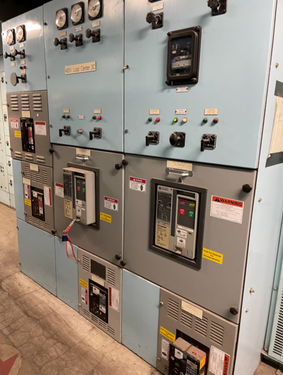
Used Motor Control Center Buyers for Direct Equipment Purchases
Call or text 713-385-1333 to submit a used MCC lineup, section inventory, or bucket package for review.
Used motor control center buyers help verified equipment owners evaluate previously installed MCC lineups, vertical sections, starter buckets, feeder units, drives, and related controls through a direct commercial purchasing process. Texas Global Resources reviews qualified opportunities from industrial plants, manufacturers, commercial facilities, electrical contractors, distributors, project owners, and businesses completing upgrades, relocations, or shutdowns across the United States.
A used MCC must be documented as an electrical assembly with a history, not described simply as a metal cabinet. Manufacturer, series, voltage, bus rating, short-circuit rating, section arrangement, bucket schedule, starter sizes, feeder devices, modifications, last known operating status, storage, location, and recovery conditions can affect purchasing interest. Used motor control center buyers need current photographs and accurate labels before evaluating an opportunity.
Texas Global Resources purchases equipment; it does not provide engineering approval, electrical contracting, testing certification, energization, code compliance, or arc-flash analysis. Motor control centers can contain hazardous voltage, stored energy, sharp edges, and heavy components. Qualified personnel must control access, establish safe electrical conditions, disconnect conductors, separate sections, rig equipment, and supervise loading.
Equipment Used Motor Control Center Buyers May Review
Qualified submissions may include complete low-voltage motor control centers, certain medium-voltage motor control assemblies, combination starter lineups, main and tie sections, feeder sections, variable-frequency-drive sections, soft starters, reduced-voltage starters, distribution sections incorporated into an MCC, and compatible replacement buckets. Purchasing decisions depend on exact identity, condition, completeness, demand, documentation, and removal requirements.
Complete lineups generally provide more context than unidentified loose components. A connected MCC can show the original section order, bus structure, main device, metering, control arrangement, and bucket schedule. Owners should preserve this information before dismantling. If sections have already been separated, number them and provide a diagram showing their prior order.
Individual buckets may also warrant consideration. Each unit should retain its door, stabs, disconnect mechanism, starter or feeder components, control transformer, overload device, terminal blocks, interlocks, and mounting hardware when applicable. Used motor control center buyers cannot assume missing pieces are available elsewhere, so every exclusion or incomplete component should be disclosed.
Discontinued equipment can remain relevant when it supports an installed base, but age by itself does not create demand. Older MCC components must be accurately identified by manufacturer and product family. Useful ratings, sound mechanical condition, complete hardware, readable labels, and compatible construction can matter more than a broad description such as obsolete electrical equipment.
Low-Voltage MCC Lineups
For low-voltage equipment, document the system voltage, phase, frequency, horizontal bus, vertical bus, short-circuit current rating, main protection, neutral and ground arrangements, enclosure type, section count, and installed unit schedule. Include available factory drawings and one-line diagrams, but note any field changes that make those records incomplete.
Medium-Voltage Motor Control Equipment
Medium-voltage assemblies require especially careful identification and handling. Provide the voltage class, current ratings, starter type, protection and metering details, control voltage, enclosure information, manufacturer series, and available documentation. Do not open compartments or approach energized equipment for photographs. Existing qualified site personnel should decide what information can be obtained safely.
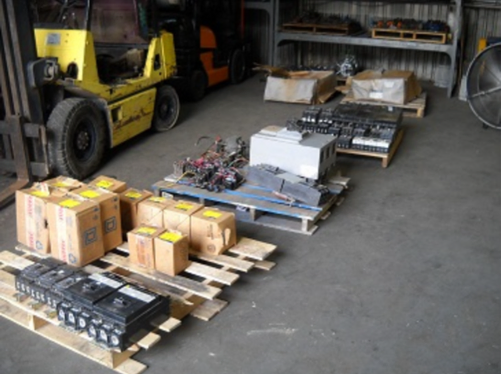
Used Motor Control Center Buyers for Staged Inventory
Have sections, buckets, and controls already staged? Call 713-385-1333 with the equipment list and location.
Warehouse submissions should separate motor control equipment from unrelated breakers, wire, panels, and industrial material. Create distinct inventory groups for complete MCC sections, starter buckets, feeder units, drives, soft starters, controls, doors, bus components, and loose hardware. Wide photographs establish quantity, while close photographs verify catalog numbers and condition.
Storage history is particularly important for used electrical equipment. State when the MCC was removed, whether it was operating at removal, how it was transported, whether it has remained indoors, and whether any openings were protected. Moisture, dust, impact, corrosion, pests, missing covers, and repeated handling can change condition after a unit leaves service.
Original packaging should not be treated as proof that a used component is new. A carton may have been reused or paired with a different device. Match shipping labels to equipment labels, identify opened packages, and photograph visible damage. Used motor control center buyers need the condition of the actual equipment, not assumptions based on a box.
Palletized sections and buckets must be stored safely. Keep cabinets upright when required, secure doors, protect exposed bus and stabs, and avoid placing heavy devices on handles, relays, or control wiring. Any lifting or repositioning should be performed by qualified personnel using reliable weight and center-of-gravity information.
Why Owners Contact Used Motor Control Center Buyers
A working MCC can become surplus even when it did not fail. Facilities retire equipment after process changes, voltage conversions, production-line closures, manufacturer standardization, capacity upgrades, or building redevelopment. Other opportunities arise when companies reduce duplicate spares or consolidate electrical assets from several sites into one maintenance program.
Direct purchasing review can be useful before an electrical room is cleared. Once lineups are dismantled, labels may disappear, buckets can become separated, drawings may be discarded, and doors or hardware may be lost. Used motor control center buyers can review the complete configuration while knowledgeable employees and project records remain available.
An organized disposition also helps internal teams coordinate. Maintenance can explain service history, engineering can provide diagrams, environmental and safety staff can identify site restrictions, accounting can authorize release, and warehouse personnel can describe loading access. One accurate submission reduces contradictory information and prevents active spares from being included accidentally.
No buyer can guarantee that every MCC will receive an offer. An uncommon voltage, limited series demand, severe arc damage, missing buckets, altered bus, incomplete identification, disputed ownership, difficult access, or high recovery cost may restrict commercial potential. Responsible used motor control center buyers evaluate the actual equipment and project facts before proposing terms.
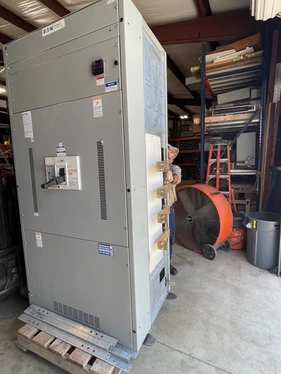
Used Motor Control Center Buyers Need Complete Identification
For a cabinet or multi-section lineup, call 713-385-1333 with the manufacturer, series, ratings, and pickup location.
Start with the main lineup nameplate and factory order information. Capture the manufacturer, product family, catalog or order number, manufacturing date when shown, voltage, phase, frequency, horizontal and vertical bus ratings, short-circuit rating, enclosure classification, and drawing references. A sharp, straight-on photograph is more useful than a handwritten interpretation.
Create a section map from left to right. Assign each vertical cabinet a number and list every installed main, tie, feeder, starter, drive, soft starter, control component, meter, and spare space. Use the same numbers in filenames and inventory records. This method lets used motor control center buyers connect each closeup to the correct position in the lineup.
Manufacturer and series must be confirmed because similar cabinets can use different bucket widths, bus stab designs, door arrangements, racking hardware, interlocks, and control schemes. Do not claim that a bucket fits another lineup because the exterior appears similar. Exact factory identification and documentation should support any compatibility statement.
Field modifications belong in the submission. Show replaced breakers, retrofitted drives, modified doors, bypassed interlocks, altered ventilation, changed control transformers, drilled enclosures, added meters, and non-factory wiring. State whether revised drawings exist. Clear disclosure helps distinguish original construction from later plant changes.
Condition Details Used Motor Control Center Buyers Need
Last Known Operating Status
State when the MCC last operated and why it was removed. Equipment retired during a planned upgrade has a different history from equipment removed after an electrical fault, overload, arc event, flood, fire, or contamination incident. If the status is unknown, use that exact description rather than assuming the lineup was functional.
Maintenance and Testing Records
Provide available cleaning, torque, insulation, breaker, starter, relay, thermography, or protective-device records that identify the specific equipment, date, provider, procedure, and result. A generic service sticker may not prove current condition. Do not energize or commission new testing solely for an initial purchasing inquiry.
Visible Damage and Missing Parts
Photograph corrosion, heat discoloration, soot, water marks, broken handles, bent doors, damaged stabs, missing barriers, cut wiring, absent buckets, cracked insulators, or modified bus. Show the surrounding area so the defect can be placed in context. Honest disclosure allows used motor control center buyers to assess feasibility without a misleading condition claim.
Removal and Storage History
Explain who disconnected the equipment, whether bus joints were protected, how sections were moved, where they were stored, and how long they remained there. Mention outdoor exposure, open doors, missing end panels, or uncovered top openings. Recent photographs should supplement older images taken while the MCC was still installed.
Ownership and Availability
Confirm that the seller owns the equipment or has documented authority to release it. Exclude leased, financed, customer-owned, utility-owned, consigned, disputed, or reserved assets. Identify the authorized decision-maker and the date on which the equipment becomes available.
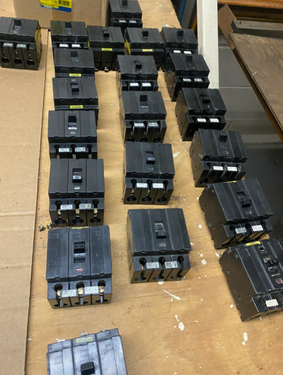
Used Motor Control Center Buyers for Buckets and Components
Submit starter buckets, feeder devices, or compatible controls by calling 713-385-1333.
A loose bucket inventory should be arranged by exact manufacturer series and catalog number. Similar units may contain different starter sizes, breaker frames, trip ratings, fuse classes, overload relays, control voltages, interlocks, or stab designs. Record each variation separately and photograph enough units to verify condition and quantity.
Starter buckets should show the contactor, overload device, disconnect or breaker, fuse provisions, control transformer, pilot devices, auxiliary contacts, terminal blocks, communications modules, door, stabs, and included hardware. Report missing or substituted components. Avoid operating mechanisms or disturbing settings simply to make the device appear functional.
Feeder units require breaker or fused-switch identification, frame and trip ratings, pole count, interrupting rating when marked, handle mechanism, door, stabs, and mounting parts. Electronic trip units should be documented without changing their settings. Used motor control center buyers may need to distinguish a complete feeder bucket from a loose breaker placed inside an unrelated enclosure.
Accessory value depends on traceable compatibility. Doors, bus links, stab assemblies, control plugs, terminal covers, interlock hardware, meters, and factory retrofit parts should retain their labels. Package accessories with the correct unit or create a cross-reference list. Unidentified mixed hardware should not be represented as a complete MCC package.
How Used Motor Control Center Buyers Evaluate Equipment
Used MCC equipment does not have a universal price per section, amp, bucket, or horsepower. Evaluation considers manufacturer, series, ratings, age, lineup composition, starter and feeder mix, condition, service history, documentation, completeness, quantity, market demand, location, schedule, and recovery cost. Two cabinets of equal dimensions can therefore have very different commercial potential.
Original installation cost is not the same as current market value. Highly customized controls may be difficult to reuse outside their original process, while standardized buckets from a widely installed family may support replacement demand. Common equipment can still have limited potential when damaged, incomplete, altered, or expensive to remove.
Documentation can reduce uncertainty but must match the offered assets. Submit one-line diagrams, factory drawings, bucket schedules, bills of material, maintenance records, and test reports when available. Mark superseded documents and identify field changes. Do not combine records from several similar lineups without showing which document belongs to which equipment.
Logistics are part of the valuation. Section weight, electrical-room access, doorway clearance, stairs, floor level, elevators, lifting requirements, loading resources, freight distance, site delays, and contractor rules may affect feasibility. Used motor control center buyers need these facts before pickup or removal terms can be discussed responsibly.

Used Motor Control Center Buyers for Facility Projects
Planning an upgrade, production-line closure, or shutdown? Call 713-385-1333 before the MCC is dismantled.
Facility projects often have fixed outage windows and clearance deadlines. Provide separate dates for purchasing review, approval, de-energization, disconnection, section separation, rigging, loading, and final site release. Early submission gives the purchasing team time to assess equipment details and recovery conditions before demolition or construction work changes the site.
Safety boundaries must remain intact. A request for photographs never authorizes entry into restricted rooms, energized work, defeated interlocks, or removed protective barriers. Qualified facility personnel should decide what information is safe to collect. The owner remains responsible for its electrical safety program and contractor controls.
Preserve the lineup configuration before removal. Number vertical sections, buckets, doors, bus pieces, end panels, barriers, and hardware. Keep drawings and schedules with the equipment. Cutting bus or cabinet frames without an agreed plan can destroy useful identification and reduce the likelihood that the assembly can be recovered as equipment.
Any commercial agreement should specify responsibility for electrical disconnection, separation, rigging, packaging, loading, freight, permits, insurance, orientation, cleanup, and site restoration. These services should not be assumed from a general statement about pickup. Written scope protects both the facility schedule and the equipment transaction.
The Submission Process for Used Motor Control Center Buyers
Document the Lineup
Photograph the full assembly, master nameplate, each section, each bucket face, accessible labels, end panels, and visible damage. Prepare a left-to-right section schedule and identify loose equipment separately.
Describe History Honestly
State the former application, service period, maintenance history, last operating status, removal reason, testing, storage, modifications, damage, and missing parts. Label unknown facts as unknown.
Explain Recovery Conditions
Provide the city and state, equipment status, dimensions, documented weight, access route, lifting resources, loading conditions, site rules, available dates, and removal deadline.
Request a Commercial Review
Send the inventory and photographs through the Texas Global Resources contact page. Complete submissions help used motor control center buyers determine whether the equipment fits current purchasing needs and what additional details may be required.
Confirm the Transaction Scope
If purchasing interest exists, verify included and excluded assets, condition representations, inspection expectations, price, payment timing, disconnection, rigging, packaging, loading, freight, and deadlines in writing before releasing equipment.
Frequently Asked Questions About Used Motor Control Center Buyers
Will a Complete Used MCC Lineup Be Considered?
Qualified complete lineups may be reviewed when ownership, identification, configuration, condition, location, and recovery requirements are clear. Submit ratings, a section schedule, current photographs, documents, and the project timeline.
Can Removed MCC Buckets Be Submitted Separately?
Yes, identifiable starter buckets, feeder units, drives, and compatible components may qualify. Provide complete labels, device details, stabs, doors, hardware, quantity, condition, and storage information.
Can Obsolete MCC Equipment Have Purchasing Potential?
Some discontinued series support existing installations, but obsolete status alone does not guarantee demand. Exact compatibility, condition, completeness, useful ratings, quantity, and recovery cost determine whether further review is practical.
Should an MCC Be Tested Before Submission?
Do not arrange unnecessary testing for an initial inquiry. Provide existing records and disclose the present status. Any testing must be performed by qualified parties under appropriate safety procedures and must identify the specific equipment.
Is Pickup Available for Used MCC Equipment?
Pickup feasibility depends on equipment value, quantity, location, dimensions, weight, access, loading resources, schedule, and site requirements. Responsibilities must be confirmed in the final commercial terms.
Are Nationwide Opportunities Reviewed?
Texas Global Resources evaluates qualified industrial electrical opportunities across the United States. Include the city and state, access conditions, quantity, and required removal date so distance and recovery cost can be considered.
Contact Used Motor Control Center Buyers
Used MCC inventory is easier to assess while labels, sections, buckets, drawings, and knowledgeable personnel remain connected to the project. Document the configuration, preserve matching hardware, disclose history, confirm ownership, and describe access before equipment is dismantled or moved again.
Texas Global Resources evaluates qualified opportunities according to exact equipment identity, electrical ratings, configuration, condition, service history, completeness, documentation, quantity, demand, location, schedule, and recovery requirements. The goal is a direct commercial purchasing discussion with verified equipment owners.
To reach used motor control center buyers, provide the manufacturer, series, voltage, bus ratings, short-circuit rating, section count, bucket schedule, last known operating status, condition photographs, documents, dimensions, weight, city and state, access details, and desired timeline.
Call or text 713-385-1333 to contact used motor control center buyers, or submit your MCC inventory online.