
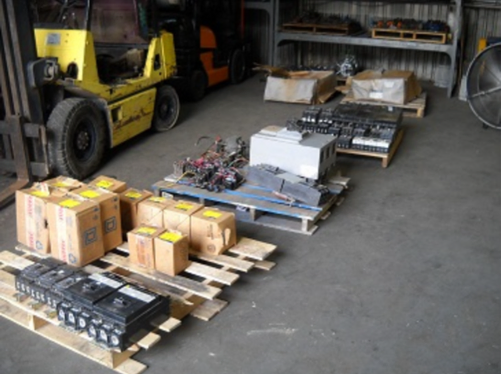
Motor Starter Buyers for Qualified Electrical Inventory
Call or text 713-385-1333 to request a direct review of qualified enclosed starters, combination starters, open starters, and MCC starter units.
Motor starter buyers provide businesses with a direct way to present unused, used, obsolete, and project-surplus motor-starting equipment for commercial evaluation. Texas Global Resources reviews qualified opportunities from industrial plants, electrical distributors, commercial properties, panel shops, mechanical contractors, automation companies, maintenance departments, and organizations clearing equipment after upgrades, shutdowns, or facility changes. A useful submission begins with exact identification, current photographs, quantities, condition, ownership, location, and the desired removal schedule.
A starter is more than a cabinet with start and stop buttons. Its contactor, overload protection, coil, disconnecting means, fuses or breaker, enclosure, control transformer, pilot devices, interlocks, and rating information can all affect application and demand. Motor starter buyers need catalog-level details because two assemblies that look alike from the outside may contain different components, control voltages, horsepower ratings, or protection arrangements.
Texas Global Resources offers commercial equipment purchasing rather than electrical engineering, installation, energization, testing certification, code approval, or arc-flash analysis. Motor starters may be connected to energized circuits, remote commands, rotating machinery, control power, and stored-energy systems. Only qualified personnel should establish safe conditions, open installed equipment, remove barriers, operate mechanisms, disconnect wiring, test components, or prepare equipment for removal.
What Motor Starter Buyers May Evaluate
Potential inventory can include full-voltage non-reversing starters, full-voltage reversing starters, combination starters, enclosed magnetic starters, open starters, IEC assemblies, NEMA-rated assemblies, reduced-voltage starters, autotransformer starters, part-winding starters, wye-delta starters, multispeed starters, definite-purpose units, and selected MCC buckets containing complete starter packages. Purchasing interest depends on the specific equipment and current needs.
A complete starter package may contain a contactor, coil, overload relay, heater elements or electronic settings, reset device, control transformer, fuse holders, circuit breaker or disconnect switch, auxiliary contacts, mechanical interlocks, terminal blocks, pilot lights, selector switches, push buttons, door hardware, labels, wiring diagram, mounting plate, and enclosure. Sellers should identify what is present and disclose anything removed, substituted, damaged, or retained.
Condition descriptions should be factual. Useful categories include new surplus in original packaging, unused open-box stock, installed but never energized, operational when removed, inspected, tested with matching records, reconditioned with documentation, stored indoors, exposed to weather, incomplete, damaged, or condition unknown. Motor starter buyers cannot determine performance from exterior paint or an unsupported statement that the unit “worked last time.”
Combination Motor Starters
A combination starter incorporates a starter and an identified disconnecting or protective device within one assembly. Document whether the unit uses a fused disconnect, molded-case circuit breaker, motor-circuit protector, or another labeled configuration. Provide the complete assembly catalog number, starter size, voltage, horsepower rating, coil details, enclosure designation, and internal component labels.
Reversing Motor Starters
For reversing equipment, photograph both contactors, the mechanical interlock, auxiliary contacts, overload protection, terminal arrangement, and wiring diagram when safely accessible. State whether the assembly is factory-built or field-modified. A reversing unit missing one contactor, its interlock, or essential wiring should be listed as incomplete.
Reduced-Voltage and Specialty Starters
Reduced-voltage starters require more detail than a basic across-the-line unit. Identify the starting method, transition arrangement, contactor count, transformer or resistor components, timers, overload devices, control voltage, and motor ratings. Specialty construction may support a particular application while also narrowing the commercial market.
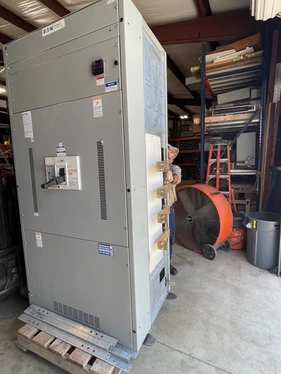
Motor Starter Buyers Need Complete Enclosure and Component Details
Have enclosed starters or large control assemblies? Call 713-385-1333 with exterior views, nameplates, internal labels, and location.
Begin with the assembly nameplate. Capture the manufacturer, product line, catalog number, series, starter size, voltage, phase, horsepower rating, short-circuit current rating, enclosure designation, control voltage, and factory-order information when shown. A straight-on label photograph is more reliable than a handwritten transcription and allows uncertain characters to be reviewed.
Next, document the major internal devices only after qualified personnel have established safe access. Photograph the contactor label, coil marking, overload relay, heater elements, breaker or disconnect, fuses, transformer, terminal blocks, and pilot-device components. Motor starter buyers need both the assembly identity and the installed component information, particularly when equipment has been serviced or modified over time.
Enclosure condition can affect the opportunity. Show doors, handles, hinges, latches, gaskets, viewing windows, push buttons, selector switches, pilot lights, conduit entries, mounting points, and any corrosion or impact damage. Report drilled holes, missing plugs, broken operators, bent panels, water marks, field paint, or replacement hardware instead of hiding them in distant photographs.
The enclosure label should not be treated as proof that an altered unit retains its original environmental suitability. NEMA and other designations apply to documented construction and defined conditions. Field openings, missing gaskets, damaged doors, substituted devices, and corrosion may change the practical condition of an assembly. Describe what the label says and what the photographs actually show.
Why Businesses Contact Motor Starter Buyers
Starters become surplus after production-line changes, motor replacements, voltage conversions, automation upgrades, preventive-maintenance standardization, facility consolidations, project cancellations, building renovations, and the retirement of older machinery. Distributors and contractors may also hold unused assemblies after specifications or final project quantities change.
A commercial review can help an owner compare recovery with long-term storage, internal redeployment, recycling, or disposal. The strongest opportunities usually have readable labels, recognizable configurations, useful ratings, complete components, organized quantities, and clear ownership. Unidentified, burned, incomplete, or heavily modified equipment may offer limited commercial potential.
Early documentation preserves details that often disappear during demolition. Maintenance personnel may know operating history, engineering may hold motor schedules, purchasing may have submittals, and warehouse staff may know where spare heaters or buckets are stored. Coordinating those records gives motor starter buyers a more accurate picture and reduces the chance that retained spares or active assets are offered accidentally.
No responsible buyer can guarantee acceptance, pickup, or a particular price before reviewing the actual inventory. Manufacturer, series, starter type, ratings, coil, overload arrangement, condition, completeness, quantity, market demand, location, access, schedule, and freight all matter. Original purchase cost alone does not establish current resale value.

Motor Starter Buyers for Plant Upgrades and Facility Shutdowns
Planning a motor-control upgrade, line closure, or facility transition? Call 713-385-1333 before starters and matched parts are separated.
Facility projects often move from shutdown planning to equipment removal on a fixed schedule. Identify potential starter inventory before contractors strip cabinets, cut wiring, or mix components into general electrical material. Assign a unique asset number to each enclosure, bucket, or open assembly and match that number to label photographs, condition notes, drawings, and the equipment list.
State whether the equipment remains energized, awaits a planned outage, has been isolated by qualified personnel, has already been removed, or is staged for loading. A purchasing discussion does not authorize live electrical work or equipment operation. The facility and its contractors remain responsible for lockout procedures, electrical safety, conductor removal, rigging, demolition, and site compliance.
Explain why the starter is being retired. A functional unit removed during modernization has a different history from equipment associated with welded contacts, overload trips, overheating, coil failure, water intrusion, fire, mechanical impact, or a motor failure. Known incidents, repeated maintenance issues, modifications, and repairs should be disclosed with any available records.
Preserve project documentation where possible. Motor lists, starter schedules, MCC elevations, one-line diagrams, bills of material, wiring diagrams, maintenance histories, inspection records, and test reports can help identify an assembly. Documents should be matched to the exact offered equipment rather than supplied as generic facility background.
Provide realistic dates for authorization, outage, disconnection, removal, inspection, loading, and final clearance. Identify work-hour limits, security procedures, escort requirements, insurance rules, loading areas, dock access, forklift capacity, and packaging expectations. Motor starter buyers need these facts before recovery responsibilities can be defined.
Information Motor Starter Buyers Need
Manufacturer, Catalog Number, and Series
Record the manufacturer, full assembly catalog number, product family, series, starter size, revision, factory order, and date code when shown. If part of a label is unreadable, mark the character as uncertain rather than copying information from a similar cabinet.
Voltage, Phase, and Horsepower Ratings
Provide the line voltage, phase, frequency, horsepower ratings, continuous current, and short-circuit rating exactly as marked. Do not assume that one horsepower value applies at every voltage. Photograph rating tables so the applicable entries can be reviewed in context.
Contactor and Coil Information
Identify the installed contactor catalog number, NEMA size or IEC designation, pole count, coil code, control voltage, and frequency. If the coil marking cannot be seen safely, state that it is unverified. Never infer coil voltage solely from the incoming power system.
Overload Protection
List the overload relay model, trip class or adjustment information, heater-element numbers, reset arrangement, and electronic settings where documented. Keep heater elements and overload accessories with their matching assembly, and disclose missing or substituted parts.
Disconnect and Short-Circuit Protection
Identify the fused disconnect, circuit breaker, motor-circuit protector, or other included device by its own label. Provide frame and trip details, fuse class, amp rating, poles, and interrupting or short-circuit markings as applicable. Do not combine separate protective-device inventory with the starter count.
Control Components and Accessories
Record control transformers, fuses, timers, auxiliary contacts, interlocks, terminal blocks, relays, push buttons, selector switches, pilot lights, space heaters, and door-mounted operators. Photograph accessory catalog numbers when they are safely accessible.
Condition, Quantity, and Location
State whether each unit is unused, installed, operational when removed, tested, repaired, stored, incomplete, damaged, or condition unknown. Include exact quantities, city and state, installed or stored status, access, loading resources, pallet count, site restrictions, and the required timeline. These details help motor starter buyers evaluate commercial and logistical feasibility.
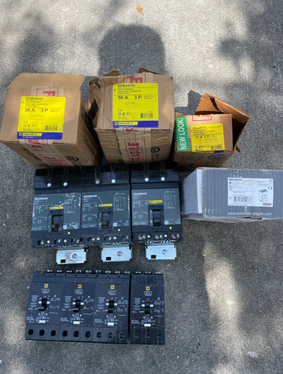
Motor Starter Buyers Require Clear Protection and Control Information
Have starters with breakers, overloads, or control accessories? Call 713-385-1333 and inventory every component accurately.
A starter, contactor, overload relay, and circuit breaker perform different functions. The presence of one device should not be used to imply that the others are included. Build the inventory around the complete starter assembly, then identify each major installed component separately. Loose breakers, contactors, or overloads should be placed on their own lines.
Short-circuit ratings deserve careful documentation. An assembly rating may depend on specified components, fuses, breakers, enclosure construction, and manufacturer instructions. Submit the marked assembly rating rather than calculating or extrapolating one. Likewise, describe service-entrance suitability, horsepower ratings, and environmental classification only when labels or reliable documentation support the claim.
Overload protection must match the inventory description. Thermal units may use replaceable heater elements, while electronic relays may include adjustable current ranges, trip classes, phase-loss features, or communication options. Photograph the relay label and installed settings without changing them. Motor starter buyers need the original observed condition, not a configuration altered for presentation.
Control voltage can come from an external source or an internal transformer. Photograph transformer labels, primary and secondary fusing, coil markings, and wiring diagrams when safe. Avoid claiming that a starter is ready for a specific voltage or motor unless the complete rating and component set support that conclusion.
How Motor Starter Buyers Assess Commercial Potential
There is no dependable universal price per starter, horsepower, amp, enclosure, or pound. Evaluation considers manufacturer, product line, starter type, size, ratings, coil voltage, overload configuration, protective device, control components, enclosure, condition, completeness, documentation, quantity, demand, location, schedule, and recovery cost.
Two starters with the same horsepower rating can have different line voltages, control voltages, enclosure types, reversing functions, protection methods, and accessories. They are not automatically interchangeable. Exact identity matters more than a broad statement that an assembly once operated a particular motor.
Original project cost provides background but does not determine present value. A complex reduced-voltage assembly may have limited demand outside its original application, while a common combination starter may support a wider range of replacement needs. Damage, missing components, obsolete parts, uncertain history, or costly recovery can reduce interest in either one.
Testing records can support a review when they identify the exact assembly, date, provider, procedures, and results. A generic sticker or verbal claim may not prove operational status. Do not energize, cycle, or bench-test a starter only for a preliminary sales inquiry. Qualified personnel should determine whether testing is necessary and safe.
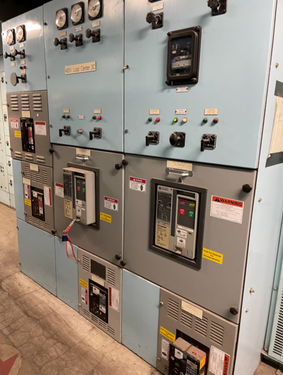
Motor Starter Buyers for MCC Buckets and Control Lineups
Releasing starters from an MCC or control lineup? Call 713-385-1333 with bucket labels, component details, and safe photographs.
An MCC bucket should be documented as a complete unit rather than a generic metal drawer. Record the MCC manufacturer and series, bucket size, unit identification, starter type and size, contactor number, overload model, control voltage, disconnect type, fuse or breaker details, door hardware, operator, stab condition, and included diagrams.
Physical width alone does not prove that a bucket fits a particular lineup. Bus stab design, mounting details, interlocks, door construction, wiring, short-circuit ratings, and product generation can differ. Motor starter buyers need exact factory identification and should not be asked to rely on visual resemblance or undocumented interchangeability claims.
If starters are being removed from fixed cabinets, keep associated doors, handles, mounting plates, wiring diagrams, transformers, pilot devices, and hardware together. Mark each set before removal. Once components are mixed across multiple buckets, reconstructing an accurate factory configuration becomes difficult and commercial interest may be reduced.
Field modifications should be disclosed. Show replaced contactors, changed overloads, altered control transformers, non-factory wiring, added relays, drilled doors, repaired stabs, bypassed interlocks, and substituted operators. A modification is not automatically disqualifying, but hiding it prevents an accurate review.
A larger lineup may include starters alongside feeder buckets, variable-frequency drives, soft starters, panel sections, and distribution devices. Keep the page submission centered on motor starter inventory by cataloging starter units first. Related equipment may be listed in separate categories without changing the exact topic.
Warehouse Preparation for Motor Starter Buyers
Warehouse stock should be grouped by complete catalog number, starter type, size, voltage, coil, overload arrangement, enclosure, and condition. Do not combine units because they share a brand or exterior cabinet. Use a unique inventory reference for each distinct configuration and match it to photographs and quantities.
Packaging can support identification, but it does not prove unused condition. Boxes may be opened, resealed, damaged, exposed to moisture, or paired with different contents. Match package labels to equipment labels and photograph the actual starter where practical. Disclose crushed cartons, missing seals, water stains, and unverified contents.
Protect contactors, overload relays, terminal blocks, handles, pilot devices, doors, and MCC stabs during storage. Avoid stacking heavy assemblies on fragile operators or leaving loose hardware inside cabinets. Palletize equipment by compatible size and weight, retain inventory labels, and describe available forklifts or docks accurately.
Verify authority before requesting a transaction. Exclude leased, financed, consigned, utility-owned, customer-owned, disputed, reserved, and operational assets unless the proper party approves release. Ownership uncertainty can stop a review regardless of equipment quality.
The Motor Starter Buyer Process
1. Confirm the Available Equipment
Separate released equipment from active assets and retained spares. Count each exact configuration and identify any units awaiting another party’s approval. Do not include components that belong to a customer, utility, lessor, or equipment manufacturer.
2. Build a Catalog-Level Inventory
List manufacturer, product line, assembly catalog number, starter type, size, voltage, phase, horsepower, coil, overload, protective device, enclosure, condition, quantity, and accessories. Assign matching photograph references.
3. Document Condition Honestly
State whether equipment is new surplus, unused, installed, operational when removed, tested, reconditioned, damaged, incomplete, or unknown. Disclose heat, moisture, fire, contamination, impact, missing parts, and field changes.
4. Explain Access and Timing
Provide the city and state, installed or stored status, dimensions, weight, access route, lifting resources, site rules, outage limitations, loading conditions, and required decision or removal dates.
5. Request a Commercial Review
Send the equipment list and current photographs through the Texas Global Resources contact page. Complete information helps motor starter buyers determine whether the opportunity matches current purchasing requirements.
6. Confirm Written Terms
If purchasing interest exists, document included equipment, exclusions, represented condition, inspection expectations, price, payment, qualified removal, packaging, loading, freight, and deadlines. Release equipment only after authorized parties approve the agreement.
Frequently Asked Questions About Motor Starter Buyers
Can a Single Motor Starter Be Submitted?
Yes. A single unit may qualify when identity, ratings, condition, completeness, location, and demand justify review. Provide the assembly label, internal component labels, full photographs, and recovery details.
Are Used Motor Starters Considered?
Qualified used units may be evaluated. Explain when and why they were removed, whether they were operational at removal, how they were stored, and whether any known event affected them. Include relevant records when available.
Can Obsolete Starters Have Value?
Some discontinued products support existing installations, but obsolete does not automatically mean valuable. Exact identification, useful ratings, completeness, condition, documentation, quantity, and current demand determine commercial potential.
Should Overload Heaters Stay With the Starter?
Keep documented heater elements and overload components with their matching starter when practical. Photograph their numbers and disclose missing pieces. Do not claim compatibility without manufacturer information.
Are Failed or Burned Starters Purchased?
Failed, burned, flooded, or severely damaged units often have limited commercial potential. Separate them from operational or unused inventory, photograph the damage, and provide the known history for an accurate review.
Should a Starter Be Tested First?
Do not arrange unnecessary testing for an initial inquiry. Submit existing records and disclose current status. Only qualified personnel should decide whether testing is safe, appropriate, and permitted.
Can Pickup Be Included?
Pickup feasibility depends on equipment value, quantity, location, dimensions, access, packaging, loading resources, schedule, and freight. Final responsibilities must be stated in the written terms.
Are Nationwide Opportunities Reviewed?
Qualified equipment across the United States may be considered. Include city and state, quantity, pallet information, access, loading conditions, and removal deadline so recovery requirements can be assessed.
Contact Motor Starter Buyers
Starter inventory is easier to review while nameplates, contactors, overloads, coils, protective devices, controls, enclosures, drawings, and knowledgeable personnel remain connected to the equipment. Organize the assets before demolition, preserve matched components, verify ownership, and describe condition accurately.
Texas Global Resources evaluates qualified opportunities according to manufacturer, product line, catalog number, starter type, ratings, coil, overload arrangement, protective device, enclosure, condition, completeness, documentation, quantity, market demand, location, schedule, and recovery requirements. The objective is a direct commercial purchasing discussion based on the actual equipment available.
To contact motor starter buyers, submit the manufacturer, series, catalog number, starter type, size, voltage, phase, horsepower rating, coil information, overload protection, breaker or fuse details, enclosure, condition, quantity, photographs, city and state, access, and desired timeline.
Call or text 713-385-1333 to reach motor starter buyers, or submit qualified motor starter inventory online.