
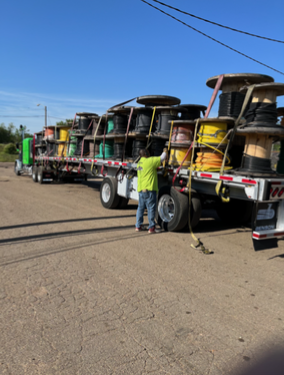
Electrical Wire Buyers for Qualified Surplus Cable Inventory
Call or text 713-385-1333 to request a commercial review of qualified reels, coils, continuous cable lengths, and project-surplus conductors.
Electrical wire buyers help verified businesses present excess wire and cable for direct commercial evaluation. Texas Global Resources reviews qualified inventory from electrical distributors, industrial facilities, commercial construction projects, utility contractors, manufacturers, renewable-energy projects, data facilities, warehouses, and organizations managing upgrades, cancellations, shutdowns, or facility relocations. A productive inquiry begins with accurate product markings, footage, condition, quantities, ownership, location, and loading information.
Useful cable identification goes well beyond jacket color or approximate diameter. Conductor metal, AWG or kcmil size, strand construction, conductor count, insulation, outer jacket, armor, shielding, voltage, temperature rating, manufacturer markings, approvals, and continuous length can affect purchasing interest. Electrical wire buyers need clear photographs of the printed legend, reel tag, visible cable ends, reel condition, and storage environment to understand what is actually available.
Texas Global Resources performs commercial purchasing rather than electrical engineering, code review, installation, testing certification, or live electrical work. Installed cable may be energized, routed through restricted spaces, connected to operating equipment, or too heavy to handle without appropriate machinery. Qualified personnel must determine electrical safety, disconnection, pulling, cutting, lifting, packaging, loading, and site-compliance requirements. Never remove, strip, energize, or test cable solely for an initial sales inquiry.
Inventory Electrical Wire Buyers May Consider
Potential opportunities may include building wire, feeder conductors, tray cable, control cable, instrumentation cable, portable power cable, welding cable, flexible industrial cable, armored cable, metal-clad cable, grounding conductor, photovoltaic wire, medium-voltage products, and selected specialty cable. Current purchasing requirements vary, so a recognizable manufacturer or high original project cost does not guarantee acceptance.
Factory reels with readable tags can make identification easier, but partial reels and documented coils may also warrant review. Cut lengths, removed conductors, mixed reels, installed runs, loose wire, and unmarked remnants require additional scrutiny. Exact continuous length matters because one uninterrupted run can have different application potential from many short pieces with the same combined footage.
Condition should be described precisely. Useful categories include factory-new sealed reel, unused opened reel, unused project surplus, previously pulled but not energized, installed and removed, stored indoors, outdoor stored, wet, sun-exposed, kinked, crushed, spliced, contaminated, mixed, or condition unknown. Electrical wire buyers cannot confirm usability from distant photographs or a statement that the cable appears fine.
Copper and Aluminum Electrical Wire
Identify conductor material from the printed legend, reel documentation, or another reliable source. Do not assume that every reddish strand is standard copper or that a silver-colored strand is aluminum; tinned copper and other constructions can create confusion. Record solid, stranded, compact, flexible, or other marked construction along with the conductor size.
Single-Conductor Building and Feeder Wire
For single-conductor products, provide size, conductor material, insulation designation, voltage rating, temperature rating, color, sequential footage markings, and the number of continuous pieces. Keep different colors and specifications on separate inventory lines even when the conductor size is the same.
Multiconductor and Specialty Cable
Multiconductor cable requires the conductor count, individual conductor size, grounding arrangement, shielding, drain wire, armor, fillers, jacket, and complete legend. Specialty products may also carry sunlight-resistance, oil-resistance, direct-burial, wet-location, tray, flex, or fire-related markings. Describe those features only as the manufacturer marks them.
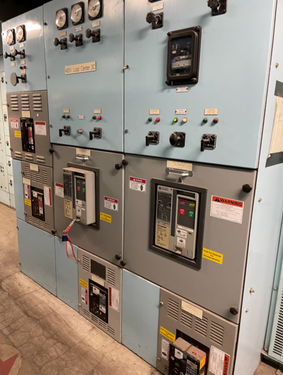
Electrical Wire Buyers Need Product Details, Not Equipment Assumptions
Have wire connected with a larger electrical project? Call 713-385-1333 and identify every reel or continuous run separately.
Wire often becomes available near switchboards, control equipment, transformers, generators, panels, and machinery. That setting provides useful project context but does not prove the conductor specification. A cable connected to a particular cabinet may have been replaced, rerouted, spliced, or installed differently from the original drawing. Product markings and current documentation remain the primary identification sources.
Separate cable from other electrical assets in the inventory. Each reel, coil, or installed run should have its own reference number, description, estimated or measured length, condition statement, photographs, and removal status. Related equipment can be listed independently without turning the wire submission into a generic facility cleanout.
Terminations require careful handling. Installed conductors may include compression lugs, stress cones, glands, connectors, armor fittings, pulling eyes, or other assemblies. State whether terminations are included, must remain with equipment, or will be removed by qualified personnel. Electrical wire buyers need the anticipated recoverable length after required trimming, not the total route length before removal.
Field history should be disclosed. Report known overloads, faults, overheating, fire, flooding, chemical exposure, excessive pulling tension, sharp bends, crushing, abrasion, damaged armor, or compromised shielding. Cable associated with an electrical failure should be separated from unused material and identified clearly.
Why Businesses Work With Electrical Wire Buyers
Surplus wire may occupy substantial warehouse space and retain material value, yet it can be difficult to classify after project teams move on. A direct review helps an owner compare a possible transaction with redeployment, supplier return, continued storage, recycling, or another approved disposition method. The review should occur while tags, purchase records, and knowledgeable personnel are still available.
Specification changes are a common source of unused inventory. A revised conductor size, approved manufacturer, insulation type, jacket color, voltage class, fire rating, or installation method can leave otherwise new cable outside the final scope. Explain whether the material was simply excess, rejected for a documented technical reason, damaged in shipment, or replaced after a design revision.
Internal coordination improves accuracy. Engineering may have cable schedules, purchasing may retain invoices, project management may know the change order, warehouse staff may know the storage history, and accounting may control asset release. Bringing these details together helps electrical wire buyers distinguish saleable inventory from reserved, customer-owned, disputed, or active material.
No responsible purchasing company can promise an offer based only on total pounds or copper market prices. Identified reusable cable is evaluated as a product, while damaged, unmarked, mixed, or very short material may be viewed differently. Specifications, continuous footage, condition, quantity, location, access, demand, and recovery expense all matter.
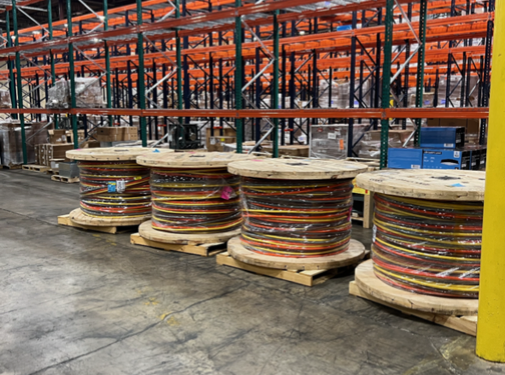
Electrical Wire Buyers for Labeled Warehouse Reels
Have cable on factory or project reels? Call or text 713-385-1333 with reel tags, legends, footage, dimensions, and loading details.
A warehouse review should begin with one inventory record per reel. Assign a unique number, then record the cable specification, footage, reel type, flange diameter, overall width, arbor opening, approximate gross weight, storage position, and visible condition. Wide photographs establish the lot layout, while close photographs verify tags, markings, and cable ends.
Reel tags are helpful only when they match the cable. Tags can be moved, overwritten, damaged, or left on a reel that was later reused. Compare the tag with the jacket legend and any sequential footage markings. If the product cannot be verified, describe the reel contents as unconfirmed rather than copying a convenient label.
Reel integrity affects safe recovery. Photograph both flanges, barrel, lagging, fasteners, arbor, and any cracks, rot, distortion, loose boards, protruding hardware, or structural damage. State whether a reel is wood, steel, plastic, returnable, rented, or owned by another party. Electrical wire buyers need to know whether material can be handled and transported without re-reeling.
Store reels upright on their flanges unless manufacturer guidance states otherwise, and secure them against rolling. Protect cable ends using methods appropriate to the product. Do not place forklift tines against cable layers, lift a reel by the conductor, or drop it from a dock. Qualified personnel should select the correct lifting shaft, spreader, chocks, trailer, and securement.
Information Electrical Wire Buyers Need
Manufacturer and Printed Cable Legend
Photograph a complete, readable section of the printed or embossed legend. Include manufacturer, product designation, conductor construction, size, count, insulation, jacket, voltage, temperature, approvals, date information, and sequential footage markers when present. Avoid cleaning methods that could erase markings or damage the jacket.
Conductor Material, Size, and Stranding
Provide copper, tinned copper, aluminum, copper-clad aluminum, or another documented metal; then list AWG or kcmil size and stranding. For flexible conductor, record the exact manufacturer designation rather than applying a general “fine strand” description.
Insulation, Jacket, Shield, and Armor
Transcribe insulation and jacket codes exactly. Identify braid, tape shield, wire shield, drain wire, concentric neutral, armor, grounding conductor, fillers, and overall jacket separately. Jacket color is descriptive, but it is not a substitute for the product designation.
Voltage and Temperature Markings
Record voltage class and temperature ratings, including wet or dry conditions where printed. Do not claim suitability for a specific installation, tray, raceway, direct burial, or hazardous location unless markings and authoritative documentation support that description.
Continuous Footage and Piece Count
Provide beginning and ending footage marks when both can be read, along with the calculation. Otherwise, label the length as estimated and explain whether it came from purchase records, documented measurements, route drawings, reel geometry, or weight. State how many separate pieces are on each reel.
Condition and Storage
Describe unused, previously pulled, installed, removed, wet, dirty, weathered, kinked, crushed, spliced, cut, contaminated, or unknown condition. Include storage duration, indoor or outdoor environment, sun exposure, standing water, end sealing, reel covering, and known incidents.
Location, Access, and Deadline
Provide city and state, reel count, dimensions, estimated weights, rack or ground location, aisle width, dock conditions, forklift or crane availability, loading hours, site restrictions, and the required decision or removal date. These details help electrical wire buyers assess logistical feasibility.

Electrical Wire Buyers for Industrial Upgrades and Shutdowns
Planning a facility transition or electrical upgrade? Call 713-385-1333 before long cable runs are cut into short, unidentified pieces.
Industrial projects often move from outage planning to demolition under tight deadlines. Cable should be identified before conductors are pulled, cut, or mixed into containers. Assign a project reference to each run and match it to the served circuit when known, accessible jacket markings, cable schedule, estimated route, termination status, and photographs.
Be clear about how footage was estimated. Drawings may show design length, but actual installed routes can include slack, vertical drops, terminations, bends, loops, rerouting, and sections that cannot be recovered intact. The useful length after removal and trimming may differ substantially from the original purchase quantity.
State whether each run remains energized, awaits a qualified outage, has been disconnected, has already been removed, or is staged for review. A commercial inquiry does not authorize live work or access to restricted spaces. Facility management and qualified contractors remain responsible for safety procedures, permits, disconnection, pulling, cutting, rigging, and cleanup.
Removal method can influence condition. Excessive tension, sharp pulling angles, undersized sheaves, crushing, uncontrolled drops, and cutting across unknown conductors may damage cable or create hazards. Preserve long continuous runs when practical, but allow qualified personnel and site requirements to control the work.
Give separate dates for review, internal approval, outage, removal, measurement, loading, and final clearance. Report contractor restrictions, security procedures, insurance requirements, escort needs, work-hour limits, lift availability, dock access, and staging space. Electrical wire buyers require a realistic project plan before firm recovery terms can be developed.
How Electrical Wire Buyers Evaluate Commercial Potential
Commercial evaluation considers conductor metal, size, stranding, count, insulation, jacket, shielding, armor, voltage, temperature rating, approvals, manufacturer, product age, continuous footage, number of pieces, total quantity, condition, documentation, location, demand, and recovery expense. No single specification establishes value by itself.
Commodity prices provide limited context but do not determine the price of identified reusable cable. Likewise, a high original invoice does not guarantee current demand. A specialized construction may fit few projects, while a common specification may have broader interest but still be limited by short lengths, damage, age, or difficult transportation.
Footage confidence matters. Sequential markers and matching purchase records can support a length statement. Weight calculations may be less certain when reel tare, moisture, mixed cable, or multiple pieces are unknown. Electrical wire buyers prefer a disclosed estimate with a clear method over an exact figure that cannot be substantiated.
Recovery costs are part of the decision. Rack height, reel weight, damaged flanges, restricted aisles, loading labor, crane or forklift requirements, appointment windows, distance, trailer needs, and re-reeling can change feasibility. Final terms must identify responsibility for measurement, removal, cutting, packaging, loading, freight, and site cleanup.
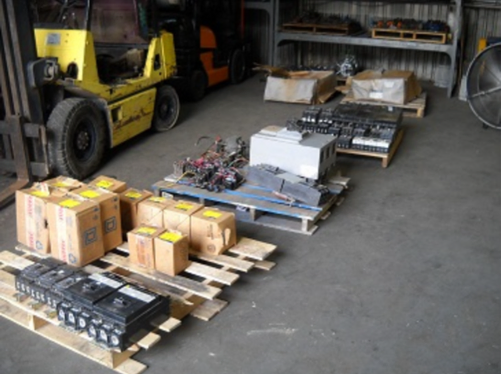
Electrical Wire Buyers for Organized Project Surplus
Ready to clear verified wire stock? Call 713-385-1333 with specifications, photographs, footage, quantity, and pickup location.
Organized project stock should be separated by exact legend, size, conductor count, color, rating, condition, and length. Do not combine reels because their jackets look similar. Different voltage ratings, insulation systems, conductor metals, approvals, or production dates may be concealed by nearly identical exteriors.
Separate full reels, partial reels, coils, straight lengths, installed runs, and remnants. List the number of continuous pieces within every group. A collection of small cuts totaling 1,000 feet does not offer the same application potential as a single 1,000-foot run, even when the printed cable specification matches.
Packaging should be verified. Boxes and shrink wrap can be opened, resealed, damaged, or reused. Compare package labels with the wire itself and disclose faded legends, broken seals, water stains, crushed cartons, and unknown contents. Photograph the actual product whenever practical.
Confirm ownership before requesting a transaction. Exclude customer-owned, utility-owned, financed, consigned, leased, disputed, reserved, and operational material until the appropriate party authorizes release. An assigned project manager or warehouse employee may not automatically have authority to sell company assets.
The Electrical Wire Buyer Process
1. Verify the Available Material
Separate authorized surplus from active stock and retained project spares. Confirm ownership, count reels and coils, identify installed runs, and exclude material subject to another party’s rights or approval.
2. Build a Specification-Level Inventory
Create one line for every manufacturer, printed legend, conductor metal, size, count, insulation, jacket, voltage, color, condition, and continuous length. Assign a reference number to every reel or run.
3. Photograph the Evidence
Provide clear views of the printed legend, reel tag, cable end, both reel flanges, packaging, visible damage, storage setting, and full lot. Do not create unsafe access or damage usable material for documentation.
4. Establish Footage Responsibly
Use sequential markers, reliable records, documented measurement, or another stated method. Label estimates as estimates, explain the calculation, and report the number of separate lengths on every reel.
5. Describe Recovery Requirements
Report reel dimensions, weights, rack position, aisle clearance, lifting equipment, dock access, loading hours, site rules, city and state, and deadline. Include installed-cable removal requirements when relevant.
6. Request a Commercial Review
Send the inventory and current photographs through the Texas Global Resources contact page. Complete information allows electrical wire buyers to determine whether the opportunity matches current purchasing requirements.
7. Confirm Final Terms
If purchasing interest exists, document included material, exclusions, represented specifications, condition, footage basis, inspection expectations, price, payment, cutting or removal, packaging, loading, freight, and deadlines before release.
Frequently Asked Questions About Electrical Wire Buyers
Can One Partial Reel Be Submitted?
Yes. A partial reel may qualify when the product is identifiable, the continuous length is useful, condition is documented, and recovery is practical. Include footage markers or explain how the remaining length was estimated.
Is Previously Installed Wire Considered?
Some removed material may warrant evaluation. Provide installation history, removal method, continuous length, terminations, bends, storage, testing records, and any known fault, heat, moisture, or mechanical event.
Should Cable Be Cut Before Review?
Avoid unnecessary cutting. Long continuous lengths may preserve more application potential, while premature cuts can eliminate useful options. Qualified personnel and site requirements must control any disconnection or removal.
How Should Footage Be Reported?
Use visible start and end markers when available. If footage comes from records, weight, reel dimensions, or route drawings, identify the method and report the result as estimated rather than exact.
Can Mixed Wire Be Submitted?
Mixed inventory can be presented, but identifiable products should be separated. Unmarked remnants, damaged cable, and short cuts should not be represented as equivalent to labeled continuous material.
Do Electrical Wire Buyers Consider Outdoor-Stored Reels?
Outdoor storage does not automatically determine the result. Report duration, sunlight, rain, standing water, reel deterioration, end sealing, jacket condition, contamination, and the product’s documented environmental markings.
Can Pickup Be Included?
Pickup feasibility depends on material value, quantity, reel dimensions, weight, location, access, lifting resources, schedule, and freight. All removal, loading, and transportation responsibilities must be confirmed in writing.
Are Nationwide Opportunities Reviewed?
Qualified inventory across the United States may be evaluated. Include city and state, reel count, weights, loading conditions, access, and deadline so recovery requirements can be considered.
Contact Electrical Wire Buyers
Wire inventory is easier to evaluate while legends, reel tags, continuous lengths, packaging, project records, and knowledgeable personnel remain connected to the material. Preserve usable lengths, protect exposed ends, document reel condition, verify ownership, and avoid unsupported specification claims.
Texas Global Resources reviews qualified opportunities according to conductor material, size, construction, count, insulation, jacket, armor, shielding, voltage, temperature rating, approvals, manufacturer, length, quantity, condition, documentation, market demand, location, schedule, and recovery requirements.
To reach electrical wire buyers, submit the complete legend, conductor metal, size, count, insulation and jacket, voltage, continuous footage, piece count, reel dimensions, estimated weights, photographs, condition, city and state, access details, and desired timeline.
Call or text 713-385-1333 to contact electrical wire buyers, or submit qualified electrical wire inventory online.