
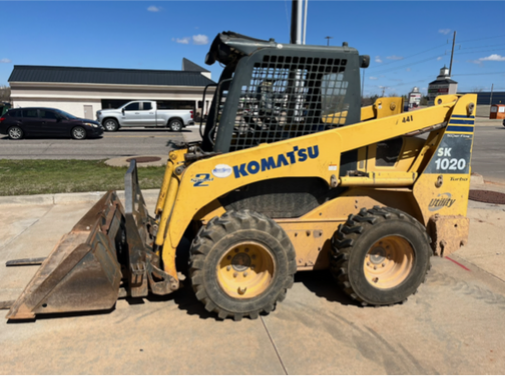
Sell Used Industrial Machinery Including Skid Steers and Compact Loaders
Ready to release qualified machines? Call or text 713-385-1333 for a direct review of your equipment and pickup requirements.
Companies preparing to sell used industrial machinery need more than a generic equipment list. Texas Global Resources reviews qualified machinery from manufacturers, contractors, warehouses, fleet operators, processors, commercial facilities, and businesses changing production or closing a location. A useful inquiry identifies exactly what is available, where it is located, who owns it, when it can be released, and what will be required to remove it safely.
Used machinery is evaluated asset by asset. Manufacturer, model, serial number, year, recorded hours, configuration, capacity, attachments, maintenance history, present condition, market demand, and transportation expense can all affect purchasing interest. Clear facts help distinguish a well-documented operating machine from an unknown unit that merely looks complete in one photograph.
Begin with readable photographs of the original data plates and the entire machine. Include all sides, controls, hour meter, engine or battery compartment, hydraulic components, tires or tracks, attachments, guards, and visible damage. State whether the equipment is working now, worked when removed from service, starts but has deficiencies, does not run, is incomplete, or has not been tested. Honest condition reporting creates a more efficient review and reduces preventable delays.
What You Can Sell as Used Industrial Machinery
Potential purchases may include skid steers, compact loaders, forklifts, scissor lifts, boom lifts, generators, welding machines, compressors, pumps, backhoes, excavators, material-handling machines, construction equipment, and selected production-support assets. Purchasing needs change with model demand, condition, location, and recovery cost, so a recognizable brand or high original purchase price does not guarantee an offer.
Complete equipment is usually easier to assess than an unidentified assortment of parts. List buckets, forks, couplers, chargers, batteries, trailers, welding leads, remotes, platforms, manuals, keys, spare components, and specialized tooling separately. Explain which accessories are included with each machine and which are excluded, leased, customer-owned, or reserved for continued operations.
Owners who want to sell used industrial machinery should avoid broad claims such as “job ready” unless recent records support them. A precise description is more valuable: starts cold, drives in forward and reverse, steering operates, hydraulics lift under no load, service brake functions, warning light remains active, or battery runtime has not been measured. Describe only checks completed by qualified personnel under safe conditions.
Construction and Earthmoving Equipment
Skid steers, compact track loaders, backhoes, and excavators should be documented with operating weight, engine model, horsepower, hours, bucket or attachment details, auxiliary hydraulic configuration, coupler type, track or tire condition, and known leaks. Show the undercarriage, pins, bushings, cylinders, hoses, cutting edges, cab, controls, and any structural repairs.
Access and Material-Handling Equipment
Forklifts and lifts need capacity, mast or platform specifications, power source, stowed dimensions, weight, hours, battery or engine details, and current inspection information. Photograph capacity plates, lift structures, chains, platforms, forks, tires, controls, chargers, and safety-related damage without placing personnel in an unsafe position.
Portable Power and Fabrication Equipment
Generators and engine-driven welders require output ratings, voltage, phase, frequency, fuel, engine identification, operating hours, control details, and test status. Clarify whether a unit was load tested, operated without load, running when parked, or not tested. A successful engine start does not prove rated electrical output.
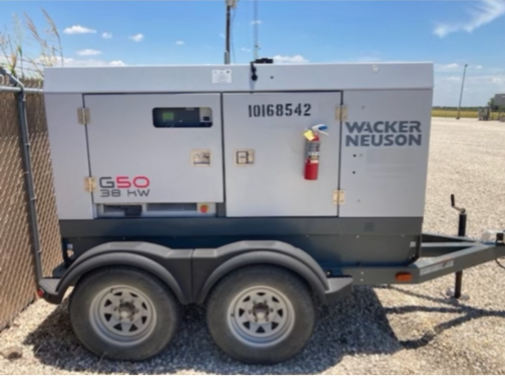
Sell Used Industrial Machinery With Complete Generator Documentation
Have a mobile generator available? Call 713-385-1333 with its model, ratings, engine, hours, test history, and location.
A generator submission should identify the equipment manufacturer, generator end, engine manufacturer and model, serial numbers, year, rated kW and kVA, selectable voltages, phase, frequency, power factor, fuel type, enclosure, controls, breaker, receptacles, and operating hours. Use the actual plates and manuals rather than specifications copied from a similar unit.
Explain the most recent test in exact terms. If the engine was started, say how long it ran and whether gauges, alarms, voltage, frequency, leaks, smoke, or unusual noises were observed. If a qualified load-bank test was completed, provide its date, load steps, duration, readings, and unresolved findings. If no test was performed, “not tested” is a useful and acceptable disclosure.
Photograph the radiator, battery, belts, hoses, fuel system, exhaust, aftertreatment, generator end, control panel, connection area, doors, louvers, and undercarriage. Report coolant loss, oil leaks, fuel contamination, damaged breakers, corrosion, missing guards, fault codes, rodent activity, and modified wiring. Trailer-mounted equipment also needs the vehicle identification number, axle and tire information, brakes, lights, coupler, safety chains, jack, title status, and known roadworthiness concerns.
When businesses sell used industrial machinery that produces electrical power, documented output matters as much as cosmetic appearance. A clean enclosure cannot establish winding condition, control reliability, engine health, or performance under load. Separating confirmed test results from assumptions gives the buyer a defensible basis for further evaluation.
Why Companies Sell Used Industrial Machinery
Machines become available after a production change, capital upgrade, fleet standardization, project completion, facility consolidation, contractor demobilization, reduced utilization, leasehold transition, or business closure. A direct purchasing inquiry gives the owner an option to compare with internal redeployment, dealer trade-in, auction, consignment, long-term storage, or disposal.
Starting the process early helps preserve the information that supports a sale. Operators may know recent performance, maintenance personnel may hold service records, accounting may control asset-release approval, and warehouse teams may know where chargers, keys, manuals, and attachments are stored. Once equipment is moved into a holding yard or mixed with other assets, those connections are harder to reconstruct.
A machine-level inventory also helps internal decision-making. Give each asset a unique reference number and connect that number to its photographs, records, accessories, location, and release status. Do not rely on a single line such as “ten shop machines” when models, condition, value, and loading needs differ. Organized records reduce confusion about what is included in a proposed transaction.
Companies can sell used industrial machinery as one qualified asset or as a coordinated group. A group submission should still disclose details for every unit. Individual records allow purchasing and logistics teams to determine whether equipment should remain together, be separated by location, or be excluded because ownership or condition has not been verified.
Information Needed to Sell Used Industrial Machinery
Manufacturer, Model, Serial Number, and Year
Photograph data plates straight on in adequate light and record every character. Include engine serial numbers, product identification numbers, attachment plates, and trailer identification where applicable. Disclose missing, damaged, painted-over, altered, or unreadable plates. Never borrow identification from another machine of the same apparent type.
Hours, Mileage, and Previous Application
Supply a close photograph of the hour meter or odometer. Explain known meter replacement, rollover, reset, discrepancy, or uncertainty. Describe whether the machine worked in manufacturing, rental, construction, demolition, warehousing, waste handling, agriculture, processing, or another demanding environment because former use can add meaningful context.
Capacity, Dimensions, and Configuration
Record operating weight, transport dimensions, lift capacity, reach, horsepower, pressure, flow, electrical output, or other relevant ratings from reliable labels and manuals. Identify options that materially change the configuration. Accurate dimensions and weight help determine both market fit and the equipment needed for removal.
Power Source, Engine, Battery, and Emissions
Identify fuel, engine manufacturer and model, emissions label or tier, aftertreatment components, starting batteries, traction-battery voltage and capacity, and charger details. Report deleted, bypassed, damaged, or nonfunctioning emissions equipment. For electric machines, include battery age, observed runtime, cable condition, connector type, and charger input requirements.
Current Operating and Physical Condition
Describe starting, running, driving, steering, braking, lifting, hydraulic, electrical, output, and control functions that were actually observed. Disclose active alarms, stored codes, abnormal smoke or noise, leaks, overheating, damaged structures, worn tires or tracks, broken glass, missing guards, cut wiring, and incomplete systems.
Service History and Inspection Records
Useful maintenance documents identify the machine, service date, meter reading, work performed, parts installed, technician or provider, and unresolved recommendations. Include recent inspection reports, oil analysis, repair invoices, battery records, and test sheets when available. Routine service alone does not certify the machine’s current mechanical or safety condition.
Ownership and Authority to Release
Confirm legal ownership, title or registration status, liens, and the person authorized to approve a sale. Keep rented, leased, financed, consigned, customer-owned, disputed, reserved, and active assets out of the available list until written authority is established. Note any title, lien-release, or transfer documents that remain outstanding.
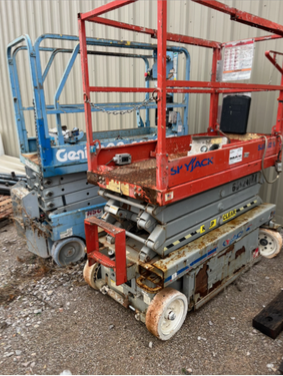
Sell Used Industrial Machinery From Access Equipment Fleets
Releasing scissor lifts from a fleet or completed project? Call or text 713-385-1333 with platform details, power type, hours, records, and pickup access.
Scissor lifts should be identified by manufacturer, model, serial number, year, platform height, working height, platform capacity, deck dimensions, extension-deck configuration, power source, drive type, tire type, hours, stowed dimensions, and operating weight. Include the charger model and battery voltage, age, and observed runtime for electric units.
Photographs should show the chassis, platform, rails, gate, extension deck, lift stack, pins, cylinders, hoses, pothole-protection system, wheels, controls, emergency-lowering equipment, battery compartment, charger, and decals. Clearly show bent rails, damaged controls, leakage, corrosion, worn tires, missing labels, cracked covers, previous welding, and any evidence of structural damage.
Provide annual-inspection reports, service logs, repair invoices, battery records, and manufacturer campaign information when available. State whether inspections are current, expired, missing, or unknown. An inspection record describes the equipment at a particular time; it does not replace disclosure of faults that appeared later.
Do not elevate a questionable platform or bypass a safety device to produce sale photographs. Only trained and authorized personnel should operate or test access equipment. If the lift is disabled, explain whether it can be steered, winched, forklifted, or otherwise prepared for loading, and give its weight, stowed dimensions, doorway clearance, surface condition, and route to the pickup point.
How Used Industrial Machinery Is Evaluated
Commercial review considers manufacturer, model, age, hours, specifications, configuration, completeness, attachments, operating condition, physical condition, records, market demand, site location, removal constraints, and transportation costs. No universal price per hour, horsepower, machine, or pound can accurately represent this mix of factors.
Original cost and accounting book value do not automatically establish current market value. Specialized equipment can be expensive when new yet have a narrow resale audience. Common machines may have broader demand but also face competition from dealer inventory, auctions, rental-fleet releases, and newer models. Obsolete controls, emissions problems, missing attachments, structural damage, or costly repairs may reduce purchasing interest.
To sell used industrial machinery efficiently, disclose defects before inspection or transportation is scheduled. Useful information includes diagnostic findings, repair estimates, parts availability, last operating date, storage environment, and the circumstances under which the machine was removed from service. Do not erase fault codes, warm an engine solely to hide a cold-start problem, or clean an area in a way that conceals an active leak.
Attachments can add utility when they fit the machine and the seller can document ownership. List manufacturer, model, serial number, dimensions, capacity, interface or coupler, hydraulic requirements, and condition for each attachment. State whether a bucket, fork carriage, grapple, platform, charger, remote, trailer, or other accessory is bundled or available separately.
Inspection Is Different From Certification
A commercial inspection may verify identity, observed condition, completeness, and limited operation. It is not necessarily a mechanical certification, safety certification, formal appraisal, emissions verification, or guarantee of future performance. Final written terms should define any inspection rights, acceptance conditions, and representations.
Known Condition Is Better Than Forced Testing
Machinery can contain stored pressure, unstable loads, hot surfaces, rotating parts, high voltage, fuel, and unexpected movement. Testing should occur only when the equipment and site can support it safely and qualified personnel are available. Unknown condition should remain unknown rather than being converted into an unnecessary safety risk.
Payment and Release Terms Matter
Before equipment leaves the property, written terms should identify the exact assets, included accessories, exclusions, represented condition, purchase price, payment method, payment timing, inspection conditions, taxes, title documents, release authority, loading responsibilities, pickup window, and consequences of delay. Verify cleared payment through normal business channels before releasing control.
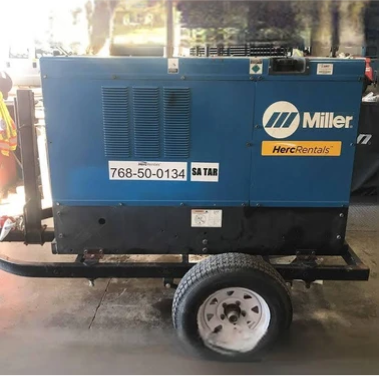
Sell Used Industrial Machinery From Welding and Fabrication Operations
Have an engine-driven welder available? Call 713-385-1333 with its identification, output, process capability, hours, accessories, and test status.
An engine-driven welding machine should be documented by manufacturer, model, serial number, year, engine model, fuel type, operating hours, rated output, duty cycle, supported welding processes, auxiliary-power rating, control options, and trailer configuration. Photograph the equipment and engine plates, controls, hour meter, output connections, receptacles, engine compartment, and overall unit.
State separately whether the engine starts, whether auxiliary power was checked, and whether welding output was tested. When qualified personnel performed a test, report the date, process, amperage range, duration, and observed result. Starting and idling the engine does not prove that the generator, output controls, or welding functions operate throughout their rated ranges.
Inventory welding leads, electrode holders, ground clamps, wire feeders, remotes, torches, regulators, carts, trailers, manuals, and spare parts. Verify ownership of cylinders because they may belong to a gas supplier. Show cable cuts, damaged connectors, broken controls, missing panels, leaks, corrosion, warning codes, rodent damage, and signs of previous electrical or mechanical repair.
Businesses that sell used industrial machinery from a fabrication operation may have several superficially similar units with different specifications and condition. Photograph and list each one individually. Serial-specific records prevent leads, feeders, trailers, and maintenance histories from being assigned to the wrong machine.
Recovery Planning When You Sell Used Industrial Machinery
Pickup planning begins before an offer is finalized. Provide the city and state, exact machine location, operating status, dimensions, weight, ground clearance, doorway and gate dimensions, aisle width, floor or yard condition, dock access, on-site lifting capacity, site hours, security procedures, insurance requirements, and required removal date.
A machine that runs and drives may still require specialized transportation because of its height, width, weight, axle load, ground clearance, or attachment. A disabled unit may need winching, blocking, a larger forklift, a crane, a rollback, or a lowboy. Never assume a standard dock or ordinary forklift can handle equipment without confirmed capacity and a qualified plan.
Preparation, disconnection, rigging, loading, permits, freight, and cleanup should be assigned in writing. If an outside contractor is required, identify site orientation, personal protective equipment, lockout procedures, utility isolation, escort rules, work hours, and documentation requirements early. Delayed access or inaccurate dimensions can materially change recovery cost and schedule.
Nationwide opportunities may be considered when the equipment and transaction support practical recovery. Distance alone does not determine feasibility. Asset value, count, weight, dimensions, operating status, loading access, permits, route constraints, schedule, and freight availability must be considered together.
The Process to Sell Used Industrial Machinery
1. Separate Authorized Assets
Confirm which machines are actually available and remove any active, rented, leased, financed, customer-owned, consigned, disputed, or reserved items. Identify the authorized seller and collect available title and lien information before marketing the equipment.
2. Create an Asset-Level List
Record manufacturer, model, serial number, year, hours, capacity, configuration, power source, attachments, condition, location, availability, and an internal reference number for each machine. Keep similar units separate rather than combining them into an ambiguous quantity.
3. Photograph Identification and Condition
Capture all sides, plates, meter, controls, engine or battery compartment, working components, tires or tracks, attachments, and damage. Use current photographs with enough detail to connect every image to the correct asset.
4. Assemble Records and Disclosures
Gather inspection reports, service history, repair invoices, test sheets, manuals, title documents, keys, and charger details. Explain former use, last operating date, storage, repairs, active faults, missing parts, damage, meter discrepancies, and information that remains unknown.
5. Describe the Removal Site
Provide location, dimensions, weight, running status, access route, loading surface, available equipment, contractor rules, site hours, deadlines, and any permit or insurance requirements. Mention stairs, pits, narrow aisles, weak pavement, low doors, overhead obstructions, or other constraints.
6. Request a Direct Review
Send the organized inventory and current photographs through the Texas Global Resources contact page. Complete information helps determine whether the opportunity fits current purchasing and recovery requirements.
7. Confirm the Transaction in Writing
If purchasing interest exists, confirm equipment, serial numbers, attachments, exclusions, condition, inspection, price, payment, title transfer, preparation, loading, freight, insurance, pickup date, and site restoration before machinery is released.
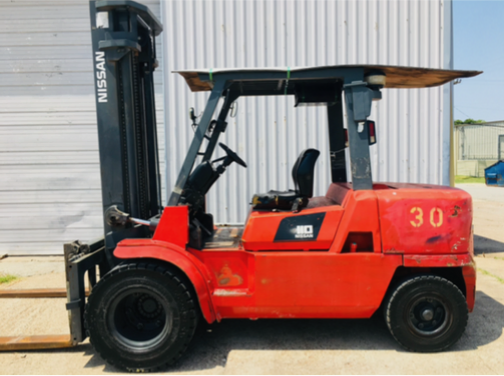
Sell Used Industrial Machinery Including Forklifts and Material-Handling Equipment
Releasing a forklift or warehouse machine? Call or text 713-385-1333 with capacity, mast, power source, hours, condition, and loading access.
A forklift record should begin with its original identification and capacity plates. Include manufacturer, model, serial number, year, rated capacity, load center, mast model, maximum lift height, lowered mast height, carriage width, fork length, side shift, attachments, fuel or battery system, tire type, hours, and operating weight. Mast and attachment combinations can change rated capacity, so do not infer specifications from a similar truck.
For internal-combustion units, identify the engine, fuel configuration, emissions information, and known starting, driving, steering, braking, and lifting behavior. For electric units, provide battery voltage, amp-hour capacity, battery age, charger manufacturer and model, charger input, connector type, cable condition, and observed runtime. State whether the battery and charger are included.
Show the mast channels, chains, rollers, cylinders, hoses, forks, heel wear, carriage, overhead guard, counterweight, steer axle, tires, controls, seat restraint, lights, engine or battery compartment, and capacity plate. Report bent forks, mast leakage, damaged chains, tire separation, cracked welds, missing guards, broken glass, warning lights, and evidence of structural repairs.
Material-handling equipment must also be assessed as a removal tool or a removal challenge. State whether the forklift starts, drives, steers, brakes, and lifts, and provide its weight, lowered height, doorway clearance, aisle width, dock or ramp access, and ground condition. If it cannot move under its own power, explain what loading equipment is available.
Questions About How to Sell Used Industrial Machinery
Can I Submit One Machine?
Yes. A single asset may warrant review when its identity, specifications, condition, records, location, and transportation requirements match current purchasing needs. Submit the data plate, hours, full photographs, ownership status, known history, and pickup conditions.
Can I Submit Non-Running Equipment?
Some non-running equipment may be considered. Explain when it last operated, the known failure, diagnosis, attempted repairs, missing components, storage conditions, and whether it can roll, steer, brake, or be loaded. Do not attempt unsafe operation solely to improve a submission.
Should I Repair the Machine Before Requesting a Review?
Do not authorize a major repair solely for an initial inquiry. Submit the present condition, diagnosis, repair estimate, parts availability, and supporting records. Repair expense may exceed the resulting change in commercial value, and unverified work can create additional uncertainty.
Do High Hours Prevent a Sale?
Hours are only one factor. Model demand, former application, maintenance, physical condition, attachments, repair needs, and transport costs also matter. Disclose meter replacement, rollover, resets, inconsistent readings, or uncertainty instead of presenting an unsupported total.
Is an Inspection Required?
Inspection requirements depend on the asset, value, location, records, and represented condition. Current photographs and accurate specifications support preliminary review. Final terms may provide for an in-person, operational, or independent inspection without representing that the machine is certified.
Can Attachments Be Included?
Yes, when ownership is verified and the attachment is identified. List manufacturer, model, serial number, dimensions, capacity, coupler or interface, hydraulic requirements, condition, and the machine it fits. Clarify whether it is bundled or offered independently.
Can Pickup and Transportation Be Arranged?
Recovery depends on equipment value, location, dimensions, weight, operating status, access, loading resources, permits, timing, and freight. The written agreement should state who prepares, rigs, loads, permits, transports, and cleans the site.
What Helps Produce a Faster Review?
A machine-level spreadsheet, readable data plates, current photographs, accurate condition notes, maintenance history, proof of ownership, release date, and complete site details give the reviewer the strongest starting point. Missing serial numbers or vague descriptions often require additional questions.
Contact Texas Global Resources to Sell Used Industrial Machinery
Machinery is easiest to evaluate while knowledgeable employees, data plates, service records, titles, keys, chargers, attachments, and test information remain connected to the correct asset. Document each unit before it is dismantled, relocated, mixed with other inventory, or exposed to prolonged outdoor storage.
Texas Global Resources reviews qualified opportunities using the manufacturer, model, serial number, year, hours, specifications, configuration, attachments, operating condition, physical condition, records, ownership, market demand, location, schedule, access, and transportation requirements. The company provides commercial purchasing review, not mechanical certification, formal appraisal, repairs, operator training, rigging engineering, or safety certification.
To sell used industrial machinery, send the manufacturer, model, serial number, year, hours, power source, capacity, dimensions, weight, operating status, known deficiencies, attachments, photographs, records, city and state, loading access, and desired release timeline. Organized facts create a clearer path from the initial inquiry to written terms and coordinated recovery.
Call or text 713-385-1333 to sell used industrial machinery, or submit your qualified equipment inventory online.