
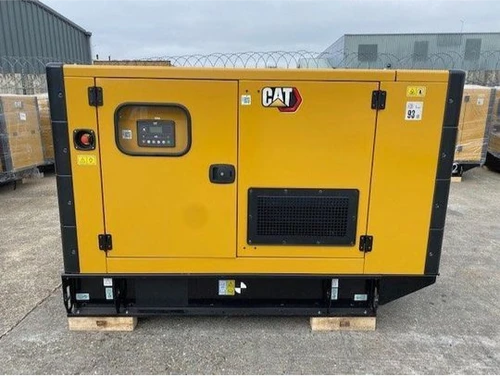
Manufacturing Equipment Buyers for Plant and Facility Assets
Have qualified plant equipment ready for sale? Call or text 713-385-1333 to request a direct inventory review.
Manufacturing equipment buyers give facility owners a direct way to present machines and production-support assets that are no longer required. Texas Global Resources reviews qualified opportunities from manufacturers, processors, fabricators, warehouses, contractors, and companies managing production changes, capital upgrades, consolidations, relocations, or closures. A useful submission identifies the equipment, documents its present condition, confirms ownership, and explains when and how it can be removed.
Every machine should be treated as an individual asset. Manufacturer, model, serial number, year, hours, output, capacity, configuration, tooling, controls, maintenance history, operating condition, market demand, location, and recovery cost can influence purchasing interest. A complete record helps distinguish a maintained production asset from an unidentified unit whose capabilities and history remain uncertain.
Start with clear photographs of the entire machine and its original data plates. Include controls, hour meters, electrical cabinets, engines or batteries, tooling interfaces, guards, feed and discharge points, hydraulic systems, accessories, and visible defects. State whether the equipment is operating in production, available for a controlled demonstration, operational when disconnected, stored after removal, incomplete, damaged, or untested. Accurate disclosure creates a stronger commercial review than unsupported descriptions such as “excellent” or “ready to run.”
What Manufacturing Equipment Buyers May Review
Potential opportunities may include generators, welding power sources, forklifts, material-handling equipment, compressors, pumps, production machines, packaging equipment, fabrication machinery, access equipment, compact loaders, and selected process-support assets. Current purchasing requirements vary by specifications, condition, completeness, demand, location, and removal complexity. A high original cost or recognized brand does not by itself guarantee an offer.
Production machinery should be documented with its actual working configuration. Identify feeders, conveyors, tooling, dies, molds, tables, fixtures, chillers, dust collectors, transformers, control panels, operator stations, guarding, and software or licenses that are included. If an accessory belongs to another line, is leased, or will remain at the facility, mark it as excluded before the equipment is evaluated.
Qualified manufacturing equipment buyers need condition information that can be verified. Useful descriptions include operating daily, operated during a scheduled demonstration, removed from service in working condition, starts with a known fault, powers on but was not cycled, disconnected before testing, non-running, incomplete, or condition unknown. The description should identify what was observed, who performed the check, and when it occurred.
Production and Fabrication Machinery
For production assets, provide the machine type, rated capacity, working envelope, material range, cycle rate, spindle or ram specifications, power requirements, controls, tooling, and former application. Include available manuals, drawings, programs, service records, and photographs of the work area, identification plates, control screens, drives, motors, hydraulic units, and guarding.
Material-Handling and Warehouse Equipment
Forklifts, lift tables, pallet-handling machines, and related assets need rated capacity, configuration, lift height, power source, hours, dimensions, weight, attachments, battery or engine information, and access conditions. Capacity plates and attachment records are important because modifications may change the machine’s rated configuration.
Plant Utilities and Production Support
Generators, compressors, pumps, welders, and other utility equipment require output ratings, voltage or pressure data, engine or motor identification, hours, controls, test status, and maintenance records. Explain whether each unit served primary production, emergency standby, temporary projects, or intermittent maintenance work.
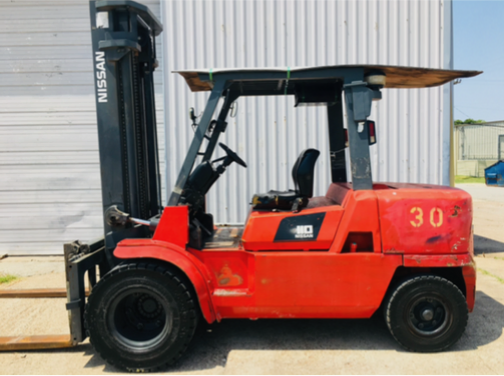
Manufacturing Equipment Buyers for Forklifts and Material Handling
Releasing a forklift or warehouse machine? Call 713-385-1333 with its capacity, mast, power source, hours, condition, and loading access.
A forklift submission should begin with photographs of its original identification and capacity plates. Record manufacturer, model, serial number, year, rated capacity, load center, mast model, maximum fork height, lowered mast height, carriage width, fork length, side shift, attachments, tire type, operating weight, and recorded hours. Do not copy specifications from a similar truck because mast and attachment combinations can affect rated capacity.
For internal-combustion equipment, identify the engine, fuel configuration, emissions label, and known starting, driving, steering, braking, and lifting behavior. For an electric forklift, provide battery voltage, amp-hour capacity, battery age, charger manufacturer and model, charger input, connector type, cable condition, and observed runtime. State clearly whether the battery and charger are included in the proposed sale.
Photograph mast channels, chains, rollers, cylinders, hoses, forks, heel wear, carriage, overhead guard, counterweight, steer axle, tires, controls, seat restraint, lights, engine or battery compartment, and any damage. Report hydraulic leakage, bent forks, worn chains, tire separation, cracked welds, missing guards, broken glass, warning indicators, and known structural repair.
When manufacturing equipment buyers evaluate a forklift, recovery details matter along with condition. Confirm whether the truck starts, drives, steers, brakes, and lifts. Provide its weight and lowered height, plus aisle width, doorway and gate clearance, dock or ramp access, pavement condition, loading hours, and the capacity of any equipment available on site.
Why Facilities Contact Manufacturing Equipment Buyers
Equipment becomes available for many legitimate business reasons. A plant may install a new production line, standardize around fewer manufacturers, outsource a process, reduce capacity, relocate work, complete a contract, retire a product, consolidate facilities, clear warehouse space, or close an operation. A direct purchasing review allows decision-makers to compare a potential sale with redeployment, trade-in, auction, consignment, long-term storage, dismantling, or disposal.
Early documentation preserves knowledge that can otherwise disappear during a transition. Operators may understand recent performance, maintenance personnel may hold service history, engineering may retain specifications and drawings, accounting may control fixed-asset release, and warehouse teams may know where tooling, keys, chargers, and accessories are stored. Capturing that information before layoffs, relocation, or disassembly reduces uncertainty.
A disciplined inventory also prevents ownership and scope problems. Assign a unique reference number to each machine and connect that number to photographs, records, accessories, location, and release status. Separate company-owned equipment from leased, financed, rented, customer-owned, consigned, disputed, reserved, and active assets. Confirm who has authority to approve a transaction.
Facilities may present one qualified machine or a coordinated group. Even when many assets are available, manufacturing equipment buyers still require machine-level information. Models, specifications, condition, tooling, demand, and removal requirements may differ enough that some assets qualify while others do not.
Information Manufacturing Equipment Buyers Need
Manufacturer, Model, Serial Number, and Age
Photograph original plates straight on in adequate light and record every character. Include machine identification, control or component model numbers, engine serials, and attachment plates where relevant. If a plate is missing, damaged, painted over, altered, or unreadable, disclose that rather than assigning data from another unit.
Capacity, Output, and Production Configuration
Provide rated capacity, working dimensions, speed, cycle rate, pressure, flow, horsepower, voltage, phase, frequency, amperage, and other relevant specifications from reliable records. Describe the actual configuration in which the machine was used, including tooling, feed systems, tables, auxiliary units, controls, and safety enclosures.
Hours, Cycles, and Former Application
Supply close photographs of hour meters, cycle counters, or control-screen totals. Explain replacements, resets, rollovers, inconsistencies, or uncertainty. Describe the material processed, shift schedule, duty cycle, environment, and last production assignment without revealing confidential customer information.
Controls, Software, and Electrical Requirements
Identify the control manufacturer and platform, operator interface, drive systems, installed programs, password or license limitations, incoming voltage, phase, full-load current, transformer requirements, and any known obsolete components. State whether programs, backups, dongles, manuals, and transferable licenses are included.
Current Operating and Physical Condition
Describe functions that were actually observed: power-up, start, idle, manual movement, automatic cycle, production under load, output, alarms, and shutdown. Disclose leaks, unusual noise, smoke, overheating, vibration, damaged structures, missing guards, bypassed devices, wiring changes, worn tooling, cracked displays, and active fault codes.
Maintenance, Repair, and Inspection History
Useful records identify the machine, date, meter or cycle count, work completed, parts installed, technician or provider, test results, and unresolved recommendations. Include preventive-maintenance logs, repair invoices, inspection reports, calibration records, oil analysis, and condition reports when available. Routine service does not certify current condition.
Ownership, Title, and Release Authority
Confirm company ownership, lien status, title or registration requirements, and the authorized seller. Do not include leased, rented, financed, customer-owned, or disputed equipment without proper written approval. Identify any lender release, landlord approval, title document, or internal authorization still required.
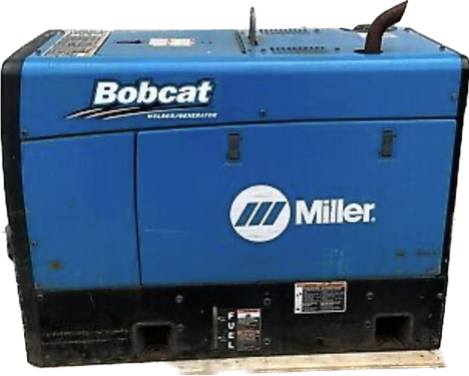
Manufacturing Equipment Buyers for Welding and Fabrication Assets
Have welding equipment available after a project or production change? Call or text 713-385-1333 with model, hours, output, accessories, test status, and location.
An engine-driven welding machine should be identified by manufacturer, model, serial number, year, engine model, fuel type, hours, rated output, duty cycle, welding processes, auxiliary-power rating, control options, and mounting configuration. Photograph equipment and engine plates, controls, hour meter, output connections, receptacles, enclosure, engine compartment, and all sides.
State separately whether the engine starts, auxiliary power was checked, and welding output was tested. If qualified personnel performed a test, provide its date, process, amperage range, duration, and observed result. Engine operation alone does not establish that the generator, output controls, or welding functions perform throughout their rated ranges.
List welding leads, electrode holders, ground clamps, wire feeders, remotes, torches, regulators, carts, trailers, manuals, and spare parts. Verify ownership of gas cylinders because they may belong to a supplier. Photograph cable damage, connectors, controls, missing panels, leaks, corrosion, warning codes, and evidence of electrical or mechanical repair.
Fabrication facilities often have several machines that look alike while carrying different output ratings, hours, options, and service histories. Manufacturing equipment buyers need a separate record for each unit so leads, feeders, controls, trailers, and maintenance documents are not assigned to the wrong serial number.
How Manufacturing Equipment Buyers Evaluate Assets
Commercial evaluation considers manufacturer, model, age, specifications, capacity, controls, configuration, completeness, tooling, hours or cycles, condition, records, market demand, location, and recovery expense. No universal price per machine, pound, horsepower, or original purchase dollar can accurately represent all of these factors.
Accounting book value is useful internally but does not establish a current offer. Specialized machinery may have a high replacement cost and a narrow secondary market. Common equipment may attract broader interest while facing competition from dealers, auctions, rental fleets, and newer models. Obsolete controls, missing tooling, damaged guarding, incomplete electrical systems, or expensive repairs can reduce commercial potential.
Accurate disclosures make the process more efficient. Report diagnostic findings, repair estimates, parts availability, last operating date, storage conditions, faults, modifications, and the circumstances under which the machine left service. Do not erase alarms, warm equipment to conceal cold-start behavior, reinstall borrowed components for photographs, or clean an area specifically to hide leakage.
Completeness affects both usefulness and recovery. A machine may depend on a transformer, hydraulic power unit, coolant system, dust collector, conveyor, feeder, control cabinet, table, tooling package, or software license. Identify every required component, photograph its connections, and state whether it is included, shared with other equipment, or unavailable.
Market Fit and Technical Compatibility
Potential value depends partly on whether another operation can use the machine’s size, capacity, controls, power, process, and output. A documented standard configuration may be easier to place than a heavily customized system. Custom equipment can still warrant review when drawings, specifications, controls, and a clear application are available.
Inspection and Testing
An inspection may confirm identity, observed condition, completeness, and limited operation. It is not automatically a mechanical certification, safety certification, formal appraisal, calibration, emissions verification, or guarantee of future performance. Final terms should define inspection rights, test conditions, acceptance, and any representations.
Written Transaction Terms
Before release, the agreement should identify exact assets and serial numbers, included tooling, exclusions, represented condition, price, payment method, payment timing, taxes, inspection, title documents, dismantling, rigging, loading, freight, insurance, deadlines, and cleanup. Verify cleared payment through normal business channels before surrendering equipment.
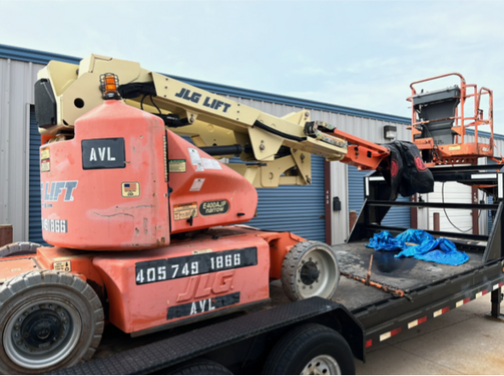
Manufacturing Equipment Buyers for Access and Maintenance Equipment
Releasing a boom lift from plant maintenance service? Call 713-385-1333 with platform specifications, hours, inspection records, condition, and pickup details.
A boom-lift inventory should include manufacturer, model, serial number, year, platform height, working height, horizontal outreach, platform capacity, power source, drive configuration, tire type, hours, stowed dimensions, and operating weight. Identify whether the machine is articulating, telescopic, towable, self-propelled, electric, diesel, dual-fuel, or hybrid according to its plates and manuals.
Photograph the chassis, turntable, boom sections, platform, gate, rails, controls, emergency-lowering components, tires, axles, counterweight, engine or battery compartment, cylinders, hoses, and decals. Clearly show bent rails, control damage, hydraulic leakage, worn pins, cracked covers, missing labels, corrosion, and evidence of structural repair.
Provide available annual-inspection reports, service logs, battery records, repair invoices, and structural documentation. State whether inspections are current, expired, missing, or unknown. A recent report supports the history but does not replace disclosure of problems that developed after the inspection date.
Do not raise a questionable platform or bypass a safety system for sale photographs. Only trained and authorized personnel should operate or test the machine. If it is disabled, explain whether it can be steered, winched, lowered, or prepared for loading, and provide the stowed dimensions, weight, doorway clearance, surface condition, and route to the pickup point.
Removal Planning With Manufacturing Equipment Buyers
Equipment value cannot be separated from the practical cost and risk of recovery. Provide the city and state, building location, operating status, machine dimensions, component weights, floor level, aisle and doorway clearances, dock access, ground condition, overhead obstructions, utility connections, loading resources, site hours, security procedures, insurance requirements, and removal deadline.
Machines connected to production lines may require electrical isolation, air and fluid disconnection, disassembly, match marking, blocking, crating, skidding, lifting, or specialized transport. State what the facility will complete and what must be performed by outside contractors. Qualified personnel should establish lockout, utility isolation, lifting points, rigging capacity, and a safe work plan.
Rigging responsibility should be defined before a transaction is finalized. The written scope should assign preparation, disconnection, dismantling, rigging, loading, permits, freight, insurance, cleanup, and disposal of excluded materials. Early site details help prevent a seemingly simple pickup from becoming delayed by restricted access or unavailable equipment.
Qualified opportunities across the United States may be considered when the assets and transaction support practical recovery. Distance alone does not determine feasibility. Equipment value, quantity, dimensions, weight, disassembly, loading access, permits, route limits, schedule, and freight availability must be evaluated together.
The Process for Working With Manufacturing Equipment Buyers
1. Identify Approved Equipment
Confirm which assets are available and separate active, leased, rented, financed, customer-owned, consigned, disputed, or reserved machinery. Identify the authorized decision-maker and collect ownership, title, and lien information.
2. Build a Machine-Level Inventory
Record manufacturer, model, serial number, year, hours or cycles, capacity, configuration, controls, power requirements, tooling, condition, location, availability, and an internal reference number. Keep similar units separate.
3. Capture Current Photographs
Photograph all sides, plates, controls, meters, working areas, motors or engines, electrical cabinets, hydraulic units, tooling, accessories, guards, and damage. Make every image traceable to the correct asset.
4. Gather Records and Disclose Defects
Assemble manuals, drawings, programs, service history, repair invoices, test reports, calibration records, inspection documents, and title information. Explain former use, last operating date, storage, missing parts, faults, modifications, and unknowns.
5. Document Access and Deadlines
Provide dimensions, weights, location, utility status, access route, floor loading, rigging resources, dock or yard conditions, contractor rules, available work hours, permits, insurance requirements, and the required completion date.
6. Submit the Opportunity
Send the organized inventory and photographs through the Texas Global Resources contact page. A complete submission helps determine whether the equipment fits current purchasing requirements.
7. Confirm Sale and Recovery Terms
If interest exists, document the equipment, serial numbers, tooling, exclusions, condition, inspection, price, payment, title transfer, dismantling, rigging, loading, transportation, insurance, schedule, and cleanup before work begins.
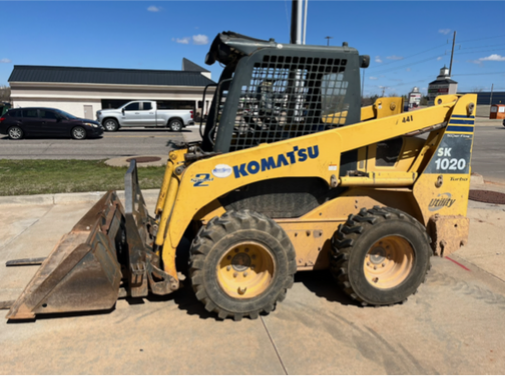
Manufacturing Equipment Buyers for Compact Facility Support Machines
Have a skid steer or compact loader ready for release? Call or text 713-385-1333 with identification, hours, attachments, condition, and loading access.
A compact loader should be documented with manufacturer, model, serial number, year, engine model, horsepower, operating capacity, tipping load when reliably documented, hydraulic-flow configuration, coupler type, auxiliary connections, operating weight, dimensions, hours, and included attachments. Use the actual equipment plates and manuals rather than specifications from a visually similar model.
Photograph the cab, controls, restraint system, lift arms, pins, bushings, cylinders, hoses, coupler, auxiliary connections, engine compartment, cooling package, tires or tracks, undercarriage, counterweight, and attachment. Report leakage, smoke, overheating, abnormal noise, warning codes, worn pins, damaged tires or tracks, cracked welds, bent structures, missing guards, and altered safety devices.
List buckets, forks, grapples, augers, sweepers, breakers, couplers, and other attachments individually. Include manufacturer, model, serial number, width, capacity, interface, hydraulic requirements, condition, and ownership. State which attachment is mounted, which items are included, and which will remain at the site.
For recovery, confirm whether the machine starts, drives, steers, brakes, raises, lowers, and releases its attachment. Provide its dimensions and weight, surface and ramp condition, doorway and gate clearance, trailer access, loading equipment, site hours, and any fluid-leak restrictions. A non-running machine may require winching, blocking, a larger loader, or specialized transport.
Questions for Manufacturing Equipment Buyers
Can a Facility Submit One Machine?
Yes. One asset may qualify when its identity, specifications, condition, documentation, location, and recovery requirements match current purchasing needs. Submit readable plates, current photographs, records, ownership status, availability, and access information.
Can Non-Running Equipment Be Reviewed?
Some non-running or disconnected machines may warrant review. Explain the last operating date, known failure, diagnosis, attempted repairs, missing components, storage conditions, and how the equipment can be removed safely. Do not attempt unsafe operation for an inquiry.
Should Repairs Be Completed Before Submission?
Do not authorize major work solely to request a preliminary review. Submit current condition, diagnostic reports, repair estimates, and parts information. Repair cost may exceed any resulting change in commercial value.
Can Tooling and Auxiliary Systems Be Included?
Yes, when ownership is confirmed and every item is identified. List tooling, dies, molds, feeders, conveyors, tables, power units, chillers, transformers, dust collection, manuals, programs, and spares separately. State whether each item is bundled or available independently.
Is an Operational Demonstration Required?
Demonstration needs depend on the machine, records, condition, location, and transaction. If production operation can be shown safely by authorized personnel, document the date and material used. If the asset is disconnected or unsafe to run, report that condition accurately.
Can Pickup Be Coordinated?
Recovery depends on equipment value, location, dimensions, weights, disassembly, access, rigging, permits, timing, and freight. Responsibilities must be defined in the written agreement before contractors arrive or machinery is released.
What Creates a Faster Review?
A machine-level spreadsheet, readable data plates, current photographs, accurate condition notes, production specifications, maintenance history, proof of ownership, release date, and complete site details give reviewers the strongest starting point.
Contact Texas Global Resources About Manufacturing Equipment Buyers
Manufacturing assets are easiest to evaluate while knowledgeable personnel, data plates, service records, drawings, programs, tooling, keys, chargers, and test information remain connected to the correct machine. Document the equipment before it is disconnected, dismantled, moved into storage, mixed with other assets, or exposed to outdoor conditions.
Texas Global Resources reviews qualified opportunities according to manufacturer, model, serial number, age, hours or cycles, specifications, controls, configuration, tooling, condition, maintenance history, ownership, demand, location, schedule, access, and recovery requirements. The company provides commercial purchasing review rather than mechanical certification, formal appraisal, repairs, operator training, rigging engineering, or safety certification.
To contact manufacturing equipment buyers, provide the manufacturer, model, serial number, year, hours or cycles, capacity, power, dimensions, weight, operating status, known deficiencies, included tooling, photographs, records, city and state, loading conditions, and desired timeline. Complete information supports a clear decision and a practical path to written terms.
Call or text 713-385-1333 to speak with manufacturing equipment buyers, or submit qualified manufacturing equipment online.