
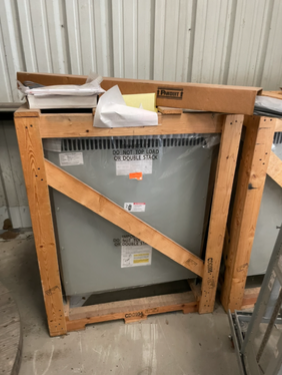
Where Can I Sell Used Transformers From a Commercial or Industrial Project?
Have an identified transformer available for review? Call or text Texas Global Resources at 713-385-1333.
If your company is asking where can I sell used transformers, begin with a commercial buyer that evaluates the actual nameplate, construction, condition, documentation, ownership, and removal requirements. Texas Global Resources reviews qualified transformer opportunities from electrical contractors, distributors, manufacturers, facilities, property operators, project managers, and organizations completing upgrades, shutdowns, consolidations, canceled projects, or asset-recovery work.
A transformer cannot be evaluated accurately from kVA alone. The review may depend on manufacturer, serial number, kVA, primary and secondary voltage, phase, frequency, impedance, winding material when documented, insulation system, temperature rise, cooling class, enclosure, taps, accessories, age, service history, testing, and location. Clear photographs of the actual unit and every nameplate are more useful than a stock image or a brief description such as “large transformer.”
Start the process before drawings, test reports, temperature monitors, fans, tap hardware, keys, spare parts, and shipping components become separated. Early documentation gives the seller time to confirm authorized ownership, define exactly what is included, disclose known issues, compare recovery options, and plan safe disconnection or loading without rushing against a demolition deadline.
Where Can I Sell Used Transformers by Type and Application?
Potential opportunities may include selected dry-type transformers, liquid-filled transformers, pad-mounted units, substation transformers, distribution transformers, drive isolation transformers, and other commercial or industrial configurations. Purchasing interest is equipment-specific and changes with ratings, configuration, condition, documentation, location, logistics, and market demand. A known manufacturer or recent production date does not guarantee an offer.
Businesses researching where can I sell used transformers should use the manufacturer’s exact description rather than substituting a broader or more attractive category. A dry-type distribution unit, cast-coil transformer, liquid-filled pad-mounted transformer, and unit substation transformer have different construction and evaluation needs. If the classification is uncertain, submit nameplates and photographs without guessing.
Dry-Type Transformers
For a dry-type unit, provide kVA, primary and secondary voltage, phase, frequency, impedance, tap arrangement, winding material when confirmed, insulation class, temperature rise, enclosure type, cooling method, weight, dimensions, and sound or efficiency information when documented. Identify whether the unit is open, ventilated, encapsulated, cast coil, or enclosed according to the label and manufacturer records.
Liquid-Filled Transformers
For liquid-filled equipment, provide the fluid type, gallons, kVA, voltages, phase, frequency, impedance, cooling class, temperature rise, winding material when documented, taps, pressure or vacuum data, total weight, fluid weight, and accessory list. Disclose leaks, staining, gasket work, pressure concerns, sampling history, repairs, and environmental records.
Pad-Mounted and Substation Units
Identify compartment arrangement, primary switching, fusing, bushings, secondary connections, gauges, valves, arresters, cabinet condition, locking provisions, radiators, fans, conservator equipment when present, and included accessories. State whether associated switchgear, cable, bus, or protective equipment is included or is a separate asset.
Information Needed When Asking Where Can I Sell Used Transformers
Complete Nameplate Identification
Copy the manufacturer, serial number, catalog or style number, manufacturing date, kVA, voltage ratings, phase, frequency, impedance, cooling class, temperature rise, insulation class, enclosure, and weight exactly as printed. Photograph the entire plate straight on in clear light, then take closer images of difficult fields. Report missing, painted-over, damaged, altered, or unreadable labels.
Primary and Secondary Voltage
Provide the full high-voltage and low-voltage ratings, connection diagrams, tap ranges, tap position, and any dual-voltage or reconnectable configuration shown. Do not infer voltage from conduit size, cable color, the former building service, or another transformer nearby. Similar cabinets can contain units with materially different electrical characteristics.
Winding Material and Construction
Identify copper or aluminum windings only when the nameplate, original submittal, purchase record, or reliable manufacturer documentation confirms the material. Exterior appearance does not prove winding material. Do not open, drill, cut, scrape, or damage a transformer to investigate construction for a sales inquiry.
Condition and Service History
State whether the transformer is new unused, installed but never energized, used and operating when removed, used and untested, repaired with records, stored after removal, damaged, or parts-only. Include the former application, last operating date, removal reason, loading history when known, maintenance, repairs, abnormal noise, overheating, fault exposure, and storage environment.
Testing and Maintenance Records
Provide reports for insulation resistance, turns ratio, winding resistance, power factor, excitation current, fluid quality, dissolved gas analysis, moisture, dielectric strength, thermography, or other qualified work when available. Each report should identify the transformer serial number, date, provider, procedure, readings, conclusion, repairs, and unresolved findings.
Quantity, Location, and Access
List each transformer separately, even when ratings appear identical. Include city and state, dimensions, estimated or documented weight, floor level, travel path, doorway clearance, dock or crane access, loading resources, site hours, insurance rules, required safety orientation, removal window, and deadline.
How to Photograph a Transformer for a Purchasing Review
Companies deciding where can I sell used transformers should provide a full visual record rather than one front view. Begin with all four sides and the top when it can be photographed safely. Add close views of the main nameplate, connection diagram, terminals or bushings, tap compartment, enclosure, radiators, gauges, fans, valves, grounding points, lifting provisions, base, wheels, pallets, and included accessories.
Photograph defects directly. Useful evidence includes corrosion, dents, broken louvers, damaged bushings, cracked insulators, fluid staining, leaking gaskets, burned terminals, overheated insulation, missing covers, cut leads, contamination, impact damage, field repairs, and altered labels. Do not hide defects with paint, cleaning, strategic camera angles, or incomplete descriptions.
Show scale without obstructing the equipment. A tape measure beside the enclosure can support dimensions, while a readable shipping drawing or manufacturer outline may support weight and lifting information. Never rely on an informal visual weight estimate for rigging. The removal team must use verified data and an appropriate lift plan.
If the transformer remains energized, limit the sales documentation to information that qualified personnel can obtain without crossing electrical boundaries or opening energized compartments. A purchasing inquiry never justifies unsafe access. De-energization, verification, lockout/tagout, grounding when applicable, and disconnection must remain under qualified control.
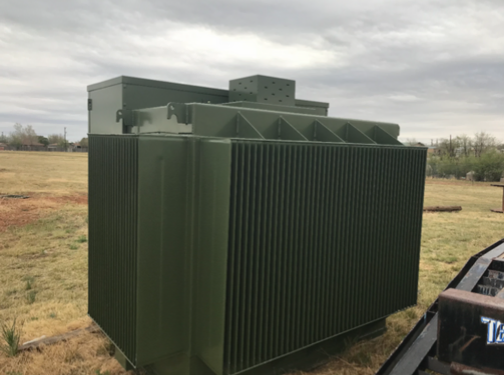
Where Can I Sell Used Transformers That Are Liquid-Filled?
Have a liquid-filled transformer with readable ratings and service records? Call 713-385-1333 for a direct review.
Liquid-filled equipment requires accurate technical and environmental information. Record the insulating fluid exactly as documented rather than calling every unit “oil-filled.” Identify the fluid type, approximate quantity, sampling history, leak history, repairs, labels, and any available documentation concerning regulated substances. Do not make environmental assurances without supporting records.
When asking where can I sell used transformers in this category, photograph the tank, radiators, cooling equipment, bushings, terminal compartments, gauges, valves, pressure devices, tap changer, conservator equipment when present, grounding points, base, and every area showing staining or corrosion. State whether accessories shown in older drawings remain installed.
Provide the latest credible operating history. Note the loading, shutdown date, reason for replacement, alarms, pressure events, unusual temperature, abnormal sound, protection operation, fault exposure, sampling findings, and repairs. If the unit was de-energized for reasons unrelated to performance, explain that fact without claiming certification.
Fluid-filled transformer movement may require careful planning for weight, center of gravity, fluid containment, road limitations, equipment dimensions, crane position, weather, site access, and environmental procedures. Clearly state whether the transformer is installed, disconnected, drained, partially drained, stored, or already loaded. Never drain or move it solely to make an inquiry easier.
Why Sellers Choose a Direct Transformer Review
Transformers become available after voltage conversions, capacity upgrades, renewable-energy projects, building renovations, plant closures, equipment standardization, spare-inventory reductions, canceled construction, utility changes, and replacement following a diagnostic finding. A direct purchasing review gives the owner another option to compare with redeployment, supplier return, trade-in, auction, long-term storage, recycling, or disposal.
The strongest answer to where can I sell used transformers begins with organized facts. A buyer should be able to connect the inventory number, serial number, photographs, test records, dimensions, condition notes, location, and ownership documents to the same physical unit. Mixed files and representative images introduce uncertainty and slow evaluation.
A professional review should acknowledge that not every transformer fits current purchasing requirements. Manufacturer, ratings, configuration, winding material, condition, documentation, quantity, market demand, location, freight, rigging, and schedule all influence feasibility. Original price, replacement cost, or book value does not automatically establish current recovery value.
Commercial Review Is Not Certification
A purchasing review may consider identification, visible condition, records, logistics, and market fit. It is not a formal appraisal, engineering approval, code determination, environmental clearance, safety certification, warranty, or recommendation that the transformer be installed or energized. Future-use decisions belong to qualified professionals working from verified data and applicable requirements.
Condition Claims Must Be Supportable
“Working when removed” should be used only when someone with direct knowledge can support the statement. It does not mean the transformer has passed current testing. “Rebuilt,” “reconditioned,” or “remanufactured” should be accompanied by the provider, date, scope, replaced components, test results, and written warranty if one exists.
Ownership Must Be Clear
Exclude active, leased, financed, consigned, customer-owned, insurer-controlled, disputed, recalled, or reserved assets until authorization and disclosure are resolved. For a closure or property transfer, determine whether the transformer is owned equipment, utility property, landlord property, or attached to another agreement.
Steps After Asking Where Can I Sell Used Transformers
1. Confirm the Authorized Assets
Create an approved equipment list and confirm the legal owner and authorized representative. Separate units that must remain in service, support temporary power, belong to another party, or are subject to a claim or financing agreement.
2. Record Every Nameplate
Photograph and transcribe the manufacturer, serial number, kVA, voltages, phase, frequency, impedance, cooling class, temperature rise, enclosure, weight, taps, winding material when documented, and fluid type when applicable. Avoid filling gaps with assumptions.
3. Build a Current Condition File
Take all-side photographs, document connections and accessories, and show every defect. State the last operating status, removal reason, maintenance, faults, repairs, testing, storage history, moisture exposure, leaks, corrosion, and missing components.
4. Add Drawings and Reports
Connect one-lines, submittals, factory test sheets, field reports, fluid reports, maintenance history, repair invoices, shipping drawings, and manuals to the correct serial number. Do not present records from a similar unit as if they cover the offered transformer.
5. Describe the Removal Environment
Provide dimensions, weight, location, access route, floor loading, doorway clearance, crane or forklift options, containment needs, site rules, outage timing, available loading support, release date, and deadline. Include photographs of the path from the equipment to the loading point.
6. Request an Equipment Review
Submit the organized package through the Texas Global Resources contact page. A complete submission helps determine whether the equipment aligns with current purchasing needs and what additional information is required.
7. Confirm Written Transaction Terms
If purchasing interest exists, document the exact serial-numbered assets, included accessories, exclusions, represented condition, inspection rights, price, payment method and timing, taxes, ownership transfer, disconnection, fluid handling, rigging, packaging, loading, transportation, schedule, and site responsibilities.
Planning Safe Transformer Removal and Pickup
Companies comparing where can I sell used transformers should determine whether each proposal covers equipment purchase only or also disconnection, rigging, packaging, loading, transportation, and site restoration. A gross offer is difficult to compare when labor, crane costs, freight, deductions, or responsibilities remain undefined.
Removal planning should address verified weight, dimensions, center of gravity, lifting points, skids, wheels, anchors, conductors, bus connections, conduit, grounding, fluid containment, floor capacity, turns, slopes, doors, overhead clearance, loading area, crane reach, trailer type, permits, and site safety requirements. Field conditions may differ from old drawings and require confirmation.
Qualified personnel must control de-energization and electrical disconnection. Rigging should be designed and performed by capable parties using appropriate equipment. Do not lift from radiators, bushings, cabinet panels, conduit, or other points that are not approved for the load. Protect terminals, gauges, fans, tap components, and enclosures from impact and weather.
Before release, verify cleared payment through normal business channels and confirm the identity of the carrier or removal team. Do not release equipment based only on a payment screenshot, unexplained overpayment, request to forward funds, or an unverified last-minute change to pickup instructions.
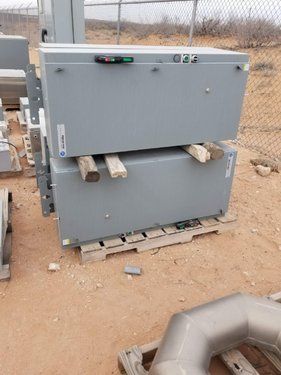
Where Can I Sell Used Transformers That Are Already Disconnected?
Have a disconnected transformer on a pallet or pad? Call or text 713-385-1333 with nameplate, condition, storage, weight, and loading details.
A disconnected transformer can still receive a meaningful review when its identity and history remain clear. State who performed the disconnection, when it occurred, why the unit was removed, whether it was operating beforehand, how leads and terminals were protected, and where it has been stored. If the operating history is unknown, say so directly.
Sellers asking where can I sell used transformers after removal should inspect the equipment for transit and storage damage. Photograph the base, pallet or skid, lifting points, enclosure, louvers, terminals, bushings, gauges, radiators, wiring, and protective coverings. Disclose dropped equipment, impact, broken insulators, cut leads, bent panels, exposure to rain, standing water, dust, animals, chemicals, and unsecured outdoor storage.
Preserve the nameplate and connection diagram. Do not paint over labels, remove terminal markings, discard tap links, or combine accessories from several units in one unlabeled box. Bag and tag hardware, keys, fans, temperature devices, wheels, vibration pads, bus pieces, and spare components using the same inventory number as the transformer.
Provide accurate loading conditions. State whether the unit is on a rated pallet, steel skid, housekeeping pad, gravel, dirt, or inside a building. Identify forklift access, crane needs, dock height, trailer limitations, soft ground, overhead lines, narrow gates, and appointment requirements. Photographs of the pickup area support practical planning.
Frequently Asked: Where Can I Sell Used Transformers?
Can One Transformer Be Submitted?
One qualified transformer may warrant review when its ratings, construction, condition, documentation, location, ownership, and logistics align with current demand. Provide the complete nameplate and photographs rather than only a kVA and asking price.
Can Untested Transformers Be Considered?
Some used and untested units may be considered. State the last known operation, removal reason, fault exposure, repairs, storage conditions, damage, and missing parts. Never perform improvised energization or unsafe testing for a purchasing inquiry.
Are Older Transformers Reviewed?
Age is one factor, not the complete answer. Exact ratings, construction, efficiency requirements, condition, documentation, fluid history, winding material, location, and demand all matter. Submit the manufacturing date and serial number when available.
Should I Pay for Testing First?
Do not authorize expensive work solely for a preliminary review without first discussing what information is needed. Existing credible reports should be provided. If testing is proposed, agree on the scope, provider, safety requirements, responsibility, and use of the results.
Can Transformers From Across the United States Be Submitted?
Qualified opportunities in the United States may be reviewed. Include city and state, quantity, individual weights and dimensions, loading access, equipment status, site requirements, release dates, and transportation considerations.
Can Pickup or Removal Be Included?
Removal or pickup depends on equipment value, location, weight, dimensions, condition, access, electrical status, fluid-handling requirements, rigging resources, schedule, and freight. Responsibilities must be defined in writing before work begins.
What Produces a Faster Review?
Readable nameplates, current all-side photographs, exact ratings, honest condition notes, test and maintenance records, ownership confirmation, dimensions, weight, location, access details, and a realistic deadline provide the strongest starting point.
Contact Texas Global Resources: Where Can I Sell Used Transformers?
If your organization is determining where can I sell used transformers, preserve the information that makes each unit understandable. Connect the serial number to its photographs and records, disclose actual condition, retain accessories, confirm ownership, and document the removal route before demolition or mixed storage changes the opportunity.
Texas Global Resources reviews qualified transformer opportunities according to manufacturer, ratings, construction, winding material when documented, cooling method, condition, testing, documentation, quantity, ownership, market demand, location, removal requirements, freight, and schedule. Review does not guarantee an offer and does not certify equipment for future service.
For a direct response to where can I sell used transformers, prepare the manufacturer, serial number, kVA, primary and secondary voltage, phase, frequency, impedance, cooling class, fluid type when applicable, dimensions, weight, condition, photographs, records, city and state, access, and release date.
Call or text 713-385-1333 when asking where can I sell used transformers, or request a transformer review online.