
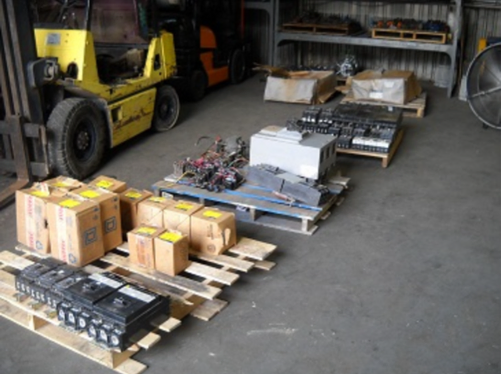
How Is Surplus Electrical Equipment Valued for a Direct Purchase?
Have organized electrical inventory ready for review? Call or text Texas Global Resources at 713-385-1333.
When an owner asks how is surplus electrical equipment valued, the process starts by identifying exactly what is available and whether it fits current purchasing demand. There is no reliable flat price for every breaker, transformer, switchgear section, cable reel, or control component. Manufacturer, catalog data, ratings, quantity, condition, completeness, documentation, location, and recovery requirements work together to shape a commercial offer.
Texas Global Resources reviews qualified surplus electrical equipment from verified owners, including contractors, distributors, manufacturers, industrial plants, commercial facilities, project managers, property operators, and organizations managing upgrades, canceled projects, shutdowns, warehouse reductions, or facility closures. The review is designed to determine purchasing fit; it is not a formal appraisal, equipment certification, engineering approval, or promise that every item will receive an offer.
A strong valuation package makes each asset traceable. The inventory number should connect the physical item, nameplate, photographs, condition notes, quantity, test records, storage location, and ownership documents. When these elements agree, the buyer can analyze equipment-specific demand and costs. When they conflict, the uncertainty can reduce or delay purchasing interest.
How Is Surplus Electrical Equipment Valued by Identification?
Identification is the first filter because small specification differences can separate a marketable asset from an incompatible one. Record manufacturer, product family, model, catalog or style number, serial number, date code, revision, and every applicable rating exactly as printed. Use clear nameplate photographs rather than relying only on manual transcription.
Companies learning how is surplus electrical equipment valued should avoid grouping items by appearance. Two molded-case breakers may share a housing but differ in trip, poles, voltage, interrupting rating, mounting, or accessory package. Two transformers may share a kVA rating but differ in voltage, impedance, winding material, enclosure, taps, or cooling. Exact identity matters because end-use requirements are specific.
Catalog Numbers and Product Families
Catalog and style numbers often describe frame, construction, connections, trip system, enclosure, or accessories. Record the complete string, including suffixes and revision marks. Do not shorten a number to the portion that is easiest to read, and do not copy a catalog number from the carton until the contents are verified.
Serial Numbers and Manufacturing Records
Serial numbers help connect equipment to production, test, repair, or maintenance records. Photograph serial plates and preserve factory documents when available. If a plate is missing, altered, painted over, or damaged, disclose the limitation rather than assigning the serial number from another unit.
Electrical Ratings
Capture voltage, amperage, phase, frequency, interrupting or short-circuit rating, bus rating, poles, trip or sensor rating, kVA, kW, impedance, control voltage, insulation class, temperature rise, cooling method, and enclosure type as applicable. Never infer a rating from cabinet size, conductor color, former service, or similar equipment nearby.
The Difference Between Asking Price, Market Value, and Net Recovery
An owner may begin with original purchase price, current replacement cost, a distributor listing, book value, or a previous offer. Those figures can provide context, but they do not automatically establish what a direct buyer can pay today. Surplus equipment value is shaped by the exact product, present demand, condition, time required to resell, handling, storage, testing, freight, and transaction risk.
The practical answer to how is surplus electrical equipment valued is often a net recovery calculation. A gross equipment amount may be reduced by disconnection, rigging, packaging, crane service, loading, freight, fluid handling, inspection, labor, or site restrictions. Written terms should make these responsibilities clear so the seller can compare the actual economic result rather than headline numbers alone.
Replacement Cost Is Not Resale Value
A new replacement may include current engineering, warranty, factory testing, documentation, configurable options, delivery commitments, and manufacturer support. Used or surplus equipment has a different risk and service profile. Replacement cost therefore should not be treated as an automatic resale benchmark.
Online Listing Prices Are Not Completed Transactions
An advertised price may remain online for months, may cover reconditioned equipment, may include a warranty, or may not represent a completed sale. Compare exact catalog data, condition, included components, seller terms, and timing before treating any listing as evidence.
Scrap Value Uses a Different Method
A recycler may focus on recoverable metals and processing costs. A commercial equipment buyer evaluates identity, specifications, usability, completeness, demand, and logistics. Sellers should confirm whether a proposal covers reusable equipment, selected parts, commodity material, or a combination.
How Condition Changes Surplus Electrical Equipment Valuation
Condition should be described through observable facts and supportable history. Useful categories include new unused project surplus, installed but never energized, used and operating when removed, used and untested, professionally reconditioned with records, incomplete, damaged, and parts-only. Mixing several categories under “good condition” prevents a precise review.
When examining how is surplus electrical equipment valued, disclose damage directly. Relevant issues include corrosion, water intrusion, fire or smoke exposure, overheating, arc events, cracked insulation, burned terminals, damaged bushings, bent bus, broken operators, cut wiring, missing trip units, stripped controls, contamination, impact, and unauthorized modifications.
“Working when removed” is operating history, not certification. It should be used only when someone with direct knowledge can support the claim. It does not prove insulation integrity, time-current performance, contact resistance, dielectric condition, winding health, or safe future service. Untested equipment should be represented as untested.
Storage History Matters
State where equipment has been stored, for how long, and with what protection. Climate-controlled shelving, an electrical room, a covered warehouse, an outdoor container, and an open yard create different exposure risks. Photograph pallets, covers, reel protection, sealed ends, floor conditions, and evidence of moisture or pests.
Documentation Supports Condition Claims
Provide test reports, maintenance logs, repair invoices, factory sheets, fluid analysis, load-bank results, thermography, relay files, and inspection records when available. Each report should identify the applicable serial number, date, provider, procedure, readings, repairs, and unresolved findings.
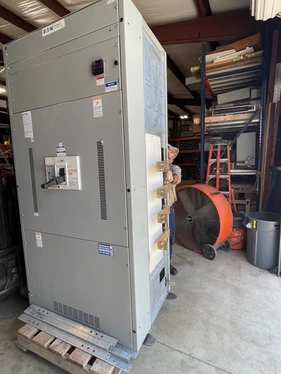
How Is Surplus Electrical Equipment Valued When It Includes Switchgear?
Have an identified switchgear lineup or section? Call 713-385-1333 with the one-line, nameplates, breaker schedule, and photographs.
Switchgear is valued as a coordinated assembly. Record manufacturer, product family, lineup or order number, nominal voltage, phase, frequency, bus rating, short-circuit rating, enclosure classification, section count, main-tie-feeder arrangement, breaker types, relay package, metering, control power, and available drawings. Identify low-voltage or medium-voltage construction according to the manufacturer’s information.
Completeness can influence marketability. Inventory every section from left to right and list installed mains, ties, feeders, fuses, breakers, relays, meters, current transformers, potential transformers, controls, communication modules, heaters, fans, shutters, secondary disconnects, and spare components. Empty cells, missing breakers, cut bus, altered doors, field wiring, and aftermarket changes should be reported.
For a meaningful answer to how is surplus electrical equipment valued, photograph the lineup before dismantling. Include the complete front, every section, each device, labels, accessible rear or interior areas when safely de-energized, bus shipping splits, cable compartments, and known defects. Number the sections and use the same references in the inventory and drawings.
Removal feasibility matters because switchgear can be heavy, sectionalized, and connected to active systems. Provide dimensions, section weights, floor level, anchors, conduit, cable, bus connections, access route, door widths, loading conditions, shutdown timing, and the intended separation points. Cutting bus or structural members before review can reduce completeness and complicate recovery.
How Quantity and Lot Composition Affect Value
Quantity can improve efficiency when the items are accurately identified, genuinely similar, and located together. It can also increase work when a lot mixes unrelated models, uncertain condition, damaged material, empty cartons, unidentified accessories, and assets from different owners. The quality of the inventory matters more than the raw item count.
Create one spreadsheet row for each serial-numbered asset or exact catalog group. Include inventory ID, manufacturer, model, ratings, quantity, condition, accessories, packaging, documentation, location, and photograph reference. Separate new unused, used tested, used untested, reconditioned, incomplete, and damaged groups.
Companies reviewing how is surplus electrical equipment valued should identify high-information assets first rather than assuming every pallet carries equal value. A complete lineup with drawings may require one review method, while a pallet of mixed control parts requires another. The buyer may select only portions that fit current acquisition needs.
Accessories Should Stay With the Correct Equipment
Trip units, rating plugs, lugs, cradles, racking handles, motor operators, relays, bus links, tap hardware, keys, fans, temperature monitors, communication modules, and mounting kits should carry the same inventory reference as the parent equipment. If compatibility is uncertain, list the part separately without promising a match.
Packaging Can Provide Evidence
Original cartons and reels may support identity and storage history, but packaging must be checked. Photograph box labels, seals, water stains, shelf wear, crushed corners, reel tags, and protective coverings. A manufacturer box does not prove the item is new or that the contents match the label.
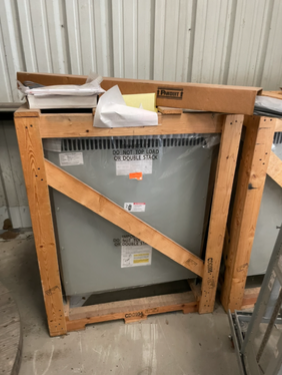
How Is Surplus Electrical Equipment Valued When It Includes Transformers?
Send the transformer nameplate, condition, testing, weight, and access details, or call 713-385-1333.
Transformer review begins with manufacturer, serial number, manufacturing date, kVA, primary and secondary voltage, phase, frequency, impedance, tap arrangement, insulation class, temperature rise, cooling method, enclosure, dimensions, and weight. Identify copper or aluminum windings only when nameplate data, original submittals, purchase records, or reliable manufacturer documents confirm the material.
A dry-type transformer should be described as open, ventilated, encapsulated, cast coil, or another construction only when supported. Photograph the enclosure, nameplate, connection diagram, terminals, tap area, louvers, base, lifting provisions, packaging, and defects. Report damaged insulation, overheating, dust, moisture, corrosion, cut leads, missing covers, and storage exposure.
Liquid-filled equipment requires the documented fluid type, quantity, cooling class, accessories, gauges, valves, bushing details, sampling history, leak history, repairs, and environmental records. Do not describe every fluid as mineral oil, and do not make assurances about regulated substances without evidence.
The question how is surplus electrical equipment valued also includes the cost and risk of transformer movement. Total weight, center of gravity, fluid containment, lifting points, crane reach, floor loading, roadway limits, trailer configuration, weather, and site schedule can affect whether an otherwise useful unit presents a practical opportunity.
How Current Demand Enters the Valuation Process
Demand is specific to manufacturer, product family, ratings, configuration, condition, and timing. A product can be discontinued yet remain useful as a replacement or spare, while another older model may have limited demand. Newer equipment can also be difficult to place if its voltage, configuration, or application is unusual.
Texas Global Resources may compare the submitted equipment with current purchasing requirements. This review can consider whether the product is recognizable, complete, supportable, transportable, and suited to an active market. Demand can change, so a prior sale or old offer does not guarantee the same result today.
Compatibility Claims Require Caution
Similar ratings do not make electrical components interchangeable. Mounting, bus connections, dimensions, trip behavior, enclosure listing, control voltage, accessory wiring, firmware, protection functions, and manufacturer instructions may differ. Public sale information should identify the product without promising fit.
Timing Can Affect Recovery Options
Starting before demolition or an emergency storage deadline preserves time to sort assets, recover documents, answer questions, arrange safe disconnection, and evaluate freight. Waiting until equipment is mixed, weather-exposed, stripped, or scheduled for immediate disposal can narrow the available paths.
How Logistics Are Applied to Surplus Electrical Equipment Value
An equipment review is incomplete without a recovery plan. Provide city and state, building location, equipment dimensions, verified or documented weights, floor level, doorway and corridor clearances, dock access, forklift or crane options, electrical status, packaging, site hours, insurance rules, safety orientation, loading support, and removal deadline.
When comparing how is surplus electrical equipment valued by different buyers, determine whether a proposal includes equipment purchase only or also disconnection, rigging, packaging, loading, transport, fluid handling, and restoration. Written terms should identify costs, deductions, responsibilities, schedule, and the treatment of changed field conditions.
Qualified personnel must control de-energization, verification, lockout/tagout, grounding where applicable, and electrical disconnection. Rigging should use verified weights, approved lifting points, appropriate machinery, and a plan suited to the actual route. A sales inquiry never justifies unsafe access to energized equipment.
Freight Is Equipment-Specific
Small breakers may ship in protected cartons, while switchgear, transformers, cable reels, and generators may require pallets, skids, flatbeds, cranes, permits, or specialized securement. Distance alone does not determine freight. Dimensions, weight, fragility, loading method, and delivery requirements also matter.
Removal Scope Must Be Clear
Define who disconnects conductors, separates bus, removes anchors, drains fluids if authorized, provides cranes or forklifts, packages accessories, loads trucks, cleans the area, and repairs openings. Ambiguous scope can turn an attractive headline offer into an uncertain net result.
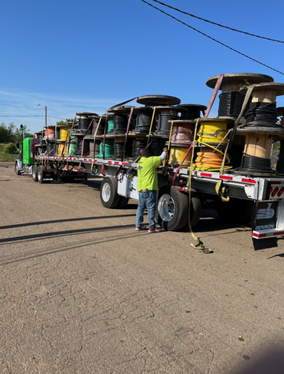
How Is Surplus Electrical Equipment Valued When It Includes Cable?
Have identified cable reels ready for review? Call or text 713-385-1333 with conductor, rating, length, and storage details.
Surplus cable requires exact construction data. Record manufacturer, conductor metal, conductor size, conductor count, voltage rating, insulation, jacket, shield, armor, date code, reel number, factory footage, verified remaining length, reel condition, and storage history. Photograph reel tags, jacket printing, both flanges, exposed ends, covering, and visible defects.
Length should be supported by printed footage markers, purchase records, measured runs, or another documented method. State the method used. Reel diameter alone is unreliable because conductor size, reel dimensions, winding pattern, and internal space vary.
Anyone studying how is surplus electrical equipment valued should distinguish new project-surplus cable from pulled cable, short remnants, mixed coils, weathered material, and commodity scrap. Original reels, sealed ends, readable printing, known length, and protected storage provide different evidence than loose material with no identification.
Loading conditions matter for heavy reels. Identify reel dimensions, estimated or documented weight, axle or stand needs, forklift capacity, crane access, trailer type, securement, and whether the reels are stable. Do not roll, lift, unwind, cut, or strip cable solely to support a preliminary review.
A Step-by-Step Surplus Electrical Equipment Valuation Review
1. Confirm Authorized Inventory
Separate equipment approved for sale from active, leased, financed, consigned, customer-owned, insurer-controlled, disputed, recalled, counterfeit, or reserved assets. Identify the legal owner and authorized representative.
2. Sort by Exact Product
Group equipment by category, manufacturer, product family, complete catalog number, ratings, configuration, and condition. Avoid broad groups such as “miscellaneous electrical” when individual items can be identified.
3. Photograph and Label Every Group
Take complete views, readable nameplates, connections, accessories, packaging, storage conditions, and defects. Link every image to the inventory number used in the spreadsheet and records.
4. Add History and Documentation
Provide former application, purchase or installation date, last operating status, removal reason, maintenance, testing, repairs, fault exposure, storage history, drawings, and reports. Separate verified facts from estimates.
5. Define Location and Schedule
List city and state, quantities, dimensions, weights, access, loading equipment, electrical status, site rules, available dates, and deadline. Include route photographs for heavy or installed assets.
6. Submit the Opportunity
Send the organized information through the Texas Global Resources contact page. Complete data helps determine whether the equipment fits current purchasing requirements and what additional verification may be needed.
7. Review Written Terms
If there is purchasing interest, confirm exact assets, quantities, included components, exclusions, represented condition, inspection rights, price, payment, taxes, ownership transfer, disconnection, rigging, loading, freight, schedule, and site responsibilities before release.
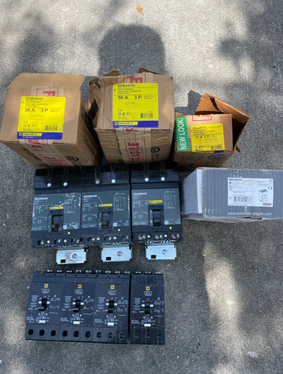
How Is Surplus Electrical Equipment Valued When It Includes Circuit Breakers?
Have boxed or loose breaker inventory? Call 713-385-1333 with catalog numbers, ratings, quantity, and condition.
Breakers should be separated by manufacturer, series, catalog number, frame, continuous-current or trip rating, poles, voltage, interrupting rating, mounting type, trip-unit model, control voltage, accessories, and condition. Verify the item inside each carton instead of assuming that the box label and breaker match.
For draw-out or large-frame breakers, document the cradle or cell, primary disconnects, secondary contacts, racking mechanism, trip unit, rating plug, charging motor, shunt trip, undervoltage release, auxiliary contacts, communication modules, and control power. State whether racking handles, rails, lifting devices, and test equipment are included.
The answer to how is surplus electrical equipment valued for breakers depends heavily on exact model demand and condition. A universal price per ampere or frame is not dependable. Photograph terminals, stabs, cases, arc chutes where safely accessible, accessory areas, labels, mounting points, and all visible damage.
Provide qualified test or reconditioning records when available. Cleaning, repainting, exercising a handle, or performing continuity does not establish full electrical performance. If no credible post-removal testing exists, describe the equipment as used and untested.
Frequently Asked: How Is Surplus Electrical Equipment Valued?
Can a Buyer Value Equipment From One Photograph?
One photograph may identify a general category but rarely provides enough data for a useful review. Submit readable nameplates, multiple condition views, quantities, records, location, and access details.
Does New Old Stock Automatically Receive a Higher Offer?
No. Exact demand, manufacturing information, storage, seals, packaging, completeness, current standards, and proof that equipment was never installed all matter. A manufacturer box alone does not prove new condition.
Does Testing Guarantee a Particular Value?
No. Credible testing can reduce condition uncertainty, but demand, ratings, configuration, completeness, age, location, and recovery costs still affect purchasing interest. Reports must match the actual equipment.
Are Obsolete Components Valuable?
Some discontinued components retain replacement or spare demand; others have limited commercial use. Exact catalog information, compatibility, condition, quantity, and current demand are more informative than the word “obsolete.”
Can One Item Be Reviewed?
One qualified item may warrant review when identification, ratings, condition, documentation, ownership, location, and demand support an opportunity. Provide complete information rather than only an asking price.
Can Equipment Across the United States Be Submitted?
Qualified opportunities in the United States may be considered. Provide city and state, quantity, dimensions, weight, packaging, access, loading resources, release date, and removal deadline.
How Quickly Can a Review Be Completed?
Timing depends on inventory quality, equipment complexity, quantity, documentation, required verification, and project schedule. Readable labels, organized files, current photographs, and clear logistics support a more efficient response.
Request a Review: How Is Surplus Electrical Equipment Valued?
For a clear answer to how is surplus electrical equipment valued, document the assets before they are dismantled, mixed, stripped, weather-exposed, or moved away from their records. Preserve nameplates, accessories, drawings, test reports, operating history, and knowledgeable contacts.
Texas Global Resources reviews qualified opportunities according to identification, ratings, configuration, quantity, condition, completeness, documentation, ownership, current demand, location, freight, labor, schedule, and recovery requirements. The result is an equipment-specific purchasing decision rather than a universal price formula.
To learn how is surplus electrical equipment valued for your inventory, prepare manufacturer, catalog or serial number, ratings, quantity, condition, photographs, records, city and state, dimensions, weight, access, electrical status, and release date. Honest, organized information supports a faster and more meaningful commercial review.
Call or text 713-385-1333 to ask how is surplus electrical equipment valued, or request a direct equipment review online.