
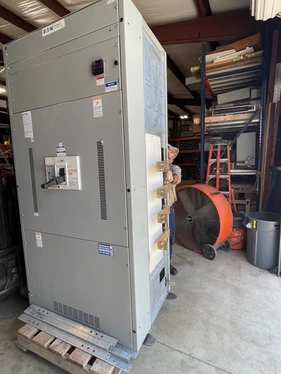
Electrical Panel Buyers for Commercial and Industrial Equipment
Call or text 713-385-1333 to submit qualified panels, panelboards, or distribution equipment for review.
Electrical panel buyers provide verified businesses with a direct way to present surplus, unused, used, and obsolete electrical distribution equipment for commercial evaluation. Texas Global Resources reviews qualified opportunities from industrial plants, commercial properties, electrical contractors, distributors, construction companies, project owners, and organizations completing upgrades, relocations, closures, or inventory reductions across the United States.
Accurate identification is essential because the phrase electrical panel can describe many different assemblies. Manufacturer, product family, voltage, phase, amp rating, short-circuit rating, main device, bus material, enclosure, circuit count, installed breakers, condition, documentation, quantity, location, and recovery requirements can affect purchasing interest. Electrical panel buyers need readable labels and full equipment photographs rather than a generic cabinet description.
Texas Global Resources provides an equipment-purchasing service. It does not provide engineering approval, electrical installation, testing certification, energization, code compliance, or arc-flash analysis. Panels may contain hazardous voltage, stored energy, exposed conductors, sharp metal, and heavy components. Qualified personnel must control access, establish safe electrical conditions, disconnect equipment, remove conductors, rig cabinets, and supervise loading.
What Electrical Panel Buyers May Review
Potential purchasing opportunities can include panelboards, distribution panels, lighting panels, power panels, enclosed breaker panels, main-breaker panels, main-lug-only panels, switchboards, service distribution sections, custom industrial control panels, and associated breakers when the equipment matches current needs. Complete assemblies and compatible component inventories may both warrant review.
A complete panel should retain its enclosure, trim, deadfront, door, interior, bus, main device, neutral and ground assemblies, breaker mounting provisions, identification labels, and installed breakers when applicable. Missing trim, removed interiors, damaged bus, or stripped components must be disclosed. Electrical panel buyers cannot assume that absent parts will be available later.
Panel condition should be described precisely. State whether the equipment is new surplus, unused project stock, installed but never energized, operational when removed, tested after removal, reconditioned, stored, incomplete, damaged, or condition unknown. Avoid unsupported claims such as fully working. Current photographs and traceable records provide a stronger basis for review.
Both current and discontinued equipment can have commercial potential. Modern panelboards may support new construction or replacement projects, while older equipment may serve installed systems that require compatible components. Obsolete status alone does not establish demand. Exact series, configuration, ratings, completeness, condition, and recovery cost remain important.
Panelboards and Distribution Panels
For a panelboard, provide the manufacturer, series, catalog number, voltage, phase, wires, frequency, amp rating, short-circuit rating, main type, interior designation, enclosure type, circuit count, and installed breaker schedule. Photograph the full exterior, complete nameplate, directory, trim, and safely accessible interior only when qualified personnel have established safe conditions.
Switchboards and Larger Distribution Sections
For larger equipment, identify every section in order. Record main, tie, feeder, metering, distribution, and auxiliary sections, along with bus ratings, overcurrent devices, section dimensions, and documentation. A simple numbered diagram helps connect photographs to the correct cabinet and prevents separated sections from being counted incorrectly.
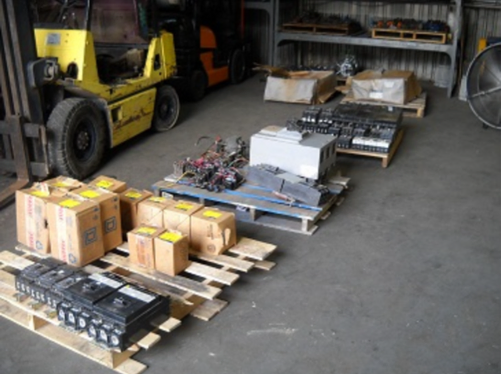
Electrical Panel Buyers for Warehouse Inventory
Have palletized panels or project overages? Call 713-385-1333 with the inventory list and pickup location.
Warehouse submissions should organize panel equipment separately from unrelated wire, controls, motors, and industrial material. Create distinct inventory groups for complete panels, panel interiors, trims, doors, breakers, main devices, bus components, and loose accessories. Use one inventory line for each exact manufacturer, series, rating, and condition combination.
Wide photographs can demonstrate quantity and storage arrangement, while close photographs verify individual labels. If several panels are identical, provide representative detail images and one photograph showing the full count. Do not combine similar-looking equipment when catalog numbers, ratings, enclosures, or interiors differ.
Packaging provides context but does not prove equipment condition. A factory carton may have been opened, exposed to moisture, crushed, or paired with the wrong panel. Match package labels to equipment labels and disclose any uncertainty. Electrical panel buyers need an accurate description of the actual assembly rather than assumptions based on a box.
Safe storage helps preserve completeness. Keep cabinets upright when required, secure doors and trims, protect bus and breaker mounting points, and avoid placing heavy components on handles or controls. State whether the warehouse has a suitable dock, forklift, pallet jack, crane access, or ground-level loading area without overstating equipment capacity.
Why Businesses Contact Electrical Panel Buyers
Panels become surplus when building plans change, equipment specifications are revised, construction projects are cancelled, or purchased quantities exceed final requirements. Used assemblies may be released during voltage conversions, service upgrades, tenant improvements, production-line changes, facility closures, or standardization around another manufacturer.
Unused panels can lose value when stored without their original trim, directory, breakers, hardware, or documentation. Removed panels can suffer bent enclosures, damaged bus, corrosion, broken handles, and missing labels after repeated moves. Early review gives electrical panel buyers an opportunity to assess equipment while its identity and components remain together.
A coordinated submission also helps the seller’s internal teams. Engineering may hold drawings, maintenance may know service history, procurement may retain submittals, accounting may authorize asset release, and warehouse personnel may understand loading access. Combining these facts into one package reduces delays and conflicting information.
No responsible buyer can guarantee an offer for every panel. Uncommon ratings, severe damage, incomplete interiors, missing trims, limited demand, disputed ownership, expensive removal, or poor access can affect feasibility. Commercial terms should follow an equipment-specific review rather than an estimate based only on cabinet dimensions or scrap weight.
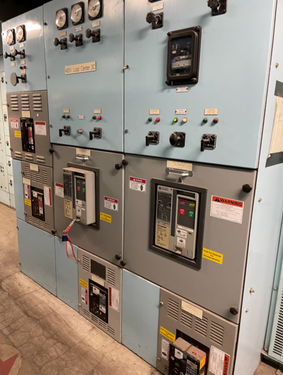
Electrical Panel Buyers Need Complete Equipment Details
For a multi-section panel or switchboard, call 713-385-1333 with the manufacturer, ratings, section count, and location.
Start with the master nameplate or equipment label. Capture the manufacturer, product family, catalog or factory order number, manufacturing date when shown, voltage, phase, wires, frequency, bus rating, short-circuit rating, main-device information, enclosure classification, and drawing references. Take the photograph straight on and close enough to keep every character readable.
For multi-section equipment, prepare a left-to-right section schedule. Identify mains, ties, feeders, branch distribution, meters, relays, control power, and spare spaces. Number the physical sections and use those same numbers in filenames and inventory records. This organization lets electrical panel buyers understand the offered lineup without reconstructing it from unrelated photographs.
Manufacturer series matters because equipment that looks similar may use different interiors, trims, breaker mounting systems, bus connections, door arrangements, or hardware. Never claim compatibility based solely on appearance. Provide exact labels and available manufacturer documentation whenever a panel, interior, trim, or breaker is represented as compatible with another assembly.
Field modifications should be disclosed separately from factory construction. Show retrofitted breakers, modified deadfronts, added meters, drilled enclosures, changed mains, altered bus, replaced interiors, added controls, or non-factory wiring. If drawings were revised, include the current version and mark superseded documents clearly.
Information Electrical Panel Buyers Need
Manufacturer and Catalog Identification
Record the complete manufacturer, product series, catalog number, interior number, trim number, factory order, and drawing number when present. If a character cannot be read, provide a close photograph and state that the identification remains uncertain rather than copying information from a similar panel.
Voltage and Current Ratings
Provide voltage, phase, wire configuration, frequency, amp rating, short-circuit current rating, main-device rating, neutral rating, and ground information when documented. Building plans may supplement the submission, but the actual equipment label should remain the primary identification source.
Breaker Schedule and Circuit Count
List the installed breakers by manufacturer, type, poles, frame or amp rating, and quantity. Identify empty spaces, filler plates, spare breakers, and unusual accessories. If the directory no longer matches the equipment, state that directly and provide a current inventory.
Condition and History
Describe whether the panel is unused, installed, energized, removed, tested, stored, repaired, altered, damaged, or condition unknown. Explain the reason for release and show rust, heat discoloration, soot, water exposure, broken handles, bent trim, damaged bus, missing barriers, or cut wiring.
Dimensions, Weight, and Access
Provide dimensions, documented weight when available, city and state, floor level, doorway clearance, stairs, elevators, dock conditions, lifting resources, loading restrictions, and removal deadline. Electrical panel buyers must consider recovery costs and site requirements along with equipment demand.
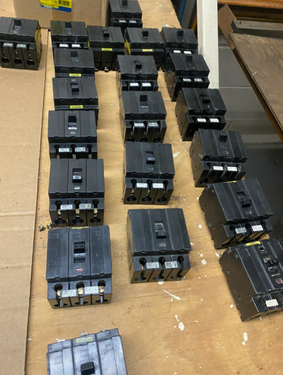
Electrical Panel Buyers for Panels With Breakers
Submit panel and breaker details by calling or texting 713-385-1333.
Installed breakers can materially affect a panel submission when they are compatible, identifiable, and in disclosed condition. Record each breaker’s manufacturer, product family, poles, amp rating, frame size, interrupting rating, trip-unit type, and quantity. Separate installed devices from loose spares so the same equipment is not counted twice.
A breaker should not be described as compatible merely because it fits the opening. Panel listings, manufacturer instructions, series design, mounting style, bus connection, and interrupting ratings can matter. Provide labels from both the panel and breaker. Electrical panel buyers need accurate equipment relationships, not informal field assumptions.
Photograph missing filler plates, altered deadfronts, damaged handles, improvised mounting, heat marks, broken mounting hardware, or exposed openings. Do not install loose breakers, change trip settings, operate mechanisms, or energize equipment simply to make a submission appear complete. Show the actual present condition.
Loose breaker inventories should be sorted by exact catalog number and rating. Keep mounting hardware, connectors, covers, trip units, and accessories with the correct device. Boxes should be matched to the equipment inside. Clearly identify untested, removed, or condition-unknown breakers rather than describing an entire group as working.
How Electrical Panel Buyers Evaluate Equipment
There is no reliable universal price per circuit, amp, breaker, section, or pound. Evaluation considers manufacturer, product family, ratings, age, configuration, installed devices, condition, documentation, completeness, quantity, demand, location, access, and recovery expense. Two panels with the same amp rating may have very different applications and commercial potential.
Original project cost is not equal to current resale value. A customized panel may have limited usefulness outside its original installation, while a standard configuration from a widely installed series may support broader replacement needs. Common equipment can still have limited value when damaged, incomplete, altered, or difficult to recover.
Documentation can reduce uncertainty when it matches the offered equipment. Approved submittals, factory drawings, bills of material, breaker schedules, maintenance records, and test reports may help explain configuration and history. Mark obsolete versions and disclose field changes rather than presenting original drawings as a current record.
Transportation and removal are part of the commercial review. Cabinet weight, floor level, electrical-room access, conductor removal, rigging, packaging, loading, permits, freight distance, site delays, and contractor requirements can affect feasibility. Any division of responsibility must be confirmed in the final terms.

Electrical Panel Buyers for Facility Upgrades and Shutdowns
Planning a service upgrade, plant project, or facility closure? Call 713-385-1333 before panels are dismantled.
Facility projects often include fixed outage windows and clearance dates. Submit panel information early enough for identification, condition, and access to be evaluated. State whether the equipment remains energized, is scheduled for qualified disconnection, has been removed, or is already staged. Never collect information by entering restricted areas or opening energized panels.
Preserve equipment relationships before removal. Number multi-section cabinets, doors, trims, interiors, bus pieces, breakers, and hardware. Retain nameplates, panel directories, one-line diagrams, and factory drawings. Cutting bus or enclosures without an agreed plan can destroy identification and reduce the chance of equipment recovery.
Explain why each panel is being released. A planned voltage conversion or capacity increase creates a different history from an arc event, flood, fire, contamination issue, or equipment failure. Disclose known incidents and provide relevant inspection or maintenance records. Electrical panel buyers need the true history to make a responsible commercial decision.
Provide separate dates for evaluation, seller approval, de-energization, disconnection, rigging, loading, and final clearance. State orientation requirements, security rules, insurance requirements, work-hour limits, available loading equipment, and contractor restrictions. Do not assume pickup includes electrical or site work unless the written scope says so.
The Electrical Panel Submission Process
Confirm Ownership
Verify that the organization owns the equipment or has written authority to release it. Exclude leased, financed, utility-owned, customer-owned, consigned, disputed, and reserved assets.
Prepare a Panel Inventory
List manufacturer, series, ratings, configuration, enclosure, circuit count, breakers, condition, dimensions, documentation, and included accessories. Pair the list with current, clearly numbered photographs.
Describe Location and Timing
Provide the city and state, current equipment status, access route, lifting needs, loading conditions, site rules, decision date, and removal deadline. Identify seller-provided work and resources accurately.
Request a Purchasing Review
Use the Texas Global Resources contact page to send the equipment details. Complete information helps electrical panel buyers determine whether the opportunity aligns with current purchasing requirements.
Confirm Commercial Terms
If purchasing interest exists, document included and excluded equipment, inspection expectations, price, payment timing, electrical disconnection, rigging, packaging, loading, freight, and deadlines before releasing the assets.
Frequently Asked Questions About Electrical Panel Buyers
Can Complete Electrical Panels Be Reviewed?
Qualified complete panels may be considered when ownership, manufacturer, ratings, configuration, condition, location, and recovery requirements are clear. Submit full views, labels, breaker schedules, and available documentation.
Can Panels Without Breakers Be Submitted?
Some empty or partially populated panels may qualify, depending on the interior, trim, bus, main arrangement, condition, series demand, and completeness. Identify every missing component.
Do Electrical Panel Buyers Consider Obsolete Equipment?
Some discontinued panels and compatible components support existing installations, but age does not guarantee demand. Exact identification, condition, completeness, ratings, and recovery cost determine feasibility.
Should a Panel Be Tested Before Submission?
Do not arrange unnecessary testing for an initial review. Submit existing records and describe the present status. Qualified parties must perform any electrical inspection or testing under appropriate safety procedures.
Can Pickup Be Included?
Pickup feasibility depends on the equipment, quantity, value, location, dimensions, weight, access, loading resources, schedule, and site requirements. Responsibilities must be confirmed in writing.
Are Nationwide Opportunities Reviewed?
Texas Global Resources evaluates qualified electrical equipment opportunities across the United States. Include the city and state, quantity, access conditions, and required removal date so recovery costs can be considered.
Contact Electrical Panel Buyers
Panel equipment is easier to evaluate while labels, interiors, trims, breakers, drawings, and knowledgeable personnel remain connected to the project. Document the complete configuration, disclose damage and modifications, confirm ownership, and explain access before scheduling dismantling or disposal.
Texas Global Resources evaluates qualified opportunities according to equipment identity, electrical ratings, configuration, condition, completeness, documentation, quantity, demand, location, schedule, and recovery requirements. The service supports direct commercial purchasing discussions with verified equipment owners.
To reach electrical panel buyers, provide the manufacturer, series, voltage, amp rating, short-circuit rating, main type, enclosure, circuit count, breaker inventory, condition, photographs, documents, dimensions, weight, city and state, access details, and desired timeline.
Call or text 713-385-1333 to contact electrical panel buyers, or submit your panel inventory online.