
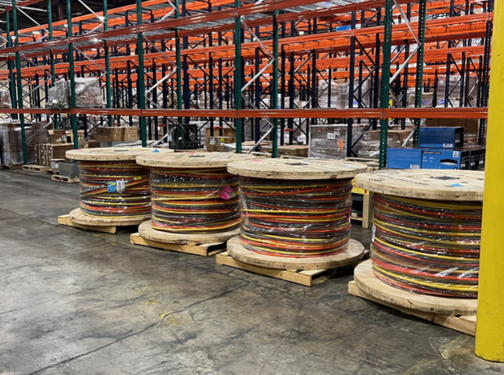
Industrial Asset Recovery for Plants, Facilities, and Project Sites
Call or text 713-385-1333 to discuss available industrial assets, deadlines, and removal requirements.
Industrial asset recovery gives organizations a practical way to identify, evaluate, sell, and remove equipment that is no longer supporting operations. Texas Global Resources works with verified asset owners, plant managers, contractors, maintenance departments, warehouses, project teams, and other businesses that need a direct purchase path for surplus industrial property. Instead of treating every idle asset as scrap or forcing employees to sell items one at a time, a coordinated recovery project can separate potentially reusable equipment from lower-value material and organize the transaction around the seller’s schedule.
Assets may become available after a shutdown, turnaround, production change, warehouse consolidation, construction project, fleet adjustment, equipment upgrade, lease expiration, or complete facility closure. These situations often involve mixed inventories with different specifications, conditions, weights, and removal needs. Texas Global Resources reviews the available scope, identifies assets that fit its purchasing focus, develops an offer for accepted items, coordinates transportation, and states that payment is provided before purchased property is loaded.
A successful industrial asset recovery project starts with documentation. Sellers should provide photographs, manufacturers, model and serial numbers, ratings, quantities, condition, operating status, location, access details, and the required completion date. For a preliminary discussion, call or text 713-385-1333 or submit information through the Texas Global Resources contact page.
What Industrial Asset Recovery Includes
Recovery is more than moving unwanted material out of a building. The work begins by understanding what exists, why it is available, who owns it, what may be reusable, what documentation survives, and how assets can be removed safely. The buyer must also account for loading, rigging, disconnection, transportation, site rules, deadlines, and the current secondary market.
Depending on the property and inventory, assets considered may include:
- Valves, actuators, controls, and flow-management equipment
- Heat exchangers and related process equipment
- Pipe, fittings, flanges, and specialty piping materials
- Tanks, vessels, and selected storage or process units
- Generators, welding equipment, and machinery
- Forklifts, lifts, and material-handling equipment
- Pumps, motors, and other identifiable industrial components
- Surplus metals and selected project overages
Not every item is guaranteed to receive an offer. Purchase decisions depend on lawful ownership, specifications, condition, completeness, quantity, current demand, location, access, and removal economics. Clear records allow the team to focus on commercially viable assets and explain what additional information is necessary.
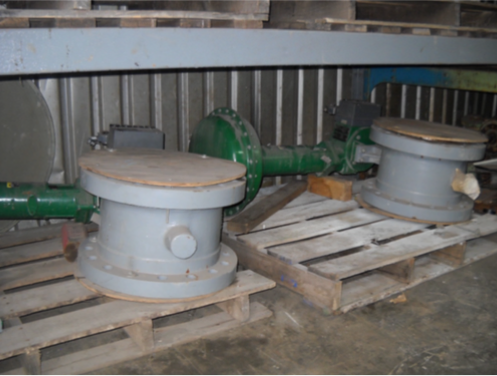
Industrial Asset Recovery for Valves and Controls
Have valves, actuators, or controls available? Call or text 713-385-1333 for a review.
Valves can remain commercially useful when their manufacturer, model, size, pressure class, body material, trim, end connection, actuator, and condition are identifiable. A mixed valve inventory may contain unused project material, maintenance spares, removed units, and older products retained for systems that have since changed. The review must distinguish these groups instead of assigning one assumption to everything.
Photograph the complete valve, manufacturer tag, casting marks, actuator plate, positioner, end connections, internals when safely accessible, and visible damage. State whether the unit is new, unused, rebuilt, removed from service, untested, incomplete, or intended only for parts. Disclose corrosion, cracked castings, missing actuators, seized stems, contamination, or exposure to an incompatible process.
During industrial asset recovery, keep matching actuators, positioners, controls, documentation, and hardware with the correct valve. Separating components or discarding tags can make identification harder. If valves are still installed, qualified personnel must isolate, decontaminate, disconnect, and prepare them according to the owner’s safety and environmental procedures before removal.
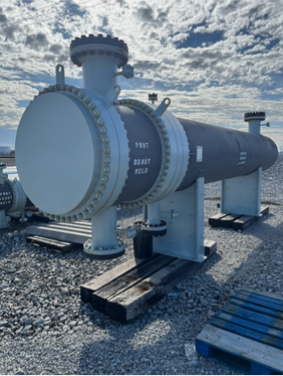
Industrial Asset Recovery for Heat Exchangers
Request a heat-exchanger evaluation at 713-385-1333.
Heat exchangers require detailed documentation because value can depend on design, materials, dimensions, pressure ratings, temperature ratings, tube count, surface area, configuration, service history, and condition. Useful submissions include the manufacturer, model, serial number, national board or equipment number when present, drawings, data sheets, material information, dimensions, weight, nozzle schedule, and photographs of every side.
Service history matters. Sellers should identify the fluids or processes previously associated with the unit and disclose corrosion, erosion, leaks, plugging, repairs, missing heads, damaged nozzles, compromised tubes, or uncertain cleanliness. Do not represent a removed exchanger as clean, tested, certified, or safe for reuse unless current records support that claim. A buyer’s commercial evaluation is not an engineering certification.
Large exchangers may require cranes, engineered lifts, heavy-haul trailers, permits, escorts, or a staged route through the facility. Provide accurate measurements and describe foundations, overhead obstructions, pipe racks, doors, roads, and loading areas. Good site information lets an industrial asset recovery plan address real logistics before the purchase agreement is finalized.
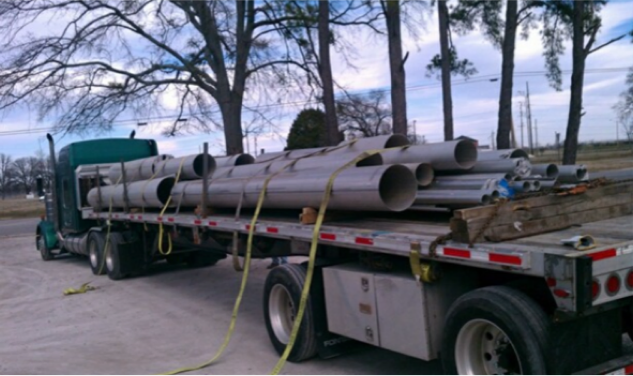
Industrial Asset Recovery for Pipe, Flanges, and Fittings
Call or text 713-385-1333 with material grades, sizes, schedules, quantities, and condition.
Surplus piping materials are easier to evaluate when they remain identifiable and organized. Provide pipe diameter, schedule, length, specification, material grade, end preparation, coating, manufacturer markings, heat numbers when available, and quantity. For fittings and flanges, include size, pressure class, material, configuration, facing, and package details.
Unused project overages in protected storage are different from removed pipe with uncertain service history. Photograph labels, markings, ends, interiors when safely visible, storage racks, bundles, pallets, and representative surface condition. Disclose rust, pitting, coating failure, bent sections, cut ends, contamination, mixed grades, missing traceability, or prolonged outdoor exposure.
Do not cut long pipe solely to simplify removal before requesting a review. Standard or usable lengths may have different marketability from short, irregular pieces. During industrial asset recovery, the buyer can consider how the material is stored, how it can be bundled, whether lifting equipment is available, and what trailer configuration may be necessary.
Industrial Asset Recovery for Tanks and Vessels
Discuss tanks, vessels, access, and removal requirements by calling or texting 713-385-1333.
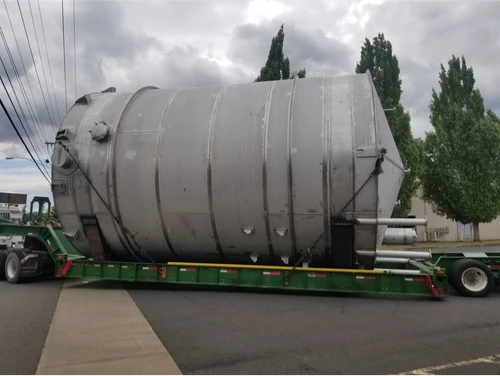
Tanks and vessels must be reviewed with special attention to prior service, contents, construction, dimensions, materials, ratings, fittings, supports, cleanliness, and transportation. A helpful submission includes manufacturer information, serial or registration numbers, drawings, capacity, diameter, length or height, empty weight, wall material, lining, insulation, agitation equipment, pressure and temperature ratings, and nozzle locations.
The seller must accurately disclose previous contents and current status. Tanks associated with fuel, chemicals, wastewater, food processing, oil, gas, or other materials may require specialized draining, cleaning, testing, documentation, or disposal procedures. Texas Global Resources does not replace the owner’s environmental, regulatory, safety, or decontamination responsibilities.
Fixed assets can create complicated removal conditions. Explain whether the tank is indoors or outdoors, elevated or ground-mounted, bolted or welded, insulated, connected, obstructed, or enclosed by structural components. Photograph the full route to the loading area. An industrial asset recovery proposal can only address transportation responsibly when the size and access constraints are known.
Industrial Asset Recovery for Generators and Power Equipment
Send generator ratings, hours, condition, and location after calling 713-385-1333.
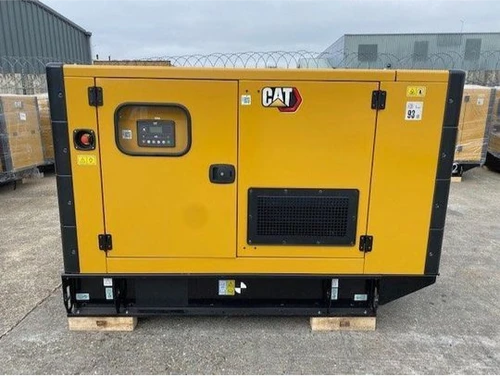
Generators may become surplus after a facility upgrade, standby-power redesign, project completion, or fleet change. Document the manufacturer, model, engine, alternator, rated output, voltage, phase, frequency, fuel type, hours, enclosure, controls, transfer equipment, emissions configuration, and operating history. Include photographs of all plates, the control panel, breaker, cooling system, base, tank, batteries, enclosure, and included accessories.
Disclose leaks, corrosion, alarm codes, starting problems, fuel status, missing cables, rodent damage, flood exposure, and the date of the last known operation. Load-bank or maintenance reports may support the review, but older records should not be presented as proof of current performance. If the generator is untested, state that clearly.
Generator removal may require qualified electrical disconnection, fuel handling, batteries, lifting equipment, and specialized transportation. The owner must secure the unit and comply with site procedures. Accurate access details allow industrial asset recovery planning to account for weight, crane reach, door dimensions, traffic control, and pickup scheduling.
Industrial Asset Recovery for Forklifts and Material Handling
Call or text 713-385-1333 to submit forklifts and warehouse equipment.
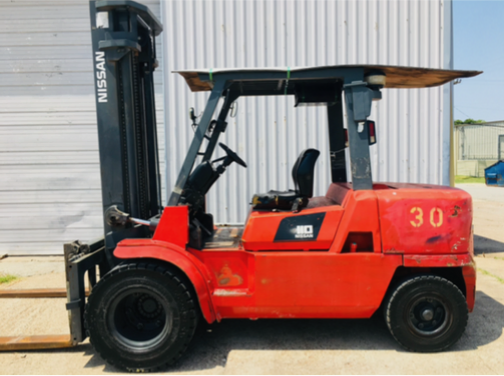
Forklifts and material-handling machines should be listed by manufacturer, model, serial number, year, capacity, mast, lift height, fuel or power type, hours, tires, forks, attachments, and condition. Electric units should include battery voltage, battery condition, charger details, and connector type. Photograph the data plate because the machine’s rated capacity depends on its actual configuration.
State whether each machine starts, drives, steers, brakes, lifts, tilts, and holds a load as expected. Identify hydraulic leaks, worn tires, damaged forks, mast problems, weak batteries, missing chargers, warning lights, or nonworking controls. For a closing warehouse, organize the inventory by unit rather than providing one description for the entire fleet.
Material-handling assets may be needed temporarily to support the recovery project itself. The agreement should distinguish machines being sold from machines the seller will retain for loading. This prevents confusion and helps the industrial asset recovery team schedule carriers without interrupting ongoing warehouse operations.
When Industrial Asset Recovery Creates the Most Value
The right time to begin is before useful equipment is damaged, separated from documentation, mixed into scrap, or blocked behind construction. Early planning gives the owner time to build an inventory, identify priority assets, verify ownership, compare disposition options, and coordinate removal around the operating schedule.
Common project triggers include:
- Complete or partial plant shutdowns
- Facility relocations and warehouse consolidations
- Production-line changes or modernization projects
- Contractor demobilization after project completion
- Maintenance storeroom and spare-parts reductions
- Lease expirations and property turnover deadlines
- Fleet standardization and equipment upgrades
- Business closures, mergers, and ownership changes
A deadline should be disclosed during the first conversation. An accelerated project may affect inspection, documentation, internal approvals, rigging availability, carrier scheduling, and the assets that can be removed economically. Waiting until a final access date can reduce options and create unnecessary risk.
How the Industrial Asset Recovery Process Works
1. Define the Project Scope
Identify the facility, available asset categories, approximate quantities, operating status, ownership, deadline, and any areas that remain active. Explain whether the project is a single-equipment sale, a warehouse cleanout, a production-line removal, or a broader facility recovery. A defined scope helps determine whether the review can begin remotely or requires a site visit.
2. Build and Photograph the Inventory
Create a spreadsheet or schedule with item numbers, descriptions, manufacturers, models, serial numbers, ratings, quantities, condition, and location within the site. Name photographs to match the list. Include wide images that show storage, access, overhead restrictions, doors, docks, yards, and loading areas.
3. Separate Ownership and Compliance Questions
Confirm that the seller has authority to transfer every offered asset. Identify leases, liens, landlord interests, financing, consigned property, customer-owned items, or regulated materials. Resolve those issues before accepting an offer. The seller remains responsible for environmental, safety, decontamination, and regulatory duties associated with the facility and equipment.
4. Complete the Commercial Review
Texas Global Resources reviews specifications, condition, quantity, completeness, current demand, location, handling requirements, and transportation costs. The review may identify assets that fit the purchase scope, items needing more information, and material that should follow another disposition path. This is a purchasing evaluation, not an independent appraisal or engineering certification.
5. Review the Offer and Responsibilities
A written agreement should identify accepted assets, price, payment, loading, rigging, disconnection, transportation, schedule, site access, exclusions, and responsibilities. Attach an equipment schedule when serial numbers or quantities matter. Correct discrepancies before signing rather than attempting to reconcile them during loading.
6. Verify Payment and Execute Removal
Texas Global Resources states that it pays before accepted items are loaded. Sellers should verify funds independently through their financial institution. Site representatives should confirm the arriving personnel, vehicles, approved assets, work areas, safety orientation, personal protective equipment, and daily schedule before removal begins.
What Determines an Industrial Asset Recovery Offer?
Identification and Technical Details
Legible plates, drawings, model numbers, ratings, materials, dimensions, and quantities reduce uncertainty. Equipment that cannot be identified may be difficult to evaluate beyond its material content. Protect labels and keep records with the related assets.
Condition and Service History
Unused assets in original packaging differ from installed, removed, repaired, weather-exposed, or untested equipment. Disclose leaks, corrosion, damage, missing parts, contamination, and known faults. Maintenance records and honest condition descriptions can answer questions that appearance alone cannot.
Market Demand and Reuse Potential
Original cost does not establish current value. Demand depends on specifications, parts support, installed systems, industry activity, available alternatives, and the cost of preparing equipment for another use. Obsolete assets can sometimes retain demand, while newer items may be too specialized for a broad market.
Quantity and Inventory Organization
Organized groups of matching products can be more efficient to research, package, and transport. Large quantity alone does not guarantee value, but clear counts and consistent specifications reduce sorting. Mixed facilities can still support a transaction when commercially viable assets are documented.
Access, Rigging, and Transportation
Weight, dimensions, foundations, overhead obstructions, loading surfaces, cranes, forklifts, permits, escorts, road access, and distance affect recovery economics. Hidden access constraints can delay removal and change cost. Provide the complete route, not only close photographs of the asset.
Schedule and Site Requirements
Working hours, security, insurance, orientations, lockout procedures, union rules, restricted areas, hot-work controls, and closure deadlines can affect labor and scheduling. Early disclosure allows the buyer to determine whether requirements can be met.
Preparing a Facility for Industrial Asset Recovery
- Assign one authorized project contact and a backup contact.
- Mark assets included in the sale and identify exclusions clearly.
- Match keys, manuals, controls, chargers, and attachments to each asset.
- Preserve nameplates, tags, serial numbers, and drawings.
- Separate customer-owned, leased, financed, or disputed property.
- Complete required isolation, draining, cleaning, and disconnection.
- Document damage and condition before removal activity begins.
- Confirm routes, docks, gates, floor capacity, and loading areas.
- Communicate site safety, security, and scheduling requirements.
- Verify payment before releasing purchased property.
Do not remove guards, cut structural components, discard accessories, or mix unrelated assets merely to make the site look organized. Premature dismantling can damage equipment, eliminate useful identification, and complicate loading. Use qualified personnel for work involving electrical systems, process lines, pressure equipment, hazardous materials, lifting, or structural modifications.
Why Choose Texas Global Resources for Industrial Asset Recovery?
Texas Global Resources offers a direct purchasing route for organizations that want to convert idle industrial property into a coordinated sale. The company can review mixed equipment categories, make offers for accepted assets, coordinate transportation, and provide payment before loading according to its stated process. This can reduce the number of buyers, listings, negotiations, and removal schedules the seller must manage.
The company is based in South Houston, Texas and works with sellers across the United States. Service availability depends on the assets, value, location, quantity, condition, and logistics; the company should not be represented as having an office or crew in a location unless that is factually established. Sellers can review additional company information on the Texas Global Resources About page.
Professional industrial asset recovery should be built on accurate information rather than inflated promises. Texas Global Resources evaluates the actual opportunity, defines accepted property in writing, and coordinates the commercial and transportation details associated with its purchase. That approach supports plant managers, owners, contractors, and project teams facing real deadlines and operational constraints.
Industrial Asset Recovery Questions
Can one machine qualify for recovery?
A single significant asset can be submitted. Whether a direct purchase is practical depends on equipment type, specifications, condition, location, value, and transportation requirements. Complete documentation gives the buyer the best basis for a decision.
Can Texas Global Resources review an entire facility?
Large mixed inventories and facility projects can be submitted for review. Begin with an asset overview, photographs, categories, site status, access, and deadline. A site visit may be appropriate after the preliminary scope is understood.
Does every item receive a purchase offer?
No. The buyer identifies assets that fit its purchasing scope. Some equipment may lack demand, documentation, safe handling options, or enough value to support transportation. Other material may be more appropriate for recycling, donation, internal transfer, or specialized disposal.
Who handles disconnection and decontamination?
Responsibilities must be defined in writing. The seller remains responsible for its facility, regulatory obligations, and safe preparation unless the agreement specifically assigns qualified work elsewhere. Never assume that a transportation commitment includes process isolation, electrical work, remediation, or hazardous-material handling.
How quickly can a project begin?
Timing depends on inventory quality, internal approvals, inspection needs, payment, site preparation, rigging, carrier availability, and the project’s complexity. A clear list and early deadline disclosure can shorten avoidable delays.
What information should be sent first?
Send equipment categories, representative photographs, manufacturers, model numbers, quantities, condition, site location, access information, and the target completion date. For heavy or fixed assets, include dimensions, weight, foundation details, and the proposed loading route.
Request an Industrial Asset Recovery Review
Idle equipment can lose value when it remains exposed, undocumented, inaccessible, or mixed into an unorganized scrap stream. A timely review helps the owner identify potentially marketable assets, define the commercial scope, and coordinate removal before a shutdown, construction, or lease deadline becomes urgent.
To begin industrial asset recovery, prepare an inventory or representative asset list, clear photographs, nameplates, quantities, condition notes, location, access requirements, and the desired schedule. Texas Global Resources can review the information, discuss the equipment categories, and determine whether a direct purchase opportunity exists.
Call or text 713-385-1333 for industrial asset recovery, or submit project details through the contact page.