
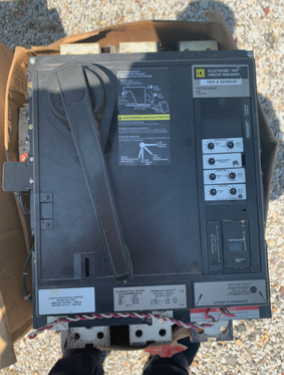
Sell Used Circuit Breakers Through a Direct Equipment Buyer
Call or text 713-385-1333 to submit breaker photos and request a purchase review.
When businesses need to sell used circuit breakers, accurate equipment identification and a responsive buyer can make the difference between a workable transaction and inventory that continues occupying valuable space. Texas Global Resources evaluates qualified circuit breakers from contractors, industrial facilities, commercial properties, distributors, maintenance departments, equipment owners, and other verified sellers throughout the United States. Opportunities may involve one significant large-frame breaker, several matching replacements, a storeroom reduction, pallet quantities, or breakers recovered during an approved electrical upgrade.
A breaker should not be described only by its physical size or handle color. Manufacturer, complete catalog number, frame rating, trip rating, voltage, interrupting capacity, number of poles, mounting style, trip-unit type, accessories, condition, and quantity all help establish what is actually available. Clear nameplate photographs let the purchasing team review these details without relying on assumptions. Sellers who want to sell used circuit breakers should preserve labels, rating plugs, lugs, trip units, hardware, cartons, and testing documents whenever available.
Texas Global Resources provides a commercial purchasing path, not electrical engineering, installation, certification, or safety advice. Used electrical equipment must be disconnected, handled, and stored by appropriately qualified personnel. The purchase review considers equipment identity, condition, market demand, quantity, location, access, and recovery costs. Not every breaker will qualify, but a complete submission allows the team to make an informed decision efficiently.
What You Can Submit When You Sell Used Circuit Breakers
Sellers may submit molded-case circuit breakers, insulated-case breakers, air circuit breakers, drawout breakers, panelboard breakers, motor circuit protectors, miniature breakers, switchgear breakers, replacement units, electronic trip units, rating plugs, and related components when those items fit current purchasing requirements. Current models and obsolete product families can both be considered. Age alone does not determine value; exact compatibility, demand, completeness, and physical condition matter.
Businesses often sell used circuit breakers after service upgrades, plant changes, tenant improvements, building renovations, facility shutdowns, preventive-maintenance revisions, or reductions in emergency spare inventory. Contractors may have recovered equipment from completed projects. Distributors may hold customer returns or older shelf stock. Property operators may have breakers removed from decommissioned distribution systems. Every situation requires proof that the seller owns the equipment or has clear authority to sell it.
A small quantity can still deserve review when models are desirable and well documented. Conversely, a large mixed lot may require extensive sorting before it can be evaluated. Begin by separating breakers by manufacturer and catalog number. Count complete devices, then list trip units, lugs, mounting hardware, and other accessories separately. This simple organization helps prevent inaccurate totals and makes it easier to compare similar equipment.
Conditions Accepted for Review
Inventory may be described as used, reconditioned, tested, untested, takeout, or condition unknown, but the description must be truthful. “Used” means the breaker was previously installed or placed in service. “Tested” should be supported by records identifying the unit, test date, test scope, and responsible party. “Reconditioned” should identify who completed the work. If the history cannot be verified, use “condition unknown” rather than making an unsupported operating claim.
Visible damage should be disclosed immediately. Cracked housings, burned terminals, corrosion, missing poles, bent mounting parts, broken handles, absent rating plugs, incomplete trip units, water exposure, or evidence of overheating can affect interest. Photographs should show those issues directly. Honest condition reporting saves time and protects the credibility of sellers who regularly sell used circuit breakers.
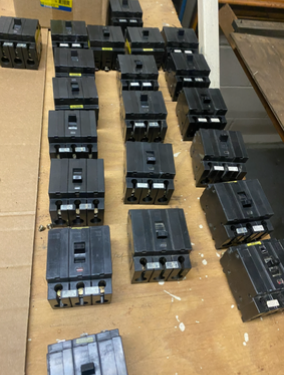
Sell Used Circuit Breakers From Organized Storeroom Lots
Have a shelf or table of breakers ready for review? Call 713-385-1333.
Organized storeroom inventory gives a buyer a clearer view of model variety and quantity. Place breakers so their faces and labels can be seen, but do not stack heavy devices in an unsafe way. Group matching catalog numbers together. If a breaker has a separate trip unit or rating plug, keep those parts with the correct device. Label any quantity that is estimated rather than physically counted.
Maintenance departments should confirm which breakers are genuinely surplus before offering them. Active emergency spares, equipment assigned to scheduled work, and customer-owned material must remain excluded. A written internal approval can prevent confusion once pricing and pickup are discussed. Companies that regularly sell used circuit breakers benefit from a consistent release procedure that includes ownership verification, equipment identification, condition notes, and photographs.
Original records can add context. Purchase orders, receiving documents, maintenance labels, test reports, and removal notes may help establish model history, but unrelated confidential information should be removed before submission. Do not cover the manufacturer’s label with an internal asset sticker. If several labels exist, photograph each one so the purchasing team can distinguish manufacturer data from company tracking information.
Why Companies Sell Used Circuit Breakers
Surplus breakers can accumulate slowly over many years. A facility replaces a panel, changes a production line, standardizes on a different manufacturer, or stores additional units for equipment that is later retired. Eventually, the storeroom contains devices that no longer support current operations. Selling qualified inventory can recover value, free usable space, improve asset records, and reduce the chance that obsolete stock will be mistaken for an approved spare.
Project-driven sellers face different pressures. Demolition, renovation, and electrical modernization often follow strict schedules. Breakers may need to be identified before switchgear is removed, and loading may need to occur within a narrow window. Contacting a buyer early provides time to review equipment, clarify what is included, and plan logistics. Waiting until the final day can limit options and increase the likelihood of avoidable damage.
Distributors and contractors may sell used circuit breakers to reduce slow-moving inventory or close completed jobs. They should separate new surplus from previously installed devices because condition categories affect evaluation. A carton does not automatically prove that the breaker inside is new. Photograph the actual unit, its label, and the package label so the contents can be matched accurately.
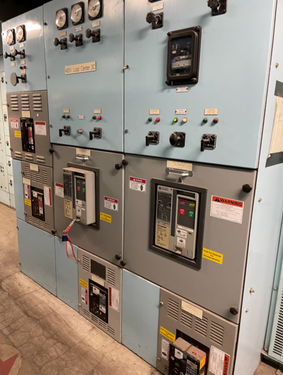
Sell Used Circuit Breakers From Switchgear Upgrades
Planning equipment removal? Call 713-385-1333 before the switchgear is dismantled.
Breakers associated with switchgear require broader documentation than loose devices. Provide photographs of the full lineup, the switchgear manufacturer plate, individual breaker faces, breaker nameplates, drawout mechanisms, trip units, and any available cell information. State whether the equipment is still installed, de-energized, disconnected, removed, or stored. Never enter energized equipment or bypass site-safety rules to obtain a photograph.
When you sell used circuit breakers from an upgrade, explain why the equipment was removed. A facility-wide modernization has different implications than a breaker removed after a known failure. Include the last known operating status without presenting it as a formal test result. If a qualified service provider completed testing, submit the related record and identify which serial number or unit it covers.
Drawout breakers may include cradles, cells, lifting devices, racking handles, secondary disconnect components, or other accessories. Identify which parts are available and whether they are included. Missing equipment does not necessarily prevent review, but buyers need an accurate scope. Clear inclusion lists also prevent site teams from loading components that the seller intended to retain.
Schedule affects recovery planning. Provide the removal date, loading date, facility hours, appointment rules, security requirements, and available material-handling equipment. Texas Global Resources discusses pickup only after the inventory and transaction scope are reviewed. Sellers should not assume labor, rigging, freight, or removal services are included unless confirmed.
How to Document Breakers Before You Sell
Photograph the Complete Catalog Number
One missing suffix can change a breaker’s configuration, rating, or compatibility. Take a sharp, straight photograph of the manufacturer label and check that every character is readable. Add a full front view so the label can be connected to the correct breaker. If a label is damaged, photograph any secondary markings and avoid guessing at the missing characters.
Record Ratings and Trip Information
List poles, voltage, amperage, frame size, interrupting rating, trip type, sensor or rating-plug details, and mounting configuration. For electronic trip units, photograph the faceplate and settings area without altering any settings. Accurate rating information lets the buyer determine whether the unit belongs with other matching equipment.
Show Terminals, Cases, and Mounting Points
Front-only photographs can hide important condition issues. Add side, rear, terminal, and mounting views when safe. Show missing lugs, altered connections, cracks, discoloration, field modifications, and accessory wiring. Sellers who clearly document condition make it easier to sell used circuit breakers without repeated requests for basic images.
Count Matching Models Separately
Use a simple inventory with one row per catalog number. Separate complete breakers from loose trip units and parts. Identify exact counts when possible and label estimates. If the inventory is too large for an immediate count, provide wide photographs and representative model details, then ask what level of inventory work is necessary.
Describe Location and Access
Provide city and state, whether equipment is installed or loose, floor level, distance to loading, door restrictions, dock availability, forklift access, pallet condition, and pickup deadline. These facts help the buyer consider recovery costs alongside equipment demand.
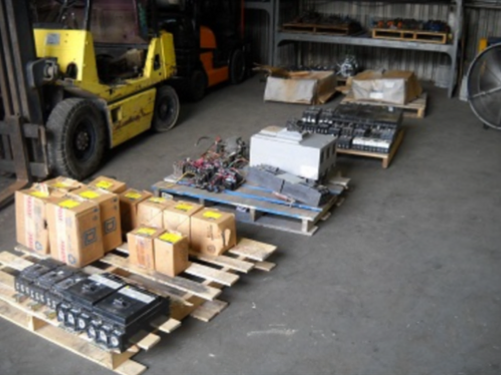
Sell Used Circuit Breakers in Pallet Quantities
For warehouse reductions and pallet lots, call or text 713-385-1333.
Pallet quantities can support an efficient transaction when the contents are identified and stable. Photograph each pallet from several sides, note the number of pallets, and provide dimensions and approximate weight when known. State whether devices are boxed, loose, layered, or mixed with other equipment. Breakers should be protected from movement, impact, moisture, and excessive stacking pressure.
A count such as “four pallets” does not explain what the inventory contains. One pallet might hold matching, usable breaker models while another contains accessories, damaged pieces, and unrelated electrical parts. Sellers should create a model-level list or at least identify the dominant catalog numbers and quantities. That information helps Texas Global Resources determine whether additional inventory work is justified.
If you need to sell used circuit breakers during a warehouse clearout, do not discard cartons, labels, or matching components before the review. Keep excluded material physically separate. Explain whether loading assistance is available and whether pallets can be accessed without moving retained inventory. These details reduce uncertainty and help both parties discuss a realistic schedule.
How Texas Global Resources Evaluates Used Breakers
Evaluation considers more than a breaker’s original selling price. Current demand, exact model, configuration, condition, quantity, replacement availability, completeness, packaging, location, and recovery expense all influence purchasing interest. Some obsolete breakers may remain useful within an installed equipment base, while other older devices may have little practical demand. Current models can also vary substantially according to rating and condition.
Testing information can support an evaluation, but only when it is specific and credible. A generic sticker or verbal statement does not establish what work was completed. Share the test date, provider, procedure, result, and unit identifier when available. Do not arrange unnecessary testing before contacting the buyer; first ask whether existing information is sufficient for initial review.
Condition is assessed from disclosures, photographs, documentation, and any agreed inspection. Clean appearance does not prove electrical performance, and cosmetic wear does not automatically eliminate a breaker. The purpose of the first review is to understand what is offered and decide whether the opportunity matches purchasing needs. Sellers who want to sell used circuit breakers should expect additional questions when labels, history, or condition remain unclear.
Logistics are part of the commercial calculation. Freight distance, palletizing, loading labor, facility access, equipment weight, deadline, and required coordination can affect a transaction. Accurate access information is therefore as important as accurate product information. A buyer cannot responsibly evaluate a nationwide opportunity without knowing where and how the equipment can be recovered.
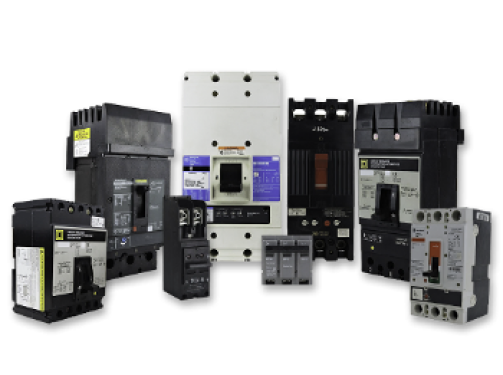
Sell Used Circuit Breakers Across Multiple Models
Submit a mixed breaker list for review by calling 713-385-1333.
Mixed inventories frequently include different frame sizes, pole counts, trip technologies, and mounting configurations. Organize the list by manufacturer and model family, then separate exact catalog numbers. Do not combine all breakers from one brand into a single quantity. Model-level counts allow the purchasing team to distinguish complete groups from isolated or incompatible devices.
Keep related accessories with the correct breaker whenever possible. Rating plugs, electronic trip units, auxiliary switches, shunt trips, undervoltage releases, lugs, mounting kits, and drawout hardware can affect completeness. If an accessory is loose and its match is uncertain, list it separately rather than attaching it to a device without verification.
Businesses can sell used circuit breakers as a breaker-only lot or identify them within a broader electrical inventory. If transformers, wire, switchgear, generators, or other industrial equipment are also available, mention them in the inquiry but preserve the breaker list as a distinct group. This page remains focused on circuit breakers so sellers can prepare the information required for that specific transaction.
The Process to Sell Used Circuit Breakers
Step 1: Confirm Ownership and Availability
Verify that the equipment is legally available for sale. Remove active spares, leased assets, consigned goods, and customer property from the proposed lot. Identify the employee or owner authorized to approve the transaction.
Step 2: Build the Breaker List
Record manufacturer, catalog number, ratings, quantity, condition, packaging, and test status. Pair the list with readable photographs. If time is limited, begin with the highest-quantity and highest-frame models.
Step 3: Submit Location and Timing
Explain where the inventory is stored, how it can be loaded, and when it must be removed. Include restrictions such as appointment-only access, limited dock hours, security clearance, stairs, or unavailable forklifts.
Step 4: Answer Review Questions
Texas Global Resources may request additional nameplates, counts, condition images, or scope clarification. Prompt, factual responses help keep the review moving. If information is unknown, say so instead of estimating.
Step 5: Review the Proposed Terms
If purchasing interest exists, confirm the included equipment, pricing, inspection expectations, payment terms, loading responsibility, pickup timing, and any exclusions. Do not release equipment based on an incomplete verbal assumption.
Step 6: Prepare the Approved Inventory
Keep sold material separated, protected, and accessible. Preserve its documented condition. Coordinate site access with authorized personnel and use qualified workers for electrical or heavy-equipment tasks.
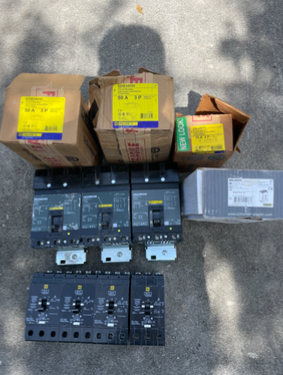
Sell Used Circuit Breakers From Boxed and Loose Lots
Photograph the cartons and actual breakers, then call 713-385-1333.
Boxed inventory deserves physical verification. Opened cartons may contain a different model, a used replacement, loose parts, or incomplete equipment. Photograph the exterior label and the breaker inside. If factory seals remain intact, show the seals clearly and do not open them solely for a photograph without first asking whether the packaging information is sufficient.
Loose devices should be arranged carefully so labels and terminals are visible. Do not place breaker weight on handles, trip units, or delicate accessories. Use protective material between heavy units and keep them away from water, dirt, and corrosive environments. Good storage preserves condition while the transaction is under review.
To sell used circuit breakers successfully, describe boxed and loose material separately. A buyer needs to know which units retain packaging, which were installed, which have test records, and which have unknown history. A precise inventory produces a more reliable commercial discussion than a broad statement that everything is “like new.”
Frequently Asked Questions About How to Sell Used Circuit Breakers
Can I Sell Used Circuit Breakers That Are Obsolete?
Obsolete breakers can be submitted. Some discontinued models retain demand as replacements for existing systems, but others may not justify purchasing. Exact catalog information, condition, completeness, quantity, and location are necessary for review.
Can I Sell a Single Circuit Breaker?
A single significant breaker may qualify, particularly when it is a desirable large-frame or specialized model. Submit complete nameplate photographs and condition details. There is no promise of an offer based only on size or original cost.
Do the Breakers Need to Work?
Provide the honest last known status and any test records. Damaged, failed, incomplete, or unknown-condition equipment may receive different consideration or no purchasing interest. Never energize or test a breaker solely to prepare a sales submission.
Will Texas Global Resources Pick Up the Equipment?
Pickup feasibility depends on inventory, value, location, access, quantity, and schedule. Provide logistics with the initial submission. Any pickup, loading, labor, or freight responsibility must be confirmed as part of agreed terms.
How Fast Can I Sell Used Circuit Breakers?
Timing depends on the completeness and complexity of the opportunity. A readable model list, clear photographs, exact quantities, honest condition, location, and deadline support a faster review. Missing labels or unclear ownership can delay the process.
What Breaker Brands Can I Submit?
Submit the actual manufacturer and catalog information rather than relying on a general brand list. Purchasing needs change, and different models from the same manufacturer may receive different levels of interest. A factual inventory is the best basis for review.
Should I Remove Breakers From Switchgear First?
Contact Texas Global Resources before unnecessary removal when possible. Installed photographs and nameplates may support an initial review. Any disconnection or removal must be performed under proper site procedures by qualified personnel.
Prepare to Sell Used Circuit Breakers Today
Before submitting inventory, confirm ownership, separate retained spares, group matching catalog numbers, count complete devices, record ratings, photograph labels, disclose damage, preserve accessories, and describe the pickup environment. These steps protect useful information and make the purchasing review more efficient.
Do not wait until breakers are mixed into scrap containers or left outdoors. Moisture, impact, missing parts, and unreadable labels can reduce practical value. If a shutdown or renovation is approaching, begin documentation while the equipment remains identifiable and project personnel can answer questions.
Texas Global Resources reviews qualified opportunities from verified sellers nationwide. To sell used circuit breakers, provide manufacturer names, complete catalog numbers, ratings, quantities, condition, testing status, photographs, city and state, access information, and the desired schedule through the Texas Global Resources contact page.
Call or text 713-385-1333 to sell used circuit breakers and request a direct equipment review.