
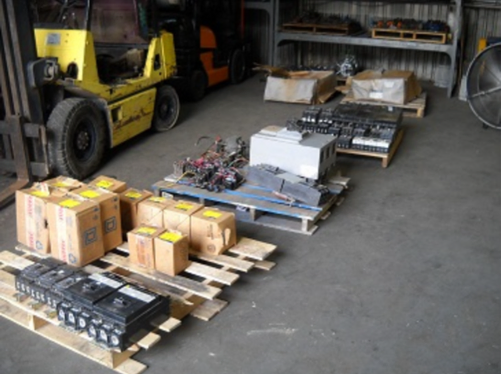
Should I Sell or Scrap Surplus Electrical Equipment From My Facility?
Before sending identified equipment to a recycler, call or text Texas Global Resources at 713-385-1333.
If you are asking should I sell or scrap surplus electrical equipment, first determine whether the assets still have equipment value beyond their recoverable metal. Identified breakers, switchgear, transformers, cable, motor control equipment, panels, busway, and related components may deserve a commercial purchasing review before irreversible dismantling. Texas Global Resources reviews qualified opportunities from verified owners and does not assume every item should be resold or scrapped.
The right path depends on manufacturer, catalog or serial number, ratings, configuration, quantity, condition, completeness, documentation, current demand, location, removal cost, and schedule. Some equipment can be marketable as a complete functioning asset, some may be useful for parts, and some may be appropriate only for responsible recycling. The decision should follow identification and condition review—not precede them.
Do not cut bus, strip copper, drain fluids, remove trip units, separate matching breakers, or discard drawings until the equipment path is clear. These actions may destroy information, damage recoverable components, complicate environmental handling, and eliminate the option to sell complete equipment. Photograph and inventory first; choose the disposition second.
Should I Sell or Scrap Surplus Electrical Equipment Based on Marketability?
Commercial marketability begins with exact identity. Record manufacturer, product family, catalog or style number, serial number, date code, revision, voltage, amperage, phase, frequency, interrupting or short-circuit rating, kVA, impedance, poles, trip data, bus rating, control voltage, enclosure, and other category-specific details. Clear nameplate photographs are essential.
Companies evaluating should I sell or scrap surplus electrical equipment should not rely on appearance alone. Two breakers with similar cases may have different trip systems and mounting. Two transformers with the same kVA may have different voltages and impedance. A switchgear lineup may look complete from the front while missing relays, breakers, bus links, or control components.
Indicators That Equipment May Deserve a Sales Review
Readable identification, complete ratings, current product demand, intact construction, matching accessories, credible operating history, useful documentation, organized quantities, protected storage, clear ownership, and practical loading access can support a commercial review. No single indicator guarantees an offer, but together they reduce uncertainty.
Indicators That Recycling May Be the Practical Path
Severe fire or arc damage, extensive water intrusion, unsafe contamination, missing identification, destroyed insulation, stripped assemblies, cracked castings, unrepairable impact, uncontrolled outdoor exposure, incomplete commodity material, or recovery costs that exceed equipment value may point toward recycling. The actual decision remains equipment-specific.
Parts Value Can Exist Between Resale and Scrap
An incomplete assembly may still contain identifiable breakers, trip units, relays, bus plugs, starters, contactors, coils, operators, handles, cradles, cells, meters, or other usable components. Inventory parts before processing the remaining material. Do not promise compatibility or future service without qualified verification.
Compare Net Recovery, Not Only the Headline Price
A sales offer and a scrap quote may use different scopes. One may include complete equipment purchase, while the other may be based on estimated commodity weight after deductions. Ask whether disconnection, rigging, packaging, loading, transportation, fluid handling, sorting, containers, minimum charges, and site restoration are included.
The practical answer to should I sell or scrap surplus electrical equipment is often the option with the strongest net recovery under safe, documented terms. A higher gross offer may be less favorable after labor, crane, freight, processing, and restoration costs. Schedule reliability and payment certainty also matter.
Understand How Each Quote Is Calculated
A commercial buyer may consider equipment identity, specifications, condition, completeness, documentation, demand, and logistics. A recycler may focus on recoverable material, grade, contamination, weight, processing, and commodity markets. Neither method should be mistaken for original cost, replacement cost, book value, or formal appraisal value.
Document Deductions and Responsibilities
Written terms should identify the exact assets, included and excluded material, represented condition, inspection rights, pricing method, deductions, payment timing, ownership transfer, dismantling, containers, loading, freight, schedule, and site responsibilities. Avoid agreements that leave essential costs undefined.
Verify Payment Before Releasing Assets
Confirm cleared payment through established business channels and verify the carrier or removal team. Do not release equipment based solely on a payment screenshot, unexplained overpayment, request to forward money, or an unverified last-minute change in pickup instructions.
Inventory First When Deciding Whether to Sell or Scrap
Create a separate record for each serialized asset or genuinely identical catalog group. Include inventory ID, category, manufacturer, model, serial or catalog number, ratings, quantity, condition, accessories, documents, dimensions, weight, physical location, and photograph references. Keep new unused, used tested, used untested, reconditioned, incomplete, and damaged items separate.
Anyone researching should I sell or scrap surplus electrical equipment should preserve the relationship between equipment and records. Use the same inventory number on photographs, spreadsheets, test reports, pallet labels, cartons, packing lists, and release documents. This prevents a report from being assigned to the wrong unit.
Photograph Actual Condition
Take full views, every side, nameplates, controls, terminals, connectors, trip units, bushings, bus areas, packaging, storage conditions, and defects. Show corrosion, moisture, overheating, burned terminals, arc exposure, cracks, broken insulators, missing components, cut wiring, impact, and modifications directly.
Preserve Accessories
Keep trip units, rating plugs, cradles, racking handles, motor operators, lugs, relays, tap hardware, fans, temperature monitors, bus links, keys, covers, mounting kits, and spare parts with the correct equipment. If the relationship is uncertain, label the item separately rather than forcing a match.
Confirm Ownership
Exclude active, leased, financed, consigned, customer-owned, utility-owned, insurer-controlled, disputed, recalled, counterfeit, or reserved equipment until authorization and disclosure are resolved. Physical possession does not always establish the legal right to sell or scrap an asset.
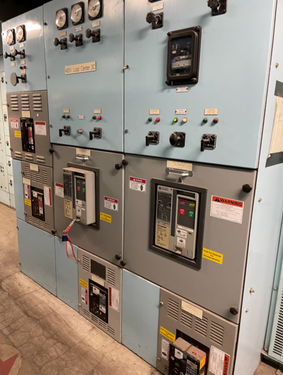
Should I Sell or Scrap Surplus Electrical Equipment Such as Switchgear?
Have a complete or partial switchgear lineup? Call 713-385-1333 before cutting bus or separating matching sections.
Switchgear should be evaluated as an assembly before it is processed as metal. Record manufacturer, product family, lineup or order number, voltage class, bus amperage, short-circuit rating, enclosure, section count, main-tie-feeder arrangement, breaker types, relays, metering, controls, and available drawings. Identify low-voltage or medium-voltage construction using manufacturer information.
Completeness matters. Inventory each section from left to right and list mains, ties, feeders, breakers, fuses, relays, meters, instrument transformers, controls, communication components, heaters, fans, shutters, secondary disconnects, and empty cells. Report missing devices, field modifications, cut wiring, damaged bus, altered doors, and aftermarket components.
When asking should I sell or scrap surplus electrical equipment that remains installed, photograph the lineup before disconnection. Include full fronts, every section, nameplates, breakers, relays, accessible rear areas when safely de-energized, cable compartments, bus shipping splits, and defects. Number photographs to match the lineup schedule.
Premature dismantling can separate matching breakers and cells, destroy evidence of configuration, damage bus joints, and disconnect control wiring without labels. If project timing requires separation, qualified personnel should document factory shipping splits, tag hardware, protect exposed conductors, and keep each component linked to its section.
When Condition Favors a Sales Review
Equipment does not need to be new to deserve a purchasing review. Used assets may qualify when exact identification, useful ratings, supportable operating history, intact construction, honest condition details, documentation, and logistics align with demand. New old stock may also require careful verification.
“Working when removed” should be used only when someone with direct knowledge can support it. It is history, not certification. It does not prove insulation integrity, contact resistance, time-current performance, winding condition, dielectric strength, code compliance, or safe future use.
Businesses weighing should I sell or scrap surplus electrical equipment should provide qualified test and maintenance reports when available. Reports should identify the exact serial number, date, provider, procedure, readings, repairs, replaced components, and unresolved findings. Cleaning or repainting is not reconditioning.
New Old Stock Still Needs Verification
Provide purchase records, original submittals, manufacturing date, packaging condition, storage history, and evidence the equipment was never installed or energized. Inspect for mounting marks, terminal wear, moisture, altered settings, broken seals, shelf damage, mismatched cartons, and missing hardware.
Used Untested Equipment Must Be Described Accurately
If no qualified post-removal test exists, identify the asset as used and untested. State the last known operation, removal reason, fault exposure, repairs, storage, corrosion, moisture, and missing components. Do not perform unsafe or improvised energization to improve a sale inquiry.
Reconditioned Claims Require Records
Identify the reconditioning provider, date, work performed, components replaced, tests, readings, findings, labels, and written warranty. A used component installed in a clean box should not be called factory new or remanufactured without support.
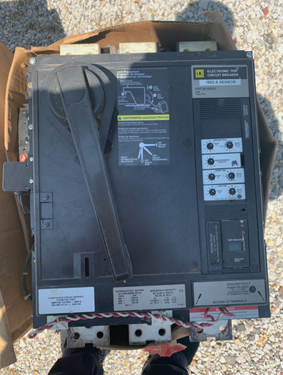
Should I Sell or Scrap Surplus Electrical Equipment Such as Circuit Breakers?
Have an identified breaker, trip unit, or matching cradle? Call or text 713-385-1333 with complete ratings and condition.
Circuit breakers often require catalog-specific review before recycling. Record manufacturer, series, catalog or style number, frame, trip or sensor rating, rating plug, poles, voltage, interrupting rating, mounting type, trip-unit model, control voltage, accessories, and quantity. Similar housings do not establish compatibility or value.
For large-frame or draw-out equipment, photograph the front, sides, rear, primary disconnects, secondary contacts, racking mechanism, arc chutes where safely accessible, trip unit, rating plug, control components, and labels. Identify matching cells or cradles, racking handles, lifting devices, extension rails, and test equipment.
The answer to should I sell or scrap surplus electrical equipment can change when a breaker is separated from its trip unit, cradle, accessories, or records. Keep those components together until the review is complete. If a component cannot be matched confidently, give it a separate inventory number.
Fault exposure must be disclosed. Report known short circuits, ground faults, overloads, nuisance trips, arc damage, fire, water, overheating, burned terminals, cracked cases, damaged stabs, and unauthorized repairs. A handle that resets or a breaker that closes mechanically has not been fully tested.
When Recycling May Be the Better Decision
Responsible recycling may be the practical path when equipment has no identifiable commercial use, is badly damaged, is unsafe or contaminated, lacks essential components, cannot be economically recovered, or does not fit current purchasing needs. The decision should reflect actual condition and handling requirements, not merely age.
Before scrapping, remove only what the agreed process and qualified personnel require. Do not dismantle energized equipment, open sealed components, drain fluids, strip insulation, or process potentially regulated material without proper authorization, training, containment, and environmental procedures.
Someone asking should I sell or scrap surplus electrical equipment should request written clarification of accepted material, prohibited items, sorting requirements, containers, scales, grading, deductions, transportation, certificates, and payment. Retain records showing what material left the site and where it went.
Environmental and Safety Requirements Still Apply
Transformers, capacitors, batteries, lamps, electronics, fluids, contaminated equipment, and other components may require special handling. Do not assume an item is free of regulated substances based on appearance or age. Use available labels, records, sampling, and qualified guidance.
Protect Data and Facility Security
Controls, relays, meters, drives, and communication equipment may store settings, network information, logs, credentials, or facility identifiers. Follow authorized data-handling and cybersecurity procedures before transfer or recycling without destroying evidence needed for equipment review.
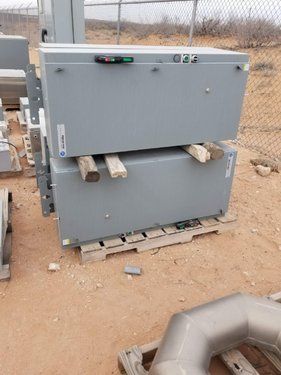
Should I Sell or Scrap Surplus Electrical Equipment Such as Transformers?
Have an identified transformer with nameplate and history? Call 713-385-1333 before draining, dismantling, or moving it.
Transformer review begins with manufacturer, serial number, date, kVA, primary and secondary voltage, phase, frequency, impedance, taps, cooling class, temperature rise, enclosure, dimensions, and total weight. Identify copper or aluminum windings only when nameplates, submittals, purchase records, or reliable manufacturer documents confirm the material.
For liquid-filled equipment, document the insulating fluid exactly as shown in records. Provide fluid quantity, sampling history, dissolved gas or dielectric reports when available, leaks, repairs, pressure events, accessories, and environmental information. Never describe a transformer as free of regulated substances without supporting evidence.
For a dry-type unit, record insulation class, temperature rise, cooling, enclosure, taps, and construction. Photograph coils or internal areas only when the unit is de-energized, access is authorized, and qualified personnel determine it is safe. Show overheating, dust, moisture, cracked insulation, damaged terminals, corrosion, and cut leads.
Facilities deciding should I sell or scrap surplus electrical equipment must account for transformer logistics. Weight, center of gravity, lifting points, fluid containment, crane reach, floor loading, doorway clearance, trailer configuration, road limits, and site schedule can affect the net result.
How Removal Costs Affect the Sell-or-Scrap Decision
Provide city and state, building location, floor level, equipment dimensions, verified weights, access route, doorway and aisle clearance, overhead restrictions, dock conditions, forklift or crane access, electrical status, site hours, insurance requirements, and deadline. Photographs of the travel path help reveal constraints.
Qualified personnel must control de-energization, verification, lockout/tagout, grounding where applicable, electrical disconnection, fluid handling, and other hazardous work. Rigging should use verified weights, approved lifting points, suitable machinery, and a plan based on actual field conditions.
When comparing should I sell or scrap surplus electrical equipment, identify who disconnects conductors, cuts approved connections, removes anchors, handles fluids, provides containers, packages accessories, loads trucks, transports material, cleans debris, and restores openings. Undefined scope can materially change the outcome.
Do Not Damage Assets Before Scope Is Agreed
Cutting cable too close to equipment, torching frames, drilling tanks, dropping transformers, breaking insulators, and stripping bus before review can reduce recovery options. Preserve the asset until the buyer or recycler’s accepted scope is documented.
Plan Around the Facility Schedule
Coordinate shutdowns, permits, escorts, security, production, tenants, utilities, weather, crane access, and truck appointments. Starting early helps the owner compare paths without allowing an immediate removal deadline to make the decision by default.
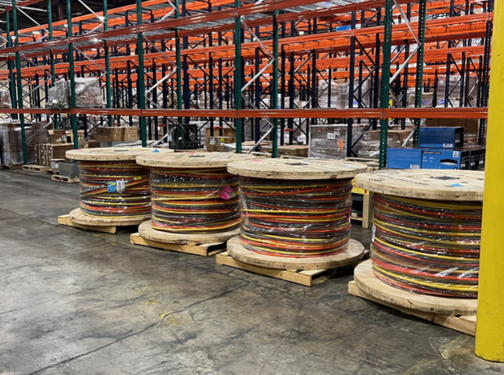
Should I Sell or Scrap Surplus Electrical Equipment Such as Cable?
Have identified project-surplus cable on reels? Call or text 713-385-1333 with conductor, rating, length, and storage details.
Cable should be identified before it is treated as commodity metal. Record manufacturer, conductor metal, conductor size, conductor count, voltage rating, insulation, jacket, shield, armor, date code, reel number, factory footage, verified remaining length, condition, and storage history.
Photograph reel tags, jacket printing, both reel flanges, exposed ends, protective covering, and visible defects. Establish length through printed footage markers, purchase records, measured runs, or another documented method. Reel diameter alone is not a reliable length calculation.
When answering should I sell or scrap surplus electrical equipment for cable, distinguish new project surplus from pulled cable, short remnants, mixed coils, weathered material, and stripped conductor. Original reels, sealed ends, readable printing, known length, and protected storage support a different review from unidentified material.
Disclose cut ends, moisture, damaged jackets, crushed reels, missing tags, field splices, contamination, and outdoor exposure. Do not unwind, strip, cut, roll, or lift heavy reels solely for a preliminary review. Handling must follow appropriate equipment and safety practices.
A Step-by-Step Sell-or-Scrap Review
1. Confirm Authorized Equipment
Identify the legal owner and approved assets. Exclude active, leased, financed, customer-owned, utility-owned, disputed, restricted, or reserved equipment.
2. Inventory Exact Models and Ratings
Record manufacturer, product family, model, serial or catalog number, ratings, quantity, condition, accessories, documents, location, dimensions, and weight.
3. Photograph Before Dismantling
Capture all sides, readable labels, connections, controls, accessories, packaging, storage, and defects. Connect every photograph to its inventory reference.
4. Add History and Test Records
Provide former application, last operation, removal reason, maintenance, testing, repairs, fault exposure, environmental information, and storage history.
5. Define Removal and Loading
Describe electrical status, access, floor level, route, dimensions, weights, lifting resources, dock conditions, site rules, release dates, and deadline.
6. Request a Commercial Review
Submit the organized package through the Texas Global Resources contact page before committing intact assets to recycling. Complete information helps determine current purchasing fit.
7. Compare the Net Terms
Review asset scope, pricing method, deductions, payment, disconnection, dismantling, rigging, loading, freight, environmental handling, schedule, ownership transfer, and site responsibilities in writing.
Frequently Asked: Should I Sell or Scrap Surplus Electrical Equipment?
Can One Item Be Reviewed Before Scrapping?
One qualified item may warrant review when its identity, ratings, condition, documentation, ownership, location, and demand support an opportunity. Provide the full nameplate and current photographs.
Is Old Equipment Automatically Scrap?
No. Some older product families retain demand for complete equipment, replacements, or parts, while others may not. Exact catalog data and condition matter more than age alone.
Is Damaged Equipment Automatically Scrap?
Not always. The type and extent of damage, affected components, identity, parts demand, safety, contamination, and recovery cost matter. Disclose damage and avoid further dismantling until reviewed.
Should I Test Equipment First?
Do not perform unsafe or improvised testing. Submit existing qualified reports and current condition first. If testing is proposed, define the provider, scope, safety controls, responsibility, and use of results.
Can Equipment Across the United States Be Reviewed?
Qualified opportunities in the United States may be considered. Provide city and state, quantity, dimensions, weight, access, packaging, loading resources, release date, and removal deadline.
What Information Speeds Up the Decision?
An itemized inventory, readable labels, exact ratings, current photographs, condition groups, records, ownership confirmation, location, access details, and realistic schedule provide the strongest starting point.
Request a Review: Should I Sell or Scrap Surplus Electrical Equipment?
If you are still deciding should I sell or scrap surplus electrical equipment, pause irreversible processing long enough to identify the assets. Preserve complete assemblies, match accessories, retain drawings and test reports, disclose condition, confirm ownership, and document the recovery environment.
Texas Global Resources reviews qualified opportunities according to manufacturer, catalog information, ratings, configuration, quantity, condition, completeness, documentation, ownership, demand, location, labor, freight, schedule, and recovery requirements. Not every item will qualify for purchase, but an informed review can prevent marketable equipment from being treated as unidentified scrap.
For a direct answer to should I sell or scrap surplus electrical equipment, prepare the equipment list, nameplate data, ratings, quantities, condition, photographs, records, city and state, dimensions, weights, access, electrical status, and release date.
Call or text 713-385-1333 when asking should I sell or scrap surplus electrical equipment, or request an equipment review online.