
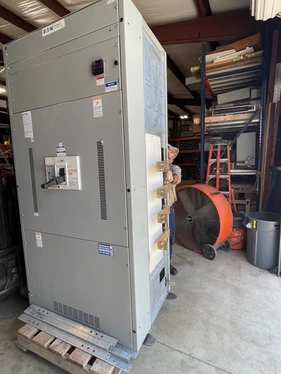
Switchgear Buyers for Surplus Electrical Distribution Equipment
Call or text 713-385-1333 to submit switchgear details and request a direct purchasing review.
Qualified switchgear buyers give industrial facilities, electrical contractors, commercial property operators, distributors, construction companies, and equipment owners a direct way to sell switchgear that is no longer required. Texas Global Resources evaluates eligible new, unused, used, and obsolete electrical distribution equipment from verified sellers across the United States. Opportunities may include one complete cabinet, multiple matching sections, drawout breaker lineups, project overages, stored replacement equipment, or assets removed during an authorized facility upgrade.
Switchgear cannot be evaluated accurately from a distant photograph and a general voltage description alone. Manufacturer, lineup type, model or catalog information, voltage class, amperage, interrupting rating, enclosure type, section count, breaker configuration, bus details, condition, location, and removal status all affect purchasing interest. Sellers should photograph the full exterior, manufacturer plates, breakers, controls, meters, compartment labels, and accessible interior identification without entering energized equipment or bypassing safety procedures.
Texas Global Resources provides commercial equipment purchasing, not electrical engineering, testing, certification, disconnection, or installation advice. Switchgear must be handled by qualified personnel following the facility’s safety program and applicable requirements. Not every submission will produce an offer, but complete records allow switchgear buyers to determine whether the equipment matches current demand and whether recovery is practical.
What Switchgear Buyers Evaluate
Purchasing reviews may cover low-voltage switchgear, medium-voltage switchgear, metal-enclosed distribution equipment, metal-clad lineups, switchboards, motor-control-related distribution sections, drawout breaker cabinets, fused sections, main-tie-main arrangements, feeder sections, distribution panels, and related breakers or controls when the package fits current purchasing needs. Exact identification matters because similar-looking cabinets may have very different ratings, construction, components, and market applications.
Both complete systems and selected sections may be considered. A matched lineup with documentation can provide a clearer opportunity than disconnected cabinets with unknown configuration. However, a single desirable section or breaker can still warrant review. Switchgear buyers consider equipment identity, condition, completeness, demand, available documentation, removal status, access, transportation requirements, and timing together rather than applying one price formula to every lineup.
Current production equipment and discontinued systems can each have potential value. Newer gear may appeal to projects seeking recognizable configurations, while older equipment may support facilities maintaining established electrical systems. Age by itself neither guarantees nor eliminates purchasing interest. Obsolescence, parts availability, condition, ratings, modifications, and the installed base all influence the decision.
Businesses comparing switchgear buyers should prepare the same complete equipment record for every review. Consistent information makes commercial responses easier to evaluate and reduces misunderstandings about the offered lineup.
New, Used, and Obsolete Switchgear
Describe condition precisely. “New” generally means equipment has not been installed or energized. “Unused” may describe stored project equipment without complete original packaging. “Used” indicates prior installation or service. “Reconditioned” should identify the company that performed the work and the testing completed. If service history is unavailable, state that the condition or operating history is unknown rather than making an unsupported claim.
Visible damage must be disclosed. Corrosion, water exposure, missing doors, broken mechanisms, burned components, cut wiring, damaged bus, absent breakers, field modifications, removed relays, and incomplete controls can materially change the review. Clear condition photographs save time and help switchgear buyers separate repairable equipment from inventory that may not be commercially practical.
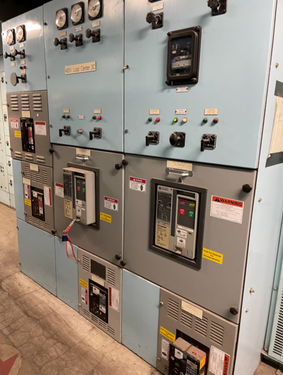
Switchgear Buyers for Installed Electrical Lineups
Planning a shutdown, renovation, or system replacement? Call 713-385-1333 before removal begins.
Installed switchgear should be documented before demolition or disassembly whenever possible. A full-lineup photograph shows the number of sections and general arrangement. Individual images should capture main breakers, feeder breakers, meters, relays, controls, nameplates, compartment labels, and any visible modifications. Provide a one-line diagram, equipment schedule, submittal, test report, or maintenance record when legitimately available and safe to share.
Sellers should explain why the lineup is being removed. Equipment replaced during a planned modernization presents a different history from gear removed after an electrical event or known failure. State the last known operating status, but do not describe switchgear as tested unless supporting records identify the work performed, the date, and the specific equipment covered. Honest history gives switchgear buyers a sounder basis for review.
Never open energized compartments, defeat interlocks, remove barriers, or approach exposed conductors to prepare a sales submission. Existing facility personnel or licensed electrical professionals should determine what photographs and records can be obtained safely. Commercial purchasing interest does not change the hazards associated with electrical distribution equipment.
Early contact also improves project coordination. A facility may have a short window between de-energization and demolition, while a contractor may need the room cleared for new gear. Submitting details before removal gives Texas Global Resources time to identify the equipment, ask questions, clarify included sections, and discuss whether a transaction can fit the schedule.
Facility owners contacting switchgear buyers should identify the project deadline before dismantling begins. This gives the purchasing review a defined schedule and helps preserve the relationship between sections, breakers, and documentation.
Why Facilities Contact Switchgear Buyers
Facilities sell switchgear for many legitimate reasons: electrical modernization, capacity changes, production-line removal, tenant improvements, building redevelopment, plant closure, equipment standardization, project cancellation, warehouse reduction, or the retirement of an older distribution system. In each case, recognizable equipment may deserve a purchasing review before it is treated as scrap or discarded.
Switchgear can occupy considerable floor space and may be expensive to move repeatedly. Holding unneeded lineups also creates tracking and storage responsibilities. A direct sale can provide an organized disposition path, but sellers should begin while labels, breakers, controls, and documentation remain together. Once sections are stripped, mixed, or exposed outdoors, evaluation becomes harder and practical value may decline.
Switchgear buyers also help organizations define the commercial boundary of a project. The seller can identify what is included, what must remain, who owns associated breakers, and when access is available. Clear scope control protects maintenance spares and prevents unrelated assets from being loaded accidentally.
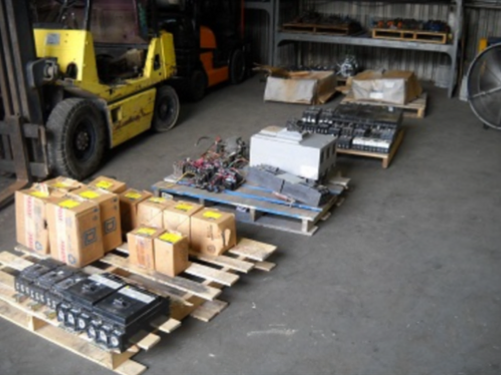
Switchgear Buyers for Facility and Warehouse Clearouts
For multiple sections, breakers, and related electrical inventory, call or text 713-385-1333.
Warehouse and facility clearouts may combine complete switchgear sections with loose breakers, spare trip units, controls, relays, hardware, and unrelated electrical material. Separate the switchgear package from other assets and identify which loose components belong to it. Do not assume every breaker on a pallet matches the available lineup. Catalog numbers, frame sizes, mounting configurations, and drawout types should be checked individually.
Provide a count of cabinets, sections, breakers, and pallets. Include approximate dimensions and weight when known. Describe whether equipment is indoors, outdoors, wrapped, crated, palletized, bolted to the floor, or awaiting removal. Photograph each side that can be accessed safely. If aisles are blocked or retained inventory must be moved first, disclose that condition during the initial review.
Loading conditions affect recovery. Switchgear buyers need to know whether a forklift, loading dock, overhead door, crane access, pallet jack, rigging path, or appointment is available. Include floor level, doorway dimensions, restricted hours, security requirements, and removal deadline. Texas Global Resources discusses feasible logistics after the equipment and transaction scope have been evaluated; no pickup service should be assumed until it is confirmed.
For urgent clearouts, identify the actual decision date and removal date. “Immediately” is less useful than a specific schedule. A complete inventory provided early can reduce repeated questions and help determine whether the opportunity is workable before site crews begin breaking down the equipment.
Warehouse managers can help switchgear buyers by keeping approved sale inventory separate from retained assets. A clearly marked staging area also reduces the risk of loading components outside the agreed scope.
Information Switchgear Buyers Need
Manufacturer and Equipment Identification
Photograph the primary manufacturer nameplate and every section label. Record product family, model, serial information, manufacturing date when shown, enclosure classification, and lineup designation. Do not infer a model from appearance alone. A readable label is more reliable than a description such as “large gray switchgear.”
Electrical Ratings
Provide rated voltage, continuous current, short-circuit or interrupting ratings, frequency, phase, wire configuration, bus rating, and any available withstand information. Include control voltage and auxiliary power details when documented. Never remove covers from energized gear to search for ratings.
Breaker and Protection Details
List main, tie, and feeder breakers by manufacturer and complete catalog number. Record frame and trip ratings, drawout or fixed mounting, trip-unit type, rating plugs, protective relays, fuses, and available spare breakers. Switchgear buyers use these details to understand the lineup’s actual configuration rather than relying only on the cabinet exterior.
Section Arrangement and Completeness
Count the sections and describe their order when possible. State whether bus, doors, covers, shutters, racking mechanisms, control power transformers, meters, relays, and internal wiring remain present. Identify removed or damaged components. A simple lineup sketch can help connect photographs to individual sections.
Condition and Service History
Explain whether the gear is operating, de-energized, disconnected, removed, stored, tested, or condition unknown. Provide maintenance and test records when available. Disclose water, fire, arc, corrosion, impact, or outdoor exposure. Do not clean away evidence or repaint equipment before review.
Location and Schedule
Provide city and state, building type, access restrictions, removal status, available loading equipment, desired pickup date, and the date by which a decision is required. Accurate logistics allow switchgear buyers to evaluate recovery costs alongside equipment demand.
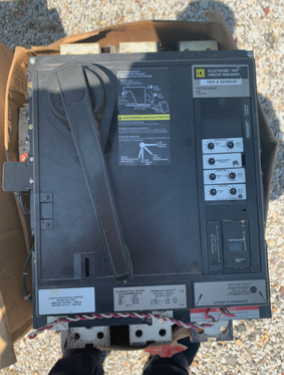
Switchgear Buyers for Drawout and Large-Frame Breakers
Have switchgear breakers or spares available? Send nameplate photos and call 713-385-1333.
Breakers can represent a significant part of a switchgear package. Large molded-case, insulated-case, and drawout breakers should be photographed from the front, sides, rear, and connection area when safely accessible. Include the complete nameplate, frame rating, trip unit, rating plug, mounting style, mechanism, secondary disconnects, and any accessories. For drawout equipment, identify whether the cradle or cell is included.
Loose breakers should be connected to the correct lineup whenever records allow. Mark the section or position served, but do not cover manufacturer labels. If the relationship is uncertain, list the breaker separately. Switchgear buyers would rather receive an honest “unknown” than an incorrect compatibility claim.
Describe why each breaker was removed and its last known status. A spare stored indoors may have a different history from a takeout exposed during demolition. Show cracked housings, damaged stabs, missing trip units, corrosion, worn mechanisms, or burned terminals. Never operate, rack, lift, or test heavy breakers without proper training, tools, and site authorization.
Texas Global Resources may evaluate breakers with a complete lineup or as a related inventory group. Purchasing interest depends on exact models, condition, demand, completeness, quantity, location, and recovery requirements. Original replacement cost is not a reliable indicator of current resale value.
How Switchgear Buyers Determine Purchasing Interest
There is no universal price per cabinet or section. Evaluation begins with identity and configuration, then considers condition, completeness, market demand, documentation, location, timing, and recovery expense. Two visually similar lineups may differ substantially because one has desirable breakers and intact controls while the other is incomplete, modified, or damaged.
Manufacturer documentation, one-line diagrams, original submittals, equipment schedules, and service records can improve clarity. Records should correspond to the actual gear being sold. If a facility has modified the lineup, describe those changes rather than presenting outdated drawings as the current configuration.
Testing and maintenance history may support confidence, but records must be specific. Switchgear buyers may ask who performed the work, what standards or procedures were followed, which components were tested, and when the work occurred. A sticker without traceable information may not establish condition.
Recovery feasibility is equally important. Dimensions, weight, section separation, bus disconnection, anchoring, doorway clearance, rigging requirements, freight distance, loading equipment, and schedule all affect the transaction. Sellers should disclose logistical challenges before terms are discussed so the opportunity can be evaluated realistically.
Accurate recovery details allow switchgear buyers to assess the equipment and the work needed to move it. Omitting access restrictions can delay a decision or change whether a proposed transaction remains practical.
Switchgear Buyers for Spare Breaker Inventories
Turn an organized spare-breaker list into a purchasing review by calling 713-385-1333.
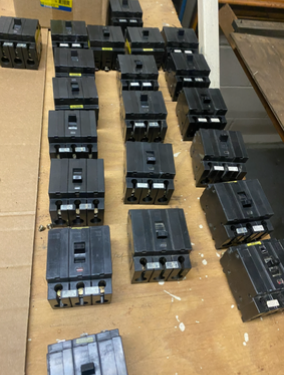
Facilities often retain spare breakers for distribution equipment that has since been replaced. Before selling, maintenance personnel should confirm that each unit is no longer required by an active system. Separate approved surplus from emergency spares, project-assigned equipment, customer property, and leased assets. Document internal authorization to release the inventory.
Organize spares by manufacturer, product family, catalog number, frame, trip rating, and mounting. Keep rating plugs, electronic trip units, racking handles, secondary disconnect parts, and related hardware with the correct breaker. If accessories cannot be matched confidently, inventory them separately.
Switchgear buyers can review organized lists more efficiently than unsorted tabletop photographs. Use one spreadsheet line per exact catalog number and include quantity, condition, test status, packaging, and location. Add one wide photograph showing the overall lot and close views of representative units. For a small number of high-value breakers, photograph every label individually.
Stored equipment should remain dry, protected, and supported. Do not place heavy breakers on handles or delicate components. Preserve factory packaging when present, but verify that the carton label matches the device inside. An opened box does not prove that its contents are new or original.
The Switchgear Selling Process
Confirm Authority to Sell
Verify ownership and obtain the necessary internal approval. Exclude leased, financed, consigned, customer-owned, or disputed equipment. Identify the authorized contact who can approve scope and terms.
Document the Equipment
Create a section count, breaker list, rating summary, and condition description. Photograph the lineup, nameplates, controls, breakers, and visible damage. Include legitimate diagrams and records when available.
Describe Access and Timing
State whether gear is installed, de-energized, disconnected, separated, palletized, or stored. Provide the location, rigging path, loading conditions, restrictions, deadline, and available handling equipment.
Submit the Package for Review
Send photographs and inventory information through the Texas Global Resources contact page. Include a phone number and email for follow-up. A complete package helps switchgear buyers identify missing information quickly.
Clarify the Proposed Transaction
If purchasing interest exists, review included and excluded assets, inspection needs, price, payment terms, loading responsibility, pickup schedule, and site requirements. Confirm these points before equipment is moved.
Prepare Approved Equipment
Keep the agreed equipment together and preserve its documented condition. Coordinate authorized access and ensure qualified personnel perform all electrical, rigging, and loading work required under the final arrangement.
Switchgear Buyers for Breakers and Distribution Components
Submit switchgear, breakers, and matching component details at 713-385-1333.
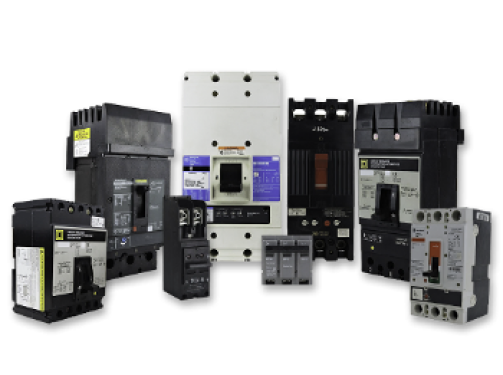
A switchgear opportunity may include multiple breaker sizes, trip technologies, controls, protective devices, and accessories. Identify which components belong to the lineup and which are general facility spares. Do not represent unrelated parts as a complete package. Accurate grouping lets the buyer understand whether the inventory supports a full system, expansion, replacement needs, or parts recovery.
Photograph each distinct breaker model and list quantities separately. Record loose trip units, rating plugs, relays, meters, fuses, control components, and hardware. If a component’s condition or compatibility is unknown, say so. Clear boundaries reduce misunderstandings and help switchgear buyers focus on assets that can be evaluated responsibly.
Related transformers, wire, generators, or industrial equipment can be mentioned in the initial inquiry, but the switchgear inventory should remain separately documented. This keeps the page and submission focused on the exact service intent while allowing a seller to disclose the broader project scope.
Sellers should ask switchgear buyers to confirm exactly which cabinets, breakers, and components are included. A written equipment boundary supports an orderly transaction and protects active facility assets.
Frequently Asked Questions About Switchgear Buyers
Do Switchgear Buyers Purchase Used Equipment?
Used equipment may be considered when it is identifiable, honestly represented, legally available, and aligned with current purchasing needs. Provide service history, removal reason, condition photographs, ratings, and test records when available.
Can Obsolete Switchgear Be Submitted?
Yes. Obsolete gear may support existing installed systems, but age does not guarantee demand. Manufacturer, model, ratings, breakers, completeness, condition, configuration, location, and recovery cost determine whether further review is practical.
Can I Submit One Switchgear Section?
A single section may qualify when it is desirable, complete enough to evaluate, and practical to recover. Photograph the section, nameplate, bus connection area when safely visible, installed breakers, controls, and all sides.
Does Equipment Need to Be Removed First?
No universal rule applies. Installed documentation may be useful before removal, especially for a complete lineup. Contact Texas Global Resources early. Any disconnection and removal must be handled by qualified personnel under the facility’s safety requirements.
Do Switchgear Buyers Purchase Equipment Nationwide?
Texas Global Resources evaluates qualified opportunities throughout the United States. Feasibility depends on equipment value, quantity, condition, location, access, freight, and schedule. Include the city and state in the first submission.
How Quickly Can a Review Be Completed?
Timing depends on the completeness and complexity of the submission. Clear nameplates, ratings, section counts, breaker lists, condition photographs, location, and deadlines reduce follow-up. Urgency should be disclosed, but it does not guarantee purchasing interest.
What Should I Do With Missing Documentation?
Submit the available nameplates and photographs, then identify which records are missing. Do not invent ratings or copy information from similar equipment. Switchgear buyers can explain whether the visible identification is sufficient for the next step.
Request an Offer From Switchgear Buyers
Switchgear is easiest to evaluate while sections, breakers, controls, labels, and records remain together. Before demolition begins, confirm ownership, document the lineup, photograph nameplates, list breakers, disclose condition, and describe access. Early preparation can protect useful information and prevent commercially relevant equipment from being damaged or mixed with scrap.
Texas Global Resources reviews qualified switchgear opportunities according to equipment identity, ratings, configuration, completeness, condition, demand, documentation, location, schedule, and recovery requirements. The service is intended for real owners seeking a direct commercial purchasing discussion.
To contact switchgear buyers, send manufacturer and model information, voltage and amperage, section count, breaker list, condition, photographs, city and state, removal status, loading details, and the required schedule. Include the best contact information for prompt follow-up.
Call or text 713-385-1333 to request a switchgear review, or submit the equipment package online.