
Who Buys Surplus Electrical Equipment From Businesses?
Have qualified electrical inventory ready for review? Call or text Texas Global Resources at 713-385-1333.
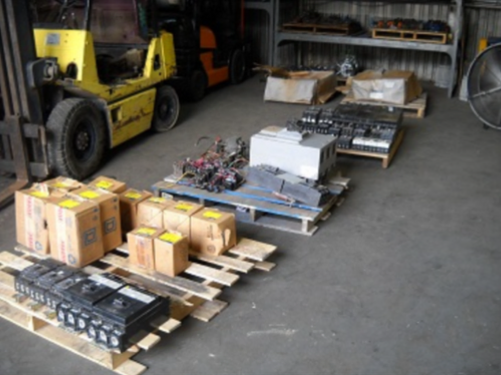
Companies asking who buys surplus electrical equipment are usually looking for a commercial buyer that can evaluate identifiable assets, explain what information is needed, and consider practical removal requirements. Texas Global Resources reviews qualified electrical equipment from manufacturers, contractors, distributors, commercial facilities, utilities, data-center projects, warehouses, and organizations managing upgrades, canceled projects, shutdowns, or excess inventory.
A buyer needs more than an equipment category and estimated quantity. Manufacturer, model or catalog number, serial number, electrical ratings, configuration, age, condition, documentation, ownership, location, storage, market demand, and transportation expense can all affect purchasing interest. Each item or organized group should be described with enough detail to distinguish it from visually similar equipment.
Start with current photographs of every asset and readable images of labels and nameplates. Include breaker faces, terminals, trip units, transformer plates, cable markings, generator controls, enclosures, packaging, and visible defects. State whether equipment is new and unused, installed but never energized, removed from working service, used, reconditioned by a named provider, damaged, incomplete, or untested.
Who Buys Surplus Electrical Equipment and What May Qualify?
Potential purchases may include circuit breakers, switchgear, switchboards, transformers, motor controls, panelboards, disconnects, safety switches, contactors, starters, bus plugs, busway, wire, cable, generators, and selected electrical components. Current demand changes by manufacturer, series, rating, condition, completeness, and location, so a familiar brand or high original price does not guarantee an offer.
Complete assemblies are generally easier to review than mixed unidentified parts. Keep breakers with their trip units and mounting hardware, bus plugs with operating mechanisms, transformer accessories with the correct unit, and cable records with the corresponding reels. List loose accessories separately and explain whether they are included, reserved, missing, or owned by another party.
When deciding who buys surplus electrical equipment, sellers should look for a buyer interested in verifiable equipment data rather than unsupported claims. Accurate labels, quantities, photographs, and condition notes make it possible to screen the opportunity before either party commits time to inspection or freight planning.
New, Unused, and Project-Excess Equipment
Provide purchase records, packaging condition, manufacturing date, storage history, and any evidence that equipment was never installed or energized. Opened packaging, missing seals, shelf wear, outdoor storage, and incomplete hardware should be disclosed even when the equipment has never been placed in service.
Removed Electrical Equipment
State the former application, removal date, reason for replacement, known operating history, fault history, disconnection method, and storage conditions. “Working when removed” should be used only when someone with direct knowledge can support that statement.
Obsolete and Discontinued Inventory
Older equipment may warrant review when model, ratings, configuration, completeness, and condition are clear. Obsolescence alone does not establish value; demand, interchangeability, testing, replacement options, and logistics also matter.
Who Buys Surplus Electrical Equipment Including Wire and Cable?
Have full or partial reels available? Call 713-385-1333 with conductor, size, insulation, voltage, footage, reel condition, and location.
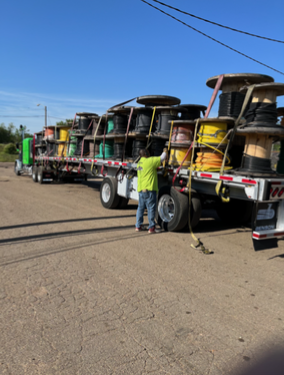
Wire and cable should be separated by manufacturer, part number, conductor material, conductor count, conductor size, stranding, insulation type, jacket, shielding, armor, voltage rating, temperature rating, and listed standard. Photograph printed legends, reel tags, manufacturer labels, exposed ends, and packaging so the material can be identified without relying on color alone.
Provide original footage, remaining footage, reel dimensions, reel material, gross weight, cut history, storage environment, and whether the ends were sealed. If remaining length is estimated, explain the method. Do not present an estimate as a manufacturer-verified measurement or combine partial reels with different specifications into one total.
Condition can change significantly through handling and storage. Show crushed flanges, loose winding, exposed conductor, jacket cuts, water exposure, sun damage, contamination, corrosion, field splices, pulled lengths, and missing labels. Cable stored outdoors or in an uncontrolled area should be described accurately even when the reel appears intact.
Businesses researching who buys surplus electrical equipment should understand that insulated cable is not evaluated only by metal weight. Exact specification, usable continuous length, traceability, reel condition, storage, current demand, handling needs, and freight may influence commercial potential.
Why Businesses Ask Who Buys Surplus Electrical Equipment
Electrical inventory becomes surplus after design changes, equipment standardization, capital upgrades, project completion, canceled construction, spare-parts reduction, facility consolidation, contractor demobilization, or closure. A direct purchasing review gives an owner another option to compare with internal redeployment, supplier return, trade-in, auction, storage, recycling, or disposal.
Beginning early helps preserve documentation. Project managers may have submittals, purchasing may retain invoices, electricians may understand configuration, maintenance may know operating history, warehouse staff may know where accessories are stored, and accounting may control asset release. Those connections can disappear after equipment is moved or teams change.
A controlled inventory prevents confusion. Assign a unique reference number to each asset or homogeneous group and connect that number to photographs, labels, quantity, condition, location, ownership, and availability. Do not use one line such as “electrical parts” for mixed breakers, controls, cable, transformers, and accessories.
The answer to who buys surplus electrical equipment also depends on lawful ownership. Exclude leased, rented, financed, consigned, customer-owned, disputed, reserved, recalled, counterfeit, and active equipment unless proper written authority and disclosure are available.
Information Needed by Companies Who Buy Surplus Electrical Equipment
Manufacturer and Exact Identification
Record manufacturer, series, catalog number, model, serial number, date code, frame, trip-unit number, accessory numbers, and other identification exactly as printed. Photograph labels straight on in adequate light. Disclose unreadable, missing, altered, or damaged labels.
Electrical Ratings
Provide voltage, amperage, phase, frequency, interrupting rating, kVA or kW, horsepower, conductor size, insulation rating, enclosure type, and other applicable data. Ratings should come from the actual item, not a similar unit or an online listing.
Configuration and Included Hardware
Identify poles, mounting style, trip unit, sensors, operators, lugs, terminals, fuses, control voltage, communication modules, cabinets, bus, hardware, manuals, and spare parts. State clearly what is included and what has been removed.
Quantity and Packaging
Count equipment by exact catalog number and condition group. Photograph cartons, pallets, crates, reels, and labels. Note damaged packaging, mixed boxes, opened seals, missing hardware, outdoor storage, and whether items can be accessed for verification.
Condition and History
Use factual categories such as new unused, new old stock, installed but not energized, used working when removed, used untested, reconditioned with documentation, incomplete, damaged, or parts-only. Disclose fault exposure, overheating, water, fire, corrosion, contamination, and repairs.
Ownership and Release Authority
Confirm the legal owner and authorized seller. Identify liens, project-owner rights, contractor claims, lease terms, customer property, insurance claims, recalls, or internal approvals that could affect release.
Location and Pickup Conditions
Provide city and state, equipment count, pallet or reel dimensions, weights, building access, dock or forklift availability, site hours, security procedures, insurance requirements, and the desired removal date.
Who Buys Surplus Electrical Equipment Such as Transformers?
Have a documented transformer available? Call or text 713-385-1333 with kVA, voltage, phase, fluid or dry type, tests, condition, weight, and access.
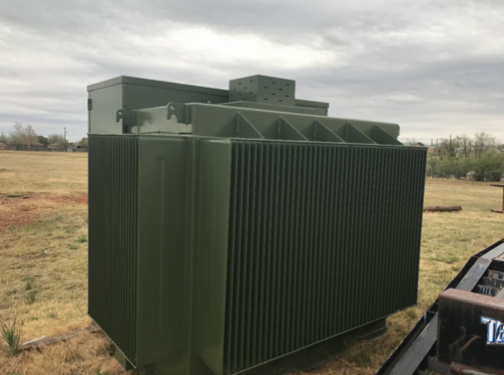
A transformer record should include manufacturer, model or catalog number, serial number, year, kVA, primary and secondary voltage, phase, frequency, impedance, winding material, temperature rise, insulation class, cooling method, enclosure rating, tap configuration, connection data, fluid type when applicable, and total weight.
Photograph the complete unit, nameplate, terminals or bushings, tap compartment, enclosure, cooling surfaces, gauges, fans, radiators, control cabinet, base, lifting points, and damage. Report corrosion, overheating evidence, oil leakage, damaged bushings, missing covers, cut conductors, impact damage, water exposure, fire exposure, and modifications.
Provide available test reports, maintenance records, fluid analysis, insulation-resistance testing, turns-ratio results, power-factor testing, dissolved-gas analysis, load history, fault history, and removal records. State when tests occurred and who performed them. Historical results do not certify present condition.
Electrical safety must remain under qualified personnel. Do not open, touch, test, disconnect, or move a transformer unless it has been properly de-energized, isolated, verified, grounded where required, and released under the facility’s procedures.
How to Evaluate Who Buys Surplus Electrical Equipment
A commercial buyer should ask for equipment-specific information and explain that purchasing interest depends on review. Manufacturer, model, ratings, configuration, quantity, condition, records, demand, location, and recovery cost all matter. A buyer cannot responsibly value mixed inventory from a total weight or a few distant photographs.
Clear written terms are also important. Before release, the transaction should identify exact equipment, catalog and serial numbers, quantities, included accessories, exclusions, represented condition, inspection rights, price, payment method, payment timing, taxes, title or ownership documents, loading, freight, schedule, and site requirements.
Sellers should verify cleared payment through normal business channels and confirm who is authorized to collect the equipment. Valuable electrical assets should not be released based solely on an emailed payment image, an unexplained overpayment, a request to forward funds, or a last-minute change in pickup identity.
When comparing who buys surplus electrical equipment, provide the same accurate inventory to each qualified party. Comparable information produces more meaningful responses than changing quantities, omitting defects, or adding equipment that has not been approved for sale.
Commercial Review Is Not Certification
A purchasing review may confirm identification, observable condition, completeness, and limited test information. It is not a formal appraisal, engineering approval, safety certification, warranty, code determination, or guarantee that equipment is suitable for installation.
Testing Must Be Properly Documented
If electrical tests exist, provide date, standard or procedure, technician or laboratory, equipment identification, readings, conclusions, and unresolved findings. Do not describe visual inspection, continuity checking, or a simple power-up as a complete electrical certification.
Logistics Affect the Offer
Pallet count, reel dimensions, transformer weight, equipment location, dock access, forklift capacity, crane needs, packaging, permits, freight distance, and removal timing may affect feasibility. Accurate logistics prevent avoidable changes after terms are discussed.
Who Buys Surplus Electrical Equipment Including Generators?
Releasing a generator from standby or project service? Call 713-385-1333 with output ratings, voltage, phase, engine, hours, test history, and location.
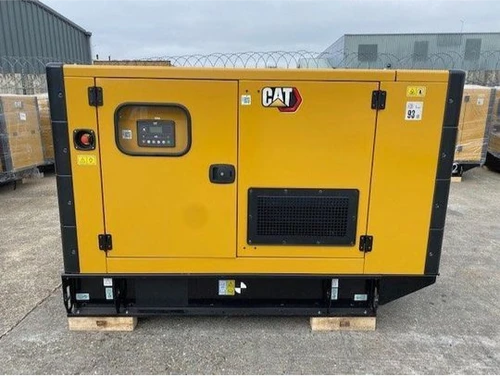
A generator inventory should include equipment manufacturer, generator end, engine manufacturer and model, serial numbers, year, rated kW and kVA, voltage selections, phase, frequency, power factor, fuel type, enclosure, controls, breaker, transfer equipment, receptacles, and recorded hours.
Describe the latest known operating check accurately. State whether the unit remains in service, exercises regularly, starts and runs without load, completed a documented load-bank test, operated when parked, has a known fault, or was not tested. A no-load start does not prove rated output.
Photograph the radiator, engine, belts, hoses, battery, fuel system, exhaust, aftertreatment, generator end, controls, breaker, connection area, doors, louvers, base, and wiring. Disclose oil, coolant, or fuel leakage; smoke; overheating; corrosion; alarm codes; rodent activity; missing guards; and modified electrical work.
Associated equipment should be listed separately. Identify tanks, transfer switches, switchgear, batteries, chargers, radiators, silencers, enclosures, cables, trailers, and spare parts. Explain what is included and provide dimensions, weights, disconnection status, fuel-handling needs, lifting access, and the route to the loading point.
The Process When Asking Who Buys Surplus Electrical Equipment
1. Verify Ownership and Availability
Separate approved surplus from active, leased, rented, financed, consigned, customer-owned, disputed, or reserved equipment. Identify the authorized seller and collect supporting ownership or release documents.
2. Create an Itemized Inventory
List manufacturer, catalog or model number, serial number, ratings, configuration, quantity, condition, location, and availability. Group items only when their identification and condition genuinely match.
3. Photograph Every Asset
Capture the complete item, labels, terminals, trip units, controls, enclosures, packaging, reels, accessories, and damage. Use current images and keep them associated with the correct inventory line.
4. Add Records and Honest Disclosures
Provide purchase records, submittals, manuals, tests, maintenance history, removal date, former use, storage conditions, missing components, damage, fault exposure, and known modifications.
5. Describe Pickup Requirements
Provide city and state, quantities, dimensions, weights, palletization, loading surface, dock or crane access, site rules, insurance requirements, available dates, and removal deadline.
6. Request an Equipment Evaluation
Send the inventory and photographs through the Texas Global Resources contact page. Complete information helps determine whether the opportunity fits current purchasing requirements.
7. Confirm Terms Before Release
If purchasing interest exists, document equipment, quantities, included accessories, condition, inspection, price, payment, ownership transfer, packaging, loading, freight, schedule, and site responsibilities.
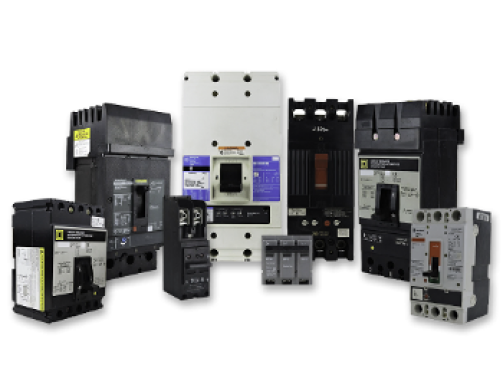
Who Buys Surplus Electrical Equipment Including Circuit Breakers?
Have breakers ready for review? Call or text 713-385-1333 with manufacturer, catalog number, frame, trip, poles, voltage, quantity, and condition.
A breaker inventory should include manufacturer, series, catalog number, frame size, trip rating, pole count, voltage, interrupting rating, mounting type, trip-unit model, sensor rating, lugs, operators, communication modules, accessories, date code, quantity, and condition.
Photograph the front, sides, back, labels, trip unit, terminals, mounting points, connectors, hardware, and packaging. Show cracked cases, burned terminals, corrosion, missing screws, altered labels, broken handles, incomplete trip units, moisture exposure, and other damage.
Separate new unused breakers from used, reconditioned, incomplete, damaged, and parts-only units. If a breaker was professionally tested or reconditioned, provide the provider, date, procedure, readings, replaced parts, and documentation. Do not use “tested” without explaining what was performed.
Mixed pallets should be sorted by exact catalog number and condition. A visible count of breaker handles does not establish identical ratings or completeness. Organized photographs and a line-by-line inventory allow the buyer to assess demand without assuming that all units match.
Questions About Who Buys Surplus Electrical Equipment
Will a Buyer Review One Item?
One qualified item may warrant review when its identification, ratings, condition, documentation, location, and recovery requirements align with current demand. Provide the full label, photographs, and ownership status.
Can Used or Untested Equipment Be Submitted?
Some used or untested assets may be considered. State the last operating date, removal reason, known faults, storage environment, damage, repairs, and missing parts. Do not energize questionable equipment solely for an inquiry.
Are Obsolete Models Considered?
Some obsolete equipment may warrant review when exact identification, ratings, configuration, completeness, condition, and demand support it. Age or discontinued status alone does not determine value.
Should Everything Be Cleaned or Repaired First?
Do not authorize major repairs solely for a preliminary review. Remove ordinary loose debris when safe, but do not disturb evidence of overheating, leakage, corrosion, or damage. Submit current condition and available repair records.
Can Nationwide Inventory Be Reviewed?
Qualified opportunities across the United States may be considered. Provide city and state, item count, pallet or reel dimensions, weights, loading access, site restrictions, available dates, and freight requirements.
Can Pickup Be Included?
Pickup depends on equipment value, location, quantity, weight, packaging, access, loading resources, permits, schedule, and freight. Responsibilities must be defined in writing before release.
What Produces a Faster Answer?
An itemized spreadsheet, readable labels, current photographs, exact ratings, honest condition notes, documentation, proof of ownership, and complete pickup information give the reviewer the strongest starting point.
Contact Texas Global Resources to Learn Who Buys Surplus Electrical Equipment
Electrical assets are easiest to evaluate while labels, project records, test documents, accessories, packaging, and knowledgeable personnel remain connected to the correct inventory. Businesses asking who buys surplus electrical equipment should document every item before mixed storage, dismantling, weather exposure, or disposal changes its condition.
Texas Global Resources reviews qualified opportunities according to manufacturer, model or catalog number, ratings, configuration, quantity, condition, documentation, ownership, market demand, location, schedule, and recovery requirements. Commercial purchasing review is not a formal appraisal, engineering approval, safety certification, warranty, or installation recommendation.
To determine who buys surplus electrical equipment, send manufacturer, catalog number, serial number, ratings, quantity, condition, photographs, documentation, ownership status, city and state, packaging, loading access, and desired timeline.
Call or text 713-385-1333 to learn who buys surplus electrical equipment, or request an equipment evaluation online.