
Who Buys Used Circuit Breakers From Commercial Sellers?
Have qualified breakers available? Call or text Texas Global Resources at 713-385-1333 for a direct inventory review.
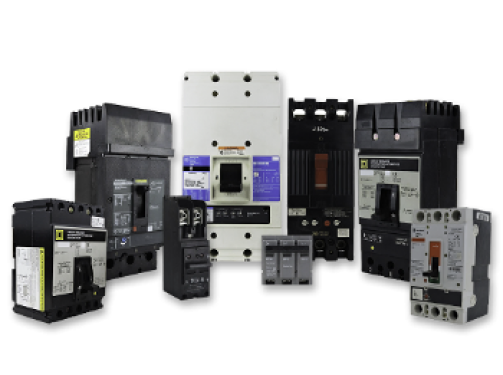
Businesses asking who buys used circuit breakers need a commercial buyer that evaluates exact breaker identification, ratings, condition, quantity, documentation, and location. Texas Global Resources reviews qualified breaker inventory from electrical contractors, manufacturers, distributors, commercial facilities, data-center projects, property managers, utilities, and companies completing system upgrades, shutdowns, or facility changes.
A circuit breaker cannot be valued responsibly from its brand name or ampere rating alone. Series, catalog number, frame size, pole count, voltage, interrupting rating, mounting style, trip-unit model, sensor rating, accessories, physical condition, operating history, and current demand may all affect purchasing interest. Similar-looking breakers can have materially different applications and compatibility.
Begin with current photographs of every model and readable images of all labels. Show the front, sides, rear, terminals, mounting points, trip unit, handle or operator, connectors, hardware, and packaging. Describe each breaker as new unused, installed but never energized, used and working when removed, used untested, professionally reconditioned with documentation, incomplete, damaged, or parts-only.
Who Buys Used Circuit Breakers and Which Types May Qualify?
Potential opportunities may include molded-case circuit breakers, insulated-case breakers, air circuit breakers, draw-out breakers, bolt-on breakers, plug-in breakers, motor circuit protectors, electronic-trip breakers, thermal-magnetic breakers, and selected obsolete or discontinued models. Current demand varies by exact catalog number, rating, configuration, condition, completeness, and quantity.
Breakers should remain with the hardware that belongs to them whenever possible. Keep trip units, rating plugs, sensors, mounting kits, cradles, racking handles, secondary disconnects, lugs, shunts, undervoltage releases, motor operators, auxiliary contacts, and communication modules identified by breaker reference number.
When researching who buys used circuit breakers, sellers should expect questions about origin and history. A buyer may need to know the facility type, former application, reason for removal, removal date, fault exposure, storage environment, testing, reconditioning, and whether the breaker was kept energized after a known event.
Molded-Case Circuit Breakers
Record manufacturer, family, catalog number, frame, trip rating, poles, voltage, interrupting capacity, trip technology, sensor rating, terminal configuration, and mounting type. Photograph case damage, terminals, labels, handles, trip controls, accessory covers, and rear connections.
Draw-Out and Air Circuit Breakers
Include breaker and cradle identification, continuous current, frame, interrupting rating, control voltage, trip unit, racking mechanism, primary disconnects, secondary contacts, charging motor, close and trip coils, accessories, and maintenance history. State whether the cradle and racking handle are included.
Obsolete and Discontinued Breakers
Older breakers may warrant review when exact identification, ratings, completeness, condition, and demand support it. Discontinued status alone does not create value. Compatibility, test history, parts availability, and the availability of modern alternatives may influence interest.
Who Buys Used Circuit Breakers in Boxed and Loose Inventory?
Have cartons and unpackaged breakers to sort? Call 713-385-1333 with catalog numbers, ratings, quantities, packaging, and condition.
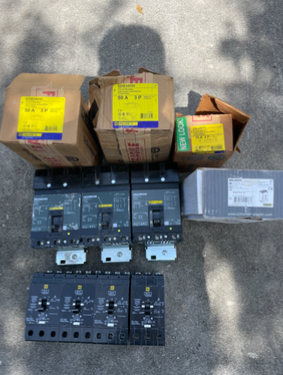
Mixed inventory should be separated by exact catalog number and condition. Verify that every carton contains the breaker identified on its label. A box may have been reused, opened, or matched with the wrong model. Photograph the carton label, seal condition, enclosed breaker label, accessories, and any packaging damage.
New unused, new old stock, used, reconditioned, incomplete, damaged, and parts-only breakers should not be combined under one quantity. These categories carry different evidence. An unused breaker may require storage and packaging history, while a used breaker needs former service, removal, fault, maintenance, and testing information.
Count each exact catalog number and note variations in trip unit, sensor, rating plug, lug configuration, accessory package, mounting hardware, and control voltage. Do not assume that breakers with the same frame and ampere setting are interchangeable. A line-by-line spreadsheet usually produces a clearer review than pallet totals.
Qualified companies assessing who buys used circuit breakers should also confirm legal ownership. Keep customer-owned, leased, consigned, financed, recalled, counterfeit, disputed, reserved, and active equipment out of the available inventory until proper authorization and disclosure exist.
Why Businesses Ask Who Buys Used Circuit Breakers
Breakers become available after service upgrades, switchgear replacement, electrical-room modernization, equipment standardization, project completion, canceled construction, spare-parts reduction, tenant improvement, facility consolidation, contractor demobilization, or closure. A direct review gives the owner another option to compare with redeployment, supplier return, trade-in, auction, storage, recycling, or disposal.
Starting early preserves records and knowledge. Electrical personnel may know the former lineup, maintenance may hold test reports, engineering may retain one-line diagrams, purchasing may have submittals, project management may document removal, warehouse teams may locate accessories, and accounting may control asset release.
A controlled inventory prevents similar breakers from being mixed. Give every unit or homogeneous group a reference number and use it on photographs, spreadsheets, test reports, pallet labels, and packing lists. Update the record whenever equipment is moved, inspected, reconditioned, excluded, or sold.
The practical answer to who buys used circuit breakers depends on the quality of the submission. Exact identification and honest condition reporting allow a commercial buyer to screen compatibility, demand, and logistics without relying on unsupported assumptions.
Information Needed by Companies Who Buy Used Circuit Breakers
Manufacturer, Series, and Catalog Number
Transcribe all identification exactly as printed, including manufacturer, product family, catalog number, style number, serial number, date code, frame designation, and revision. Photograph each label straight on in clear light and disclose missing, damaged, or altered identification.
Frame, Trip, Poles, and Voltage
Provide frame size, continuous-current rating, trip setting or rating plug, sensor rating, pole count, voltage, frequency where applicable, and interrupting rating. Do not infer ratings from case size, handle markings, or another breaker in the same lineup.
Mounting and Connection Type
Identify plug-in, bolt-on, draw-out, fixed, panelboard, switchboard, or switchgear mounting. Document line and load terminals, lugs, rear connectors, stabs, primary disconnects, cradle, hardware, orientation, and any modifications.
Trip Unit and Accessories
Record trip-unit model, protection functions, sensor, rating plug, display, communications, shunt trip, undervoltage release, auxiliary switches, alarm contacts, motor operator, charging motor, and control voltage. State what is installed, loose, missing, or untested.
Condition and Former Service
State former application, removal date, removal reason, latest known operation, fault exposure, maintenance, storage, and testing. Disclose burned terminals, overheated insulation, cracked cases, corrosion, moisture, contamination, broken handles, damaged stabs, missing parts, and unauthorized modifications.
Testing and Reconditioning Records
If testing exists, provide the date, provider, procedure or standard, equipment identification, readings, replaced parts, conclusions, and unresolved findings. Do not describe a visual inspection, handle exercise, continuity check, or simple trip as complete certification.
Quantity, Location, and Packaging
List quantities by exact identification and condition group. Provide city and state, pallet count, cartons, dimensions, weights, dock or forklift access, packaging needs, site hours, available dates, and removal deadline.
Who Buys Used Circuit Breakers in Large Draw-Out Frames?
Have a large-frame or draw-out breaker? Call or text 713-385-1333 with plate data, trip unit, cradle, accessories, test history, and condition.
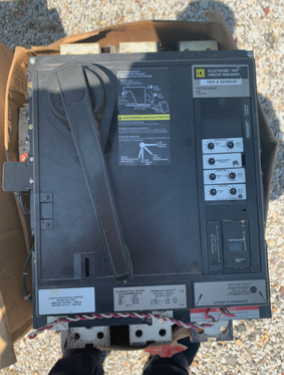
A large breaker submission should capture the breaker nameplate, trip-unit label, frame and sensor ratings, interrupting capacity, control voltage, wiring diagram, serial number, and accessory data. If a cradle or cell is available, identify it separately and confirm whether it is included.
Photograph primary disconnects, secondary contacts, racking mechanism, wheels, rails, close and trip buttons, springs, charging motor, arc chutes, pole assemblies, trip unit, terminal points, accessory compartments, and all sides. Show erosion, burning, pitting, cracking, corrosion, missing hardware, bent parts, and improvised repairs.
Describe whether the breaker can be manually charged, closed, opened, racked, and electrically operated, but only when qualified personnel can perform these checks safely. A mechanical exercise does not establish time-current performance, insulation condition, contact resistance, or interrupting capability.
Provide maintenance and test history such as cleaning, lubrication, primary injection, secondary injection, insulation resistance, contact resistance, trip timing, accessory checks, and documented repairs. State the test date and breaker serial number so reports can be matched to the correct unit.
How to Evaluate Who Buys Used Circuit Breakers
A commercial buyer should request exact breaker data and explain that purchasing interest depends on review. Manufacturer, catalog number, ratings, mounting, trip unit, accessories, quantity, condition, documentation, demand, location, and recovery cost all matter. A universal price per amp or per breaker is not reliable.
Written terms should identify catalog and serial numbers, quantities, included trip units and hardware, exclusions, represented condition, inspection rights, price, payment method, timing, taxes, ownership documents, packaging, loading, freight, and schedule. Ambiguous terms create avoidable disputes.
Verify cleared payment through normal business channels and confirm the identity of the pickup carrier. Do not release valuable inventory based only on an emailed payment image, unexplained overpayment, request to forward money, or an unverified last-minute change in collection instructions.
When comparing who buys used circuit breakers, provide each qualified party with the same accurate list and photographs. Comparable information produces more meaningful responses than changing quantities, hiding defects, or adding equipment that has not been approved for sale.
Commercial Review Is Not Certification
A purchasing review may verify identification, visible condition, completeness, and available records. It is not a formal appraisal, engineering approval, code determination, safety certification, warranty, or recommendation that a breaker be installed.
Fault Exposure Must Be Disclosed
Identify known short-circuit events, ground faults, overloads, nuisance trips, arc damage, water, fire, overheating, and abnormal interruption. Do not assume that a breaker is unaffected merely because the handle resets or the case looks intact.
Logistics Affect the Transaction
Large breakers and cradles may require palletizing, blocking, lift equipment, secure packaging, and freight. Small breakers still need organized cartons and protection against impact, moisture, lost accessories, and mixed identification.
Who Buys Used Circuit Breakers Stored Without Packaging?
Have loose breakers removed from service? Call 713-385-1333 with catalog numbers, quantities, removal history, condition, and storage details.
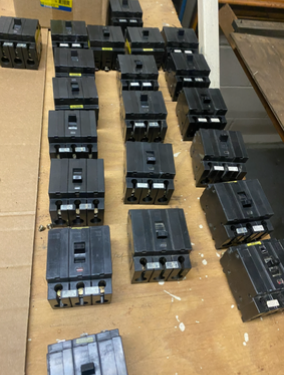
Loose breakers should be inspected visually for broken cases, chipped barriers, bent terminals, missing lugs, damaged handles, exposed mechanisms, corrosion, dirt, oil, paint, moisture, and evidence of impact. Photograph every model group from above and include close views of representative labels and defects.
Do not stack heavy breakers directly on delicate terminals or handles. Separate models, protect connection points, retain loose hardware, and label boxes or pallets with the inventory reference. Packaging does not need to look new, but it should prevent additional damage and preserve identification.
Explain where and how the breakers were stored. Indoor climate-controlled shelving, an electrical room, an unconditioned warehouse, an outdoor container, and an open yard create different exposure concerns. State whether breakers were covered, sealed, palletized, or exposed to water and dust.
Testing should not be improvised. Only qualified personnel using appropriate equipment and procedures should perform electrical or mechanical checks. If no test was performed after removal, describe the inventory as used untested and provide the latest credible operating history.
The Process When Asking Who Buys Used Circuit Breakers
1. Verify Ownership and Approval
Separate authorized breaker inventory from active, leased, financed, consigned, customer-owned, recalled, counterfeit, disputed, or reserved equipment. Identify the owner and person authorized to approve release.
2. Sort by Exact Identification
Group breakers by manufacturer, series, catalog number, frame, trip, poles, voltage, interrupting rating, mounting, trip unit, accessories, and condition. Do not combine merely similar cases.
3. Photograph Breakers and Labels
Capture fronts, sides, backs, labels, trip units, terminals, mounting points, connectors, accessories, packaging, and defects. Keep photographs connected to inventory reference numbers.
4. Add History and Documentation
Provide former application, removal date, reason, fault exposure, maintenance, test reports, reconditioning records, storage, missing parts, damage, and modifications.
5. Explain Packaging and Pickup
Provide city and state, quantities, pallet dimensions, weights, dock or forklift access, packaging needs, site rules, insurance requirements, available dates, and deadline.
6. Request a Breaker Evaluation
Send the inventory and current photographs through the Texas Global Resources contact page. Complete information helps determine whether the opportunity fits current purchasing requirements.
7. Confirm Written Terms
If purchasing interest exists, document breakers, quantities, included accessories, condition, inspection, price, payment, ownership transfer, packaging, loading, freight, schedule, and site responsibilities.
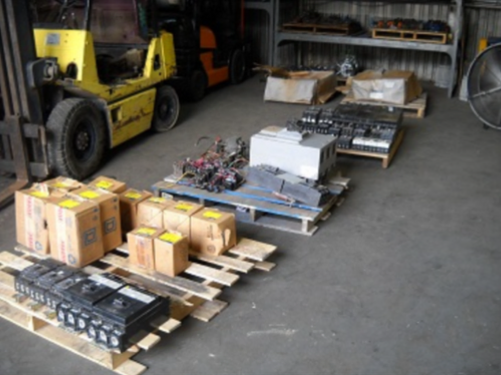
Who Buys Used Circuit Breakers From Warehouse Lots?
Have multiple pallets of breaker inventory? Call or text 713-385-1333 with a spreadsheet, label photos, condition groups, pallet count, and pickup access.
A warehouse lot should be inventoried before pallets are wrapped for shipment. List every exact catalog number, quantity, condition, packaging type, accessory, and location. If boxes contain mixed items or unknown contents, open and verify them when authorized and safe.
Photograph each pallet before and after organization, plus representative labels for every model group. Keep breaker inventory separate from unrelated contactors, starters, fuses, controls, switch components, and loose hardware unless those items are listed independently.
Provide pallet dimensions, weights, stacking limitations, dock height, forklift capacity, aisle access, site hours, carrier requirements, and deadline. Heavy items should be blocked and secured so they cannot shift or damage smaller breakers during transportation.
A large quantity does not replace accurate identification. One documented group of desirable breakers may warrant more attention than several pallets of mixed, damaged, or unknown inventory. A clean spreadsheet and traceable photographs make that distinction visible.
Questions About Who Buys Used Circuit Breakers
Can One Breaker Be Submitted?
One qualified breaker may warrant review when exact identification, ratings, condition, documentation, location, and logistics align with current demand. Provide full label photographs and known history.
Can Untested Breakers Be Considered?
Some used untested breakers may qualify. State the last service date, removal reason, fault history, storage, damage, repairs, and missing parts. Do not perform unsafe or improvised testing.
Are Reconditioned Breakers Reviewed?
Reconditioned equipment should include provider, date, procedures, test results, replaced parts, labels, and warranty information if any. “Rebuilt” without records is not the same as documented reconditioning.
Are Obsolete Breakers Considered?
Some obsolete models may warrant review when catalog number, ratings, compatibility, completeness, condition, and demand support it. Discontinued status alone does not determine commercial value.
Should Breakers Be Cleaned First?
Remove ordinary loose debris when safe, but do not disturb evidence of overheating, corrosion, water, fire, or damage. Do not use unapproved solvents, lubricants, abrasive cleaning, or internal disassembly for a preliminary inquiry.
Can Nationwide Inventory Be Reviewed?
Qualified breaker opportunities across the United States may be considered. Provide city and state, quantity, pallet details, loading access, site requirements, dates, and freight information.
What Supports a Faster Review?
An itemized spreadsheet, readable labels, current photographs, exact ratings, condition groups, service and test history, proof of ownership, packaging details, and pickup information provide the strongest starting point.
Contact Texas Global Resources to Learn Who Buys Used Circuit Breakers
Breaker inventory is easiest to evaluate while labels, trip units, accessories, test records, packaging, and knowledgeable personnel remain connected to each asset. Businesses asking who buys used circuit breakers should document equipment before mixed storage, weather exposure, dismantling, or disposal changes its condition.
Texas Global Resources reviews qualified opportunities according to manufacturer, catalog number, ratings, mounting, trip unit, accessories, quantity, condition, documentation, ownership, demand, location, schedule, and recovery requirements. Commercial purchasing review is not an appraisal, engineering approval, safety certification, warranty, or installation recommendation.
To determine who buys used circuit breakers, provide manufacturer, series, catalog number, frame, trip, poles, voltage, interrupting rating, mounting, trip unit, quantity, condition, photographs, records, ownership, city and state, packaging, and pickup requirements.
Call or text 713-385-1333 to learn who buys used circuit breakers, or request a breaker evaluation online.